AI surveillance prevents elephant deaths on Coimbatore railway stretch
Synopsis
Tamil Nadu's AI-and-thermal-camera network at Puthupathi has delivered a remarkable result: zero elephant deaths on one of India's most sensitive rail corridors over two-and-a-half years, with 7,100-plus alerts and nearly 9,500 safe crossings logged. The system's integration with live railway communications — now augmented by AI drones — makes it a replicable model for human-wildlife coexistence on India's expanding rail network.
Key Takeaways
Tamil Nadu's AI-powered surveillance system near Coimbatore has recorded zero elephant fatalities on the monitored railway stretch over two-and-a-half years .
The network has generated more than 7,100 alerts on elephant movement, prompting loco pilots to take precautionary action on over 3,280 occasions .
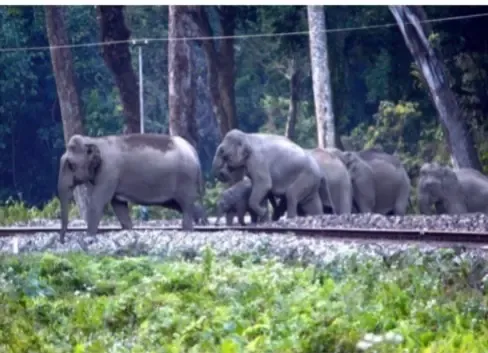
Nearly 9,500 safe elephant crossings have been facilitated since the system became operational at Puthupathi village, Madukkarai Forest Range .
The system combines AI , thermal imaging cameras , and a 24-hour control and command centre integrated with railway communication channels.
AI-powered drones have been added to extend aerial monitoring beyond the fixed camera perimeter.
Other species detected include gaur , deer , and leopards , broadening the system's conservation reach.
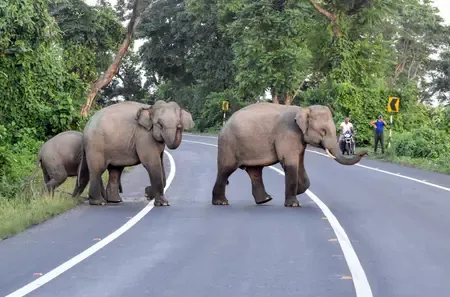
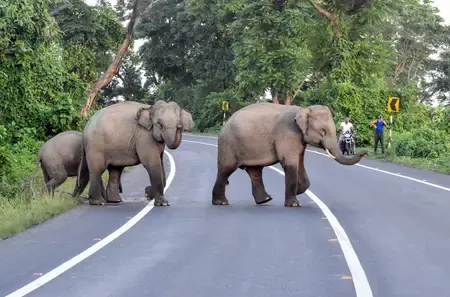
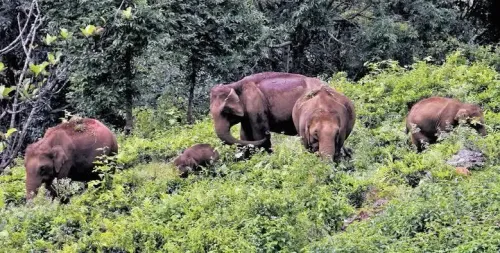
Tamil Nadu's AI-powered wildlife monitoring system has recorded zero elephant fatalities on a vulnerable railway corridor near Coimbatore over the past two-and-a-half years, with more than 7,100 real-time alerts prompting train operators to slow down or halt for safe elephant crossings. The initiative, centred on Puthupathi village in the Madukkarai Forest Range, represents one of India's most operationally active human-wildlife conflict mitigation deployments on a live rail network.
How the System Works
The surveillance network combines artificial intelligence, thermal imaging cameras, and round-the-clock human monitoring to detect elephant movement near the tracks in real time. Once an animal is detected, alerts are relayed instantly to both forest personnel and railway authorities through a dedicated control and command centre that operates 24 hours a day.
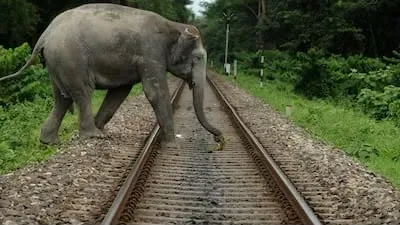
Station masters at nearby railway stations are notified first, following which loco pilots receive instructions via wireless communication to reduce speed or bring trains to a halt. Forest teams simultaneously move to the site to prevent elephants from entering the tracks and guide them safely across the corridor.
Key Outcomes So Far
Since becoming operational, the system has generated over 7,100 elephant-movement alerts, resulting in loco pilots taking precautionary action — slowing down or stopping — on more than 3,280 occasions. Authorities report that the network has facilitated nearly 9,500 safe elephant crossings during this period, with no elephant deaths recorded on the monitored stretch.
Beyond elephants, the cameras have also detected gaur, deer, and leopards, effectively expanding the system into a broader wildlife monitoring platform for the region.
Drones Extend Aerial Coverage
The ground-based thermal camera network has been further reinforced with AI-powered drones that provide aerial surveillance across a wider landscape beyond the fixed camera perimeter. The drones track elephant movement through forests and adjoining railway corridors, improving situational awareness and enabling faster, more coordinated responses from forest and railway teams.
Forest officials, frontline staff, drone operators, and railway personnel share live location updates through a dedicated messaging platform, ensuring all stakeholders act on the same real-time picture.
Significance for Wildlife Corridors
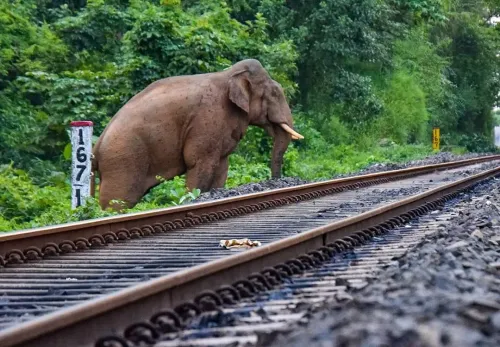
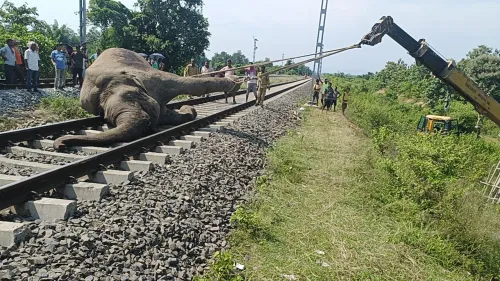
The Madukkarai Forest Range lies within one of Tamil Nadu's most sensitive wildlife corridors, where elephant-train collisions have historically posed a serious conservation and safety challenge. This project forms part of the state government's broader objective to eliminate elephant deaths caused by train accidents across such high-risk zones.
Notably, the integration of AI surveillance with active railway communication channels — rather than operating as a standalone conservation tool — is what sets this deployment apart from earlier passive warning systems. With drone coverage now layered on top, authorities are positioned to extend the model to other vulnerable stretches across the state.
Point of View
Not experimental — 7,100-plus alerts acted upon in real time on a live rail network is a very different claim from a pilot study. What the mainstream coverage underplays is the integration layer: linking AI detection directly to wireless loco-pilot instructions is the hard problem, and Tamil Nadu appears to have solved it at scale. The question now is replication. India's rail network cuts through dozens of critical wildlife corridors where elephant and large-mammal mortality remains chronic. If this model's cost and operational complexity are within reach of other forest divisions, the Madukkarai deployment could mark a genuine inflection point — not just a conservation headline.
NationPress
8 Oct 2026
Frequently Asked Questions
How does Tamil Nadu's AI wildlife surveillance system prevent elephant deaths on railways?
The system uses AI-enabled thermal cameras installed along the tracks at Puthupathi village to detect elephant movement in real time. Alerts are immediately sent to a 24-hour command centre, which notifies station masters and instructs loco pilots via wireless communication to slow down or stop trains while forest teams guide elephants safely across.
How many elephant deaths have occurred on the monitored Coimbatore railway stretch?
According to officials, zero elephant fatalities have been recorded on the monitored stretch since the system became operational over two-and-a-half years ago. The network has facilitated nearly 9,500 safe elephant crossings during this period.
Where exactly is this AI surveillance system installed?
The system is installed along railway tracks at Puthupathi village within the Madukkarai Forest Range near Coimbatore, Tamil Nadu — one of the state's most sensitive wildlife corridors.
What role do drones play in the elephant monitoring system?
AI-powered drones provide aerial surveillance across a wider area beyond the fixed thermal cameras, tracking elephant movement through forests and adjoining railway corridors to improve situational awareness and enable faster coordinated responses.
Does the system monitor animals other than elephants?
Yes. The AI-enabled camera network has also detected gaur, deer, and leopards, effectively functioning as a broader wildlife monitoring system for the region around the Madukkarai Forest Range.