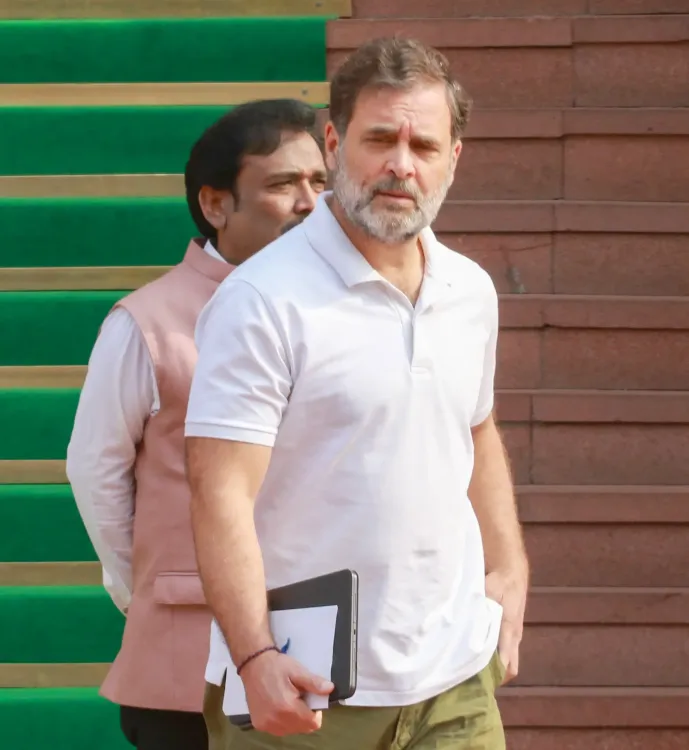
Can <b>Rahul Gandhi</b> Critique His Exclusion During <b>Putin</b> Visit After Skipping Key Events?
Synopsis
As the conversation around protocol breaches intensifies, Congress leaders question their exclusion from a key banquet. But can Rahul Gandhi raise concerns effectively when his own attendance at significant national events has been sporadic? This article explores the implications of leadership participation in national ceremonies.
Key Takeaways
Rahul Gandhi and Mallikarjun Kharge have raised objections about their exclusion from a key banquet.
The LoP's attendance at national events is essential for credibility.
Past absences from significant events are being scrutinized.
Political expectations for leaders include consistent participation in national ceremonies.
Absences can impact public perception and party integrity.
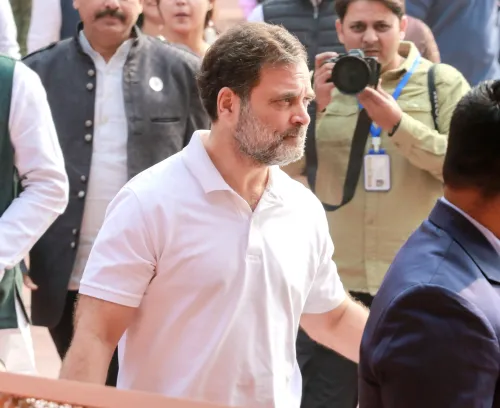
New Delhi, Dec 5 (NationPress) A renewed discussion has emerged following objections raised by Congress leaders Rahul Gandhi and Mallikarjun Kharge regarding their exclusion from the President’s banquet honoring Russian President Vladimir Putin. They have also posed questions about the absence of the Leader of the Opposition (LoP) in significant interactions.
Experts observe that LoP Rahul Gandhi’s previous absences from several pivotal national and ceremonial events have sparked inquiries about the party's ethical stance in voicing such grievances. These analysts argue that the LoP’s track record of non-attendance at constitutional events undermines claims of ‘protocol violations’.
This situation has spurred a wider conversation about the expectations and traditions tied to the office of the LoP. Critics contend that raising protocol concerns carries more significance when a leader’s actions align with the dignity and obligations of their role.
Throughout the years, various instances have been spotlighted by political commentators. Rahul Gandhi was notably absent from the Republic Day festivities and the Independence Day ceremony on multiple occasions—events where leaders from all political backgrounds typically gather as a symbol of national unity.
In a similar vein, during the inauguration of Kartavya Bhawan on Kartavya Path—a public institution funded by taxpayer money—Rahul Gandhi did not attend, while most other national leaders were present. At that time, discussions regarding invitations or protocols were notably lacking.
Concerns have also been raised regarding courtesy norms. When President Ram Nath Kovind took office, Rahul Gandhi and Sonia Gandhi did not extend a courtesy visit, which is typically seen as a gesture of respect for the constitutional position. Conversely, during events such as Vice President C. P. Radhakrishnan’s swearing-in, Congress leaders were present, but Rahul Gandhi was not.
His absence was also noted during significant judicial ceremonies, including the oath-taking of Sanjiv Khanna as the 51st Chief Justice of India (CJI) and Surya Kant as the 53rd CJI—events that traditionally see attendance from leaders across the political divide. Observers argue that the LoP’s absence at such occasions sends a certain message, whether intended or not.
Moreover, when former President Pranab Mukherjee was awarded the Bharat Ratna or when Heeralal Samariya became India’s first Dalit Chief Information Commissioner, numerous parties celebrated these milestones, but Rahul Gandhi was absent.
Collectively, these occurrences have prompted a broader debate. According to analysts, regular participation in key national and constitutional events is a fundamental expectation from the LoP. Yet, it is observed that Rahul Gandhi has frequently missed such occasions.
Point of View
It is crucial to recognize the importance of consistent participation in national events by leaders, especially those holding prominent opposition roles. Rahul Gandhi's absence from several key events raises questions about accountability and the expectations tied to his position. Leaders should embody commitment to their roles through active engagement in national ceremonies to maintain credibility.
NationPress
22 Sept 2026
Frequently Asked Questions
Why were Rahul Gandhi and Mallikarjun Kharge not invited to the banquet?
The reasons for their exclusion have not been officially stated, leading to speculation about protocol and political dynamics.
What are the expectations of the Leader of the Opposition?
The LoP is expected to represent the opposition in significant national discussions and events, ensuring accountability and upholding democratic values.
How many key national events has Rahul Gandhi skipped?
Over the years, Rahul Gandhi has missed several major national events, including Republic Day and Independence Day celebrations.
What is the impact of a leader's absence from national events?
Absences can signal disinterest or disengagement from national issues, affecting public perception and credibility.
How do these absences affect the Congress party?
Frequent absences from important events can lead to questions about the party's commitment to national unity and its moral standing in political discourse.