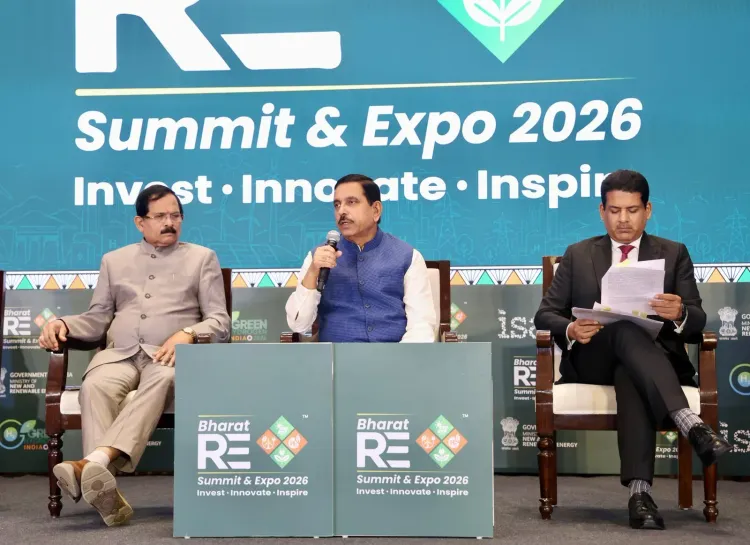
Pralhad Joshi Briefs Press on Bharat Renewable Energy Summit 2026
Synopsis
Union Minister Pralhad Joshi closed the Bharat Renewable Energy Summit 2026 with a press briefing on global participation and India's renewable ambitions, held alongside the 9th ISA Assembly, reinforcing India's 500 GW target and multilateral clean-energy leadership.
Key Takeaways
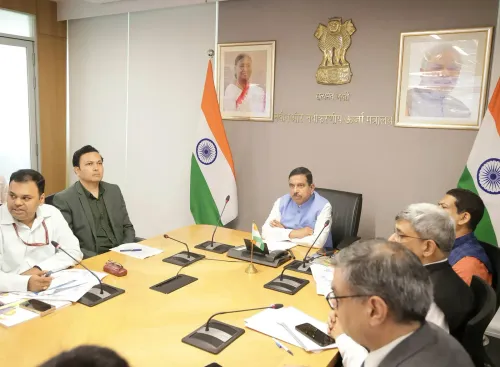
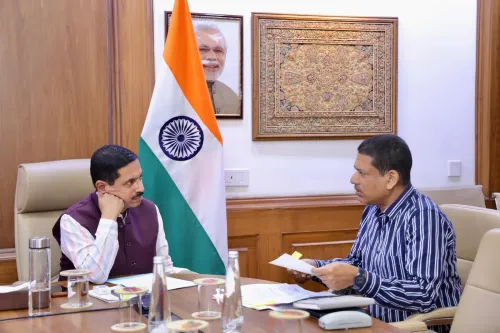
Union Minister Pralhad Joshi addressed the press at the conclusion of the Bharat Renewable Energy Summit 2026 on November 5, 2026 .
The summit coincided with the 9th International Solar Alliance (ISA) Assembly , pairing India's domestic energy push with its global multilateral role.
India's 500 GW non-fossil fuel capacity target by 2030 was reaffirmed as the central ambition driving the summit's agenda.
The ISA , an India-led intergovernmental body founded in 2015 , underpins India's international clean-energy diplomacy.
India's renewable energy policy lineage runs from the National Solar Mission (2010) through successive auction rounds to its current global leadership positioning.
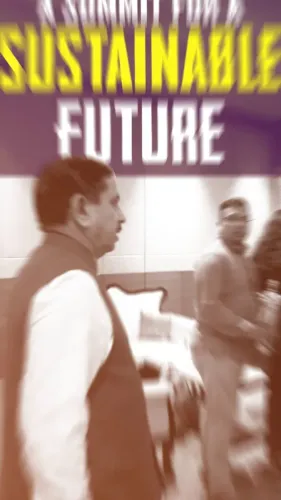
India's clean-energy story got its loudest retelling yet on Thursday, November 5, 2026, as Union Minister for New and Renewable Energy Pralhad Joshi addressed the press at the conclusion of the Bharat Renewable Energy Summit 2026 (#BRESummit), calling it a demonstration of 'vision, ambition and extraordinary execution.'
What the BRE Summit put on the table
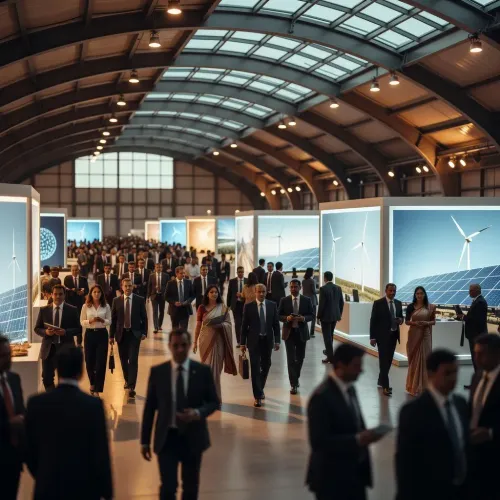
Speaking at the summit's close, Minister Joshi highlighted the event's key outcomes, the breadth of global participation, and its role in accelerating India's renewable energy ambitions. The summit ran alongside the 9th International Solar Alliance (ISA) Assembly (#9ISAssembly) — a pairing that underscores how India has woven its domestic clean-energy push into a wider multilateral framework.
The International Solar Alliance, an India-led intergovernmental body launched in 2015, was conceived to mobilise solar deployment across solar-resource-rich nations. Hosting the ISA Assembly in tandem with the BRE Summit signals that India sees its own energy transition and its global leadership role as inseparable.
The 500 GW target and the road it was built on
The ambition Joshi invoked has a clear numerical spine. India committed at COP26 in 2021 to reach 500 GW of non-fossil fuel capacity by 2030 — a target that required multiplying installed renewable capacity several times over in under a decade. The groundwork stretches back further: the National Solar Mission, launched in 2010, set the first grid-connected solar targets and proved the model could scale.
That lineage matters. Each policy layer — the Solar Mission, successive auction rounds, the ISA platform, and now the BRE Summit — has built on the last, turning what once looked like an aspirational pledge into a credible industrial programme backed by state electricity boards, private developers, and international capital.
India's pitch to the world
Global participation at the summit, flagged by the Minister as a headline outcome, reflects a broader repositioning. India is no longer simply a developing-world recipient of climate finance; it is actively exporting the template — auctions, domestic manufacturing incentives, grid integration know-how — to other nations through platforms like the ISA. The BRE Summit, framed this way, is as much a foreign-policy moment as an energy-sector one.
The kicker: when a country can host the world's renewable energy conversation and simultaneously be its fastest-growing protagonist, the distinction between ambition and execution begins to disappear.
Point of View
Bookended by a ministerial press briefing from Joshi, fits into a deliberate BJP-government strategy of using high-profile multilateral platforms to reinforce India's clean-energy credibility ahead of the 2030 target deadline. Hosting the ISA Assembly simultaneously is a signal that Delhi views energy diplomacy as a core foreign-policy asset, not a side programme. For the government, every summit outcome announced on this stage is also a domestic political proof-point — progress on renewables insulates it from criticism on fossil-fuel dependency. The real test, however, lies in the parliamentary and budgetary follow-through that translates summit declarations into grid capacity.
NationPress
6 Nov 2026
Frequently Asked Questions
What is the Bharat Renewable Energy Summit 2026?
The Bharat Renewable Energy Summit 2026 (BRE Summit) is a high-level conference convened to discuss India's renewable energy progress, attract global participation, and align stakeholders around India's clean-energy targets, including the 500 GW non-fossil fuel goal by 2030.
What did Pralhad Joshi say at the BRE Summit 2026?
Union Minister Pralhad Joshi briefed the press on the summit's key outcomes and global participation, describing India's renewable energy journey as a story of 'vision, ambition and extraordinary execution.'
What is the International Solar Alliance and why does it matter?
The International Solar Alliance (ISA) is an India-led intergovernmental body launched in 2015 to accelerate solar energy deployment, particularly in solar-resource-rich developing nations. India hosts its Assembly, reinforcing its role as a global clean-energy leader.
What is India's renewable energy target by 2030?
India committed at COP26 in 2021 to achieving 500 GW of non-fossil fuel electricity capacity by 2030, a goal that anchors both domestic policy and India's international climate pledges.
What was the 9th ISA Assembly held alongside in 2026?
The 9th International Solar Alliance Assembly (#9ISAssembly) was held in conjunction with the Bharat Renewable Energy Summit 2026, linking India's domestic energy ambitions with its global multilateral clean-energy diplomacy.