Piyush Goyal receives 'Datanomics' book on India's Viksit Bharat journey
Synopsis
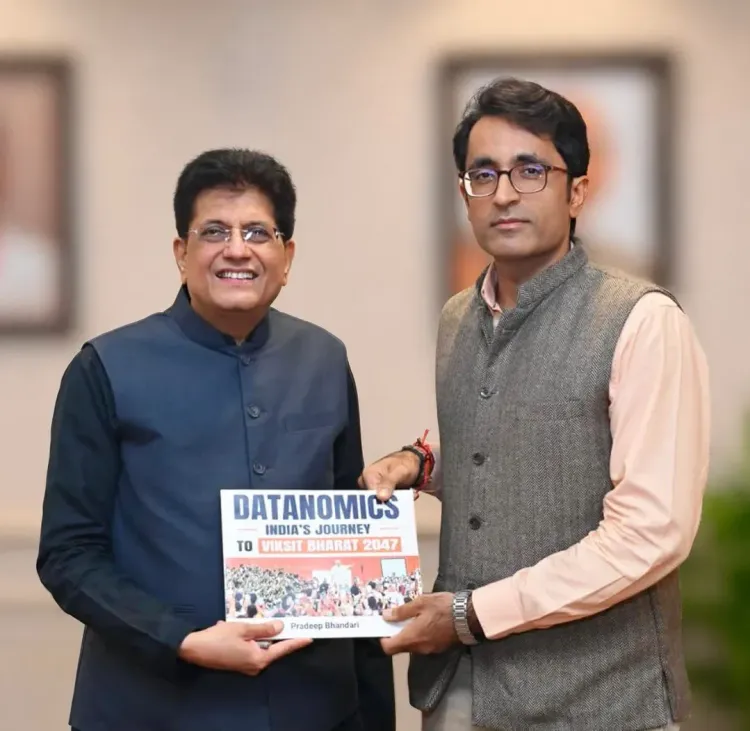
Union Commerce Minister Piyush Goyal received 'Datanomics: India's Journey to Viksit Bharat 2047' from BJP Spokesperson Pradip Bhandari on November 7, 2026 — a data-driven account of India's progress since 2014 under PM Modi, tied to the government's Viksit Bharat 2047 vision.
Key Takeaways
Union Commerce and Industry Minister Piyush Goyal received the book 'Datanomics: India's Journey to Viksit Bharat 2047' on November 7, 2026 .
The book was presented by Pradip Bhandari , BJP Spokesperson and National Media Co-Incharge.
It documents India's transformation over 12 years of PM Narendra Modi 's leadership using data, facts, and graphs.
The volume is linked to the government's Viksit Bharat 2047 vision — India becoming a developed nation by the centenary of independence.
The post follows a recurring BJP pattern of using social media to amplify data-backed governance narratives.
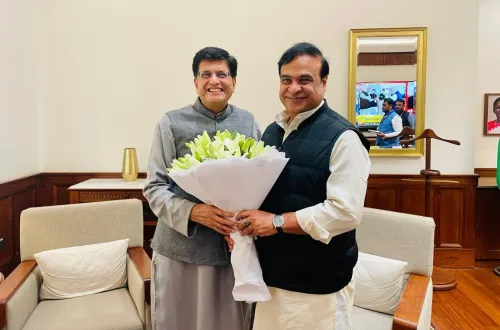
A book that wraps twelve years of national transformation into data, facts, and graphs landed in the hands of Union Commerce and Industry Minister Piyush Goyal on Saturday, November 7, 2026 — and he wasted no time recommending it to the country.
BJP Spokesperson and National Media Co-Incharge Pradip Bhandari presented Goyal with a copy of 'Datanomics: India's Journey to Viksit Bharat 2047', a volume that documents India's governance record since 2014 under Prime Minister Narendra Modi through charts, statistics, and verified figures. Goyal called the insights 'valuable' and urged followers to pick it up.
'Datanomics' and the data-driven narrative around Viksit Bharat
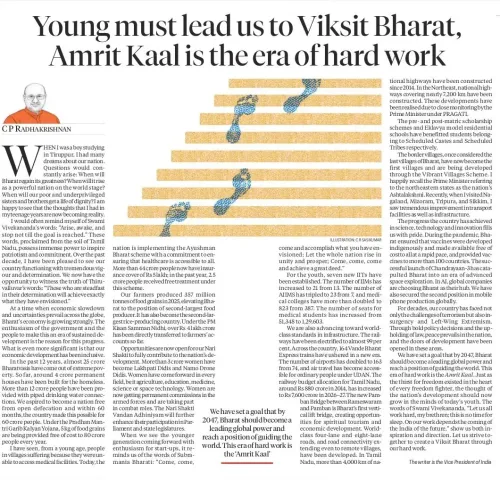
The title is a nod to the Viksit Bharat 2047 vision — the government's publicly stated goal of elevating India to developed-nation status by the centenary of independence. Prime Minister Modi first articulated this long-term framework during Azadi Ka Amrit Mahotsav events in 2022, framing it as a generational mission rather than a single-term policy pledge.
What distinguishes Datanomics, at least as Goyal describes it, is its method: not speeches or manifestos, but graphs and hard numbers that trace sectoral progress over a 12-year arc. For BJP's communication machinery, that framing matters — it positions the ruling party's record as empirically verifiable rather than merely asserted.
Senior ministers, social media, and the evidence-governance playbook
Goyal's post fits a well-worn pattern inside BJP's senior ranks. Ministers and party leaders routinely use social media to amplify books, reports, and data compilations that document progress since 2014 — a strategy of turning policy outcomes into shareable, cite-able content. The endorsement from a Leader of the House in the Rajya Sabha gives the volume visible credibility within party and policy circles.
Bhandari, who authored or co-ordinated the book in his capacity as National Media Co-Incharge, sits at the intersection of party communication and information architecture — making Datanomics as much a political communication tool as a reference text.
Whether the book surfaces in budget-season briefings, economic survey appendices, or future policy advocacy will be the real test of its reach beyond the party faithful.
Point of View
Insulating the narrative from election-cycle volatility. Coming from the Leader of the House in the Rajya Sabha, the post signals that the data-driven governance story will remain a central pillar of BJP's political communication as 2047 milestones inch closer. Books like this often serve as source material for budget speeches and policy advocacy, so their reach inside the party apparatus can outlast the social media moment.
NationPress
8 Nov 2026
Frequently Asked Questions
What is the book 'Datanomics: India's Journey to Viksit Bharat 2047' about?
'Datanomics: India's Journey to Viksit Bharat 2047' presents India's development progress over 12 years of PM Narendra Modi's leadership using data, facts, and graphs, framed around the government's Viksit Bharat 2047 vision.
Who presented the Datanomics book to Piyush Goyal?
BJP Spokesperson and National Media Co-Incharge Pradip Bhandari presented the book to Union Commerce and Industry Minister Piyush Goyal on November 7, 2026.
What is Viksit Bharat 2047?
Viksit Bharat 2047 is the Indian government's vision to transform India into a developed nation by 2047, the centenary of its independence, first articulated by PM Modi during Azadi Ka Amrit Mahotsav events in 2022.
What is Piyush Goyal's current role in the government?
Piyush Goyal serves as Union Minister of Commerce and Industry and is also the Leader of the House in the Rajya Sabha, making him one of the most senior BJP leaders in Parliament.
Why do BJP ministers promote data-focused books on social media?
BJP ministers regularly use social media to endorse data compilations and policy books as part of a broader strategy to position the party's governance record as empirically verifiable and to amplify the Viksit Bharat narrative ahead of key policy milestones.