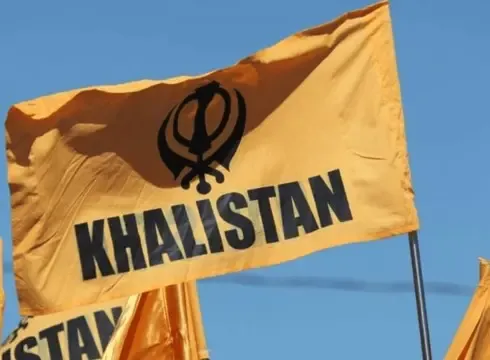
ISI-backed Khalistan-gangster nexus fracturing under global crackdown
Synopsis
The ISI's Khalistan-gangster alliance — built on narcotics, arms, and extortion — is fracturing from within. Squeezed by a three-way India-Canada-UK crackdown, Khalistani operatives are pivoting to 'peaceful' outreach, but the gangster wing, which runs on fear and extortion, is refusing to follow. The ISI now faces its most difficult balancing act yet.
Key Takeaways
The ISI built a Khalistan-gangster network to smuggle narcotics and arms and fund the separatist movement, primarily operating from Canada and the UK .
A diplomatic reset by Prime Minister Narendra Modi with Canada and the UK has triggered a coordinated crackdown on Khalistani networks in both countries.
Khalistani operatives have reportedly shifted to a non-violent, community-outreach strategy to win over the Sikh community and shed the terrorist label.
The gangster wing — dependent on violence and extortion — has opposed the soft approach , creating an internal rift within the network.
The ISI faces a structural dilemma: any gangster violence undermines the Khalistan movement's rebranding, but severing ties with gangsters would cut off arms and funding.
Officials warn that the gangster network could 'spiral further out of control' if the ISI attempts to rein it in.
The Inter-Services Intelligence (ISI) of Pakistan is facing mounting pressure to hold together its carefully constructed Khalistan-gangster network, as a coordinated crackdown by India, Canada, and the United Kingdom exposes deepening fault lines within the alliance, according to officials. The network — built to smuggle narcotics and arms while funnelling funds to the Khalistan movement — is reportedly showing signs of fracture as its two wings pursue conflicting strategies.
How the Network Was Built
According to officials, the ISI had deliberately engineered a symbiotic relationship between Khalistani operatives and organised criminal gangs, primarily operating out of Canada and the United Kingdom. The arrangement was straightforward: the gangster network provided muscle, weapons procurement, and narcotics revenue, while Khalistani elements supplied ideological cover and direction. For years, officials say, this arrangement functioned without significant friction.
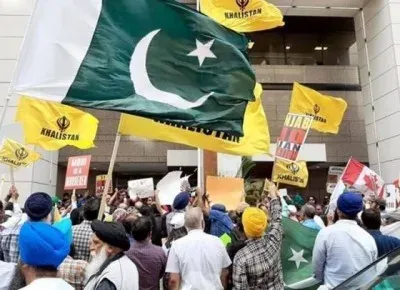
The network's activities included firing at buildings and establishments belonging to the Indian diaspora in Canada, according to an Intelligence Bureau official — actions designed to generate fear and extract extortion money. Threats against diaspora members, desecration of temples, and sustained anti-India campaigns were among the documented tactics.
The Diplomatic Reset That Changed the Equation
The cracks now emerging can be traced, in part, to a diplomatic reset engineered by Prime Minister Narendra Modi with both Canada and the UK. With bilateral ties recalibrated, both countries have intensified their crackdowns on Khalistani networks operating within their borders. Effective three-way coordination between Indian, Canadian, and UK agencies has, according to officials, begun to visibly shift the operational environment.
'With the coordination in place and an ongoing crackdown on the movement, the fear factor among the people is slowly vanishing,' one official said. The Khalistani operatives who had long used these countries as launchpads for campaigns against India are, reportedly, reassessing their approach.
The Strategic Divergence: Soft Power vs. Street Fear
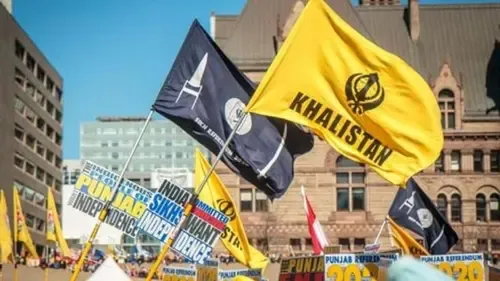
Faced with a shrinking operational space, Khalistani elements have reportedly opted for a markedly different posture — one focused on peaceful events, community outreach, and building public support by articulating the movement's stated rationale. The intent, officials say, is to shed the terrorist label and function as a legitimate separatist movement, raising funds through lawful channels and winning over a Sikh community that, in the majority, does not subscribe to the Khalistan cause.
'These elements decided that they would not indulge in violence now onwards and take a softer approach so that they could convince the people instead of generating fear among them,' a second official said.
This pivot has not been well received by the gangster network. Violence and fear are the operational foundations of criminal extortion — a soft strategy dismantles the very instrument through which these groups generate income. The decision has reportedly been actively opposed by the gangster wing, and that opposition, officials say, has driven a wedge between the two sides.
The ISI's Balancing Act
Counter-terrorism experts point out that the ISI now faces a structural dilemma it cannot easily resolve. Any violent act by the gangster network will be immediately linked to the Khalistan movement, undermining its non-violent rebranding. Yet severing ties with the gangsters is not a viable option either — the criminal network remains the primary conduit for arms procurement, and narcotics smuggling continues to be the movement's key funding mechanism.
Notably, the movement has found it difficult to gain any meaningful traction inside India, making diaspora-based support all the more critical. Officials say that for the ISI, keeping both networks aligned is imperative — any significant rift could prove catastrophic for the movement's momentum.
'The Pakistani spy agency may rein in the Khalistanis, but keeping the gangster network under check would be extremely hard as these elements would spiral further out of control,' one official warned. As the global crackdown tightens, whether the ISI can sustain this increasingly unstable alliance remains the central question.
Point of View
But it should not be read as the network's collapse — it is a stress fracture, not a break. The Khalistani pivot to 'peaceful' outreach is a tactical rebranding, not an ideological conversion; the arms and narcotics dependency on the gangster wing remains structurally unchanged. What is genuinely new is the three-way diplomatic coordination between India, Canada, and the UK — something that was conspicuously absent during the height of bilateral tensions in 2023. The ISI's real problem is that it built a network optimised for coercion, and coercion is now counterproductive to the movement's survival strategy. Holding a terror-for-hire criminal gang and a separatist political project together under one umbrella — when their operational imperatives have diverged — is a contradiction the ISI cannot resolve with tradecraft alone.
NationPress
1 Oct 2026
Frequently Asked Questions
What is the ISI-backed Khalistan-gangster network?
It is a covert alliance reportedly engineered by Pakistan's Inter-Services Intelligence (ISI) to advance the Khalistan separatist movement. The network uses organised criminal gangs to smuggle narcotics and arms, and to raise funds through extortion, primarily targeting the Indian diaspora in Canada and the UK.
Why is the Khalistan-gangster nexus fracturing now?
A diplomatic reset by Prime Minister Narendra Modi with Canada and the UK has led to an intensified, coordinated crackdown on Khalistani networks in both countries. Squeezed operationally, Khalistani elements have shifted to a non-violent outreach strategy — a pivot that directly conflicts with the gangster network's extortion-based model, creating an internal rift.
What is the new strategy being adopted by Khalistani operatives?
According to officials, Khalistani elements are now focusing on organising peaceful events, holding seminars, and building public support within the Sikh community — aiming to function as a separatist movement rather than a terrorist network. The goal is to convince the Sikh majority, which largely does not support the Khalistan cause, through persuasion rather than fear.
Why is the gangster network opposed to the soft approach?
The gangster network's primary revenue stream is extortion, which depends on the threat of violence and fear. A non-violent posture dismantles the operational tool through which these groups generate income. Officials say this fundamental conflict of interest has driven a wedge between the two wings of the network.
What challenge does the ISI face in holding the network together?
The ISI must prevent the two wings from splitting, because any violent act by the gangster network would immediately be linked to the Khalistan movement, undermining its non-violent rebranding. At the same time, the Khalistani elements cannot sever ties with the gangsters, who remain essential for arms procurement and narcotics funding. Officials warn the gangster network could spiral out of control if the ISI attempts to constrain it.