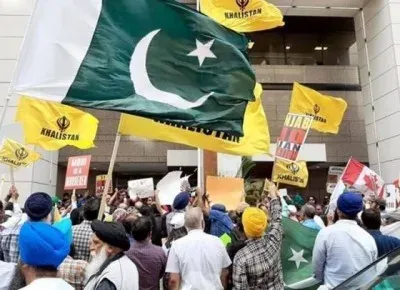
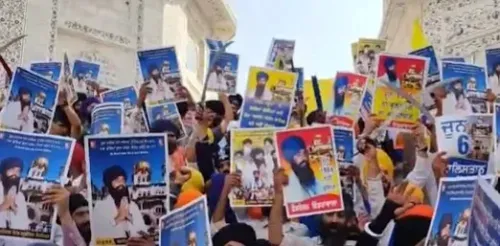
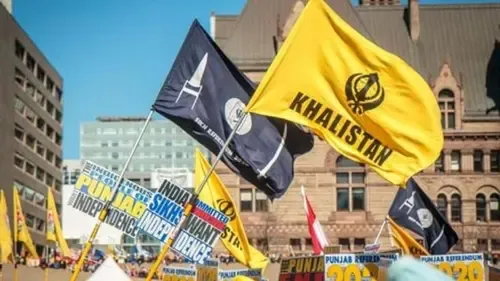
ISI, Khalistani groups plotting attacks on Indian diaspora in UK, Canada: Intel agencies
Synopsis
Indian intelligence agencies have warned that the ISI has activated Europe-based modules to orchestrate coordinated attacks on pro-India members of the Indian diaspora in the UK and Canada — a strategic escalation driven by the Khalistan movement's mounting frustration over its own failures, and timed to pressure India as its ties with both countries improve.
Key Takeaways
Indian intelligence agencies warned on 9 July of a coordinated ISI-backed plot targeting the Indian diaspora in Canada and the UK .
Targets include individuals perceived as pro-India or supporters of PM Modi , as well as Indian investigative agencies probing Khalistan cases.
The ISI has reportedly activated Europe-based modules and directed its gangster network to coordinate attacks using social media.
Officials attribute the escalation to growing frustration within the Khalistan movement over its limited success.
Support for the Khalistan movement in the UK and Canada has reportedly declined significantly, with groups increasingly linked to extortion , narcotics , and arms smuggling .
India-Canada diplomatic ties have improved following meetings between PM Modi and Canadian PM Mark Carney , enabling closer counter-terrorism coordination.
Indian intelligence agencies have issued a formal warning about a coordinated security threat targeting members of the Indian diaspora in Canada and the United Kingdom, with inputs suggesting that elements linked to Pakistan's Inter-Services Intelligence (ISI) and Khalistani extremist networks are planning organised attacks against individuals perceived as pro-India or supporters of Prime Minister Narendra Modi. The warning, issued from New Delhi on 9 July, marks a significant escalation in the assessed threat level against overseas Indian communities.
What Intelligence Agencies Have Warned
According to an Intelligence Bureau (IB) official, the ISI has reportedly activated its Europe-based modules to intensify attacks against the Indian community in both the UK and Canada. Officials say these incidents are no longer expected to be isolated or spontaneous, but part of a deliberate, coordinated campaign.
'The ISI is planning a series of coordinated attacks against the Indian diaspora. These elements are expected to target individuals by branding them as pro-India or supporters of PM Modi. That is likely to be the pretext for carrying out such attacks,' the official said.
Agencies are said to be coordinating closely with their Western counterparts to strengthen protective measures and prevent such attacks from materialising.
ISI's Modus Operandi: Gangster Networks and Social Media
Officials say the ISI intends to use its established gangster network to execute violent attacks, with modules in Europe assigned the role of coordinators. These networks have reportedly been directed to use social media to incite attacks against the Indian diaspora and Indian investigative agencies.
In India, according to officials, local gangsters would be activated to carry out parallel strikes. The targets are not limited to diaspora members — Indian investigative agencies probing Khalistan-related cases have also been identified as targets, reportedly to send a warning to those opposing the movement.
Why the Threat Is Escalating Now
Officials attribute the shift in ISI strategy to growing frustration over the Khalistan movement's limited momentum. Security officials who have monitored the movement say the campaign has achieved only limited success, and that frustration is mounting as plans have failed to deliver anticipated results.
'Targeting the Indian diaspora and the investigating agencies is to send out a strong message to those who are opposing the Khalistan movement,' officials noted.
Notably, the alleged plot also carries a diplomatic dimension. Officials described it as an attempt to send a message to India at a time when its ties with both Canada and the UK have improved. The recent diplomatic reset between India and Canada — facilitated by meetings between Prime Minister Modi and Canadian Prime Minister Mark Carney — has reportedly enabled Indian agencies to pursue Khalistan-linked networks more effectively.
Declining Support Base for the Khalistan Movement
Indian security officials also pointed to a significant decline in public support for the Khalistan movement within UK and Canadian communities in recent years. While a section of the local population had earlier sympathised with the cause, officials say the situation has shifted, with many now viewing Khalistan-linked groups as primarily driven by extortion, narcotics smuggling, and arms trafficking rather than any political cause.
According to officials, the attacks by Khalistani elements are not only disturbing peace and harmony within diaspora communities but are also damaging the broader image of the Indian community abroad. This, they argue, explains the movement's eroding support base.
What Happens Next
Indian security agencies are said to be in active coordination with intelligence counterparts in the UK and Canada. With the India-Canada relationship on a more stable footing following years of diplomatic friction — partly linked to Khalistan-related tensions — officials believe this cooperation creates a stronger operational environment to counter the threat. The situation will be closely watched as both countries assess the credibility and imminence of the alleged plots.
Point of View
Coinciding with the India-Canada reset, suggests New Delhi is publicly framing the Khalistan threat in a way that reinforces the case for bilateral security cooperation. What is notable is the explicit claim that ISI frustration, not fresh momentum, is driving the escalation: a movement that is losing ground domestically and internationally resorting to external violence is a different threat calculus than an ascendant one. The reference to gangster networks as operational proxies also underlines a structural shift — the Khalistan cause has increasingly become a franchise for organised crime, which may make it harder, not easier, to counter through traditional counter-terrorism channels.
NationPress
8 Oct 2026
Frequently Asked Questions
What has Indian intelligence warned about the ISI and Khalistan groups?
Indian intelligence agencies have warned that the ISI, in coordination with Khalistani extremist elements, is planning a coordinated campaign of attacks against members of the Indian diaspora in Canada and the UK. The targets are reportedly individuals perceived as pro-India or supporters of Prime Minister Narendra Modi, as well as Indian agencies investigating Khalistan-related cases.
Why is the ISI escalating attacks on the Indian diaspora now?
According to intelligence officials, the escalation stems from growing frustration within the Khalistan movement over its limited success. Plans set in motion have reportedly failed to deliver anticipated results, prompting the ISI to shift towards targeting diaspora members and Indian investigative agencies to send a warning to those opposing the movement.
How does the ISI plan to carry out these attacks?
Officials say the ISI intends to use its established gangster network, with Europe-based modules acting as coordinators. These networks have reportedly been directed to use social media to incite attacks. In India, local gangsters are said to be targeted for activation to carry out parallel strikes.
How have India-Canada relations affected the Khalistan threat?
The recent diplomatic reset between India and Canada, facilitated by meetings between PM Modi and Canadian PM Mark Carney, has reportedly enabled Indian agencies to pursue Khalistan-linked networks more effectively. Officials say Khalistan elements had long benefited from political patronage in Canada, and the improved bilateral relationship is now constraining that space.
Is support for the Khalistan movement growing in the UK and Canada?
No — according to Indian security officials, support for the Khalistan movement in both countries has declined significantly in recent years. Many in these communities now view Khalistan-linked groups as primarily engaged in extortion, narcotics, and arms smuggling rather than a genuine political cause, which officials say explains the movement's eroding base.