Canada's Khalistan crackdown squeezes ISI networks, Punjab misadventure feared
Synopsis
Canada's post-Modi-Carney crackdown on Khalistani networks — including a new hate law and CSIS's blunt attribution of the 1985 Air India bombing — is squeezing ISI-backed outfits. But Indian intelligence agencies warn the pressure may push a cornered Babbar Khalsa International toward a desperate major strike in Punjab.
Key Takeaways
Canada's Combating Hate Act (Bill C-9) takes effect on 18 July , barring Khalistani protests outside places of worship.
CSIS has explicitly attributed the 23 June 1985 Air India Kanishka Flight 182 bombing to Canada-based Khalistani extremists.
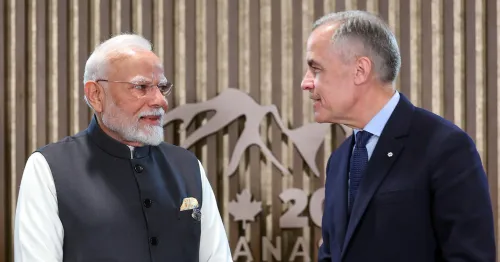
The crackdown follows a bilateral meeting between PM Narendra Modi and PM Mark Carney in New Delhi .
Intelligence Bureau officials warn that Babbar Khalsa International (BKI) , backed by Pakistan's ISI , may attempt a major attack in Punjab out of desperation.
Hindu temples in Canada have faced vandalism, anti-India graffiti, and terrorist imagery — incidents formally raised by India with Ottawa .
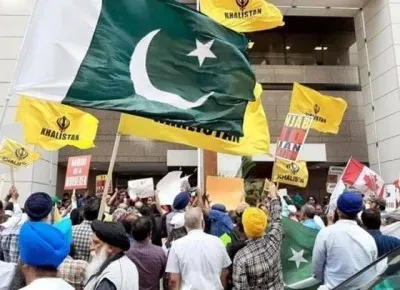
Canadian security agencies have significantly tightened the operating space for pro-Khalistan elements following a bilateral meeting between Prime Minister Narendra Modi and his Canadian counterpart Prime Minister Mark Carney in New Delhi. Intelligence officials say the coordinated pressure is now reverberating inside Pakistan's Inter-Services Intelligence (ISI), which has long relied on Canada-based networks to keep the Khalistan movement alive.
Key Developments Since the Modi-Carney Meeting
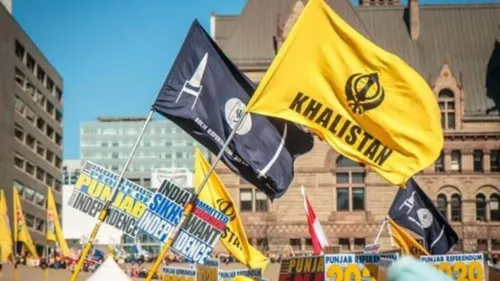
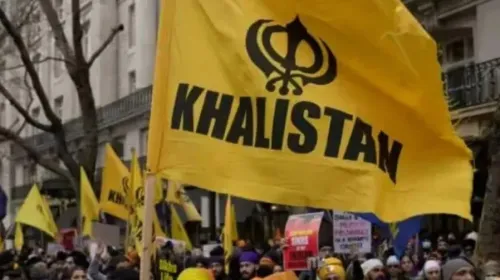
A string of measures by Ottawa has followed the bilateral talks. The most significant is the passage of the Combating Hate Act (Bill C-9), which is set to come into force on 18 July. The legislation is expected to bar Khalistani elements from staging protests outside places of worship — a practice that has repeatedly drawn protests from the Hindu community in Canada, whose temples have been vandalised with anti-India graffiti and images of designated terrorists.
Separately, the Canadian Security Intelligence Service (CSIS) explicitly attributed the 23 June 1985 bombing of Air India Kanishka Flight 182 to Canada-based Khalistani extremists — a direct and unambiguous attribution that the agency had, according to officials, avoided in recent years. The bombing killed 329 people and remains the deadliest terrorist attack in Canadian history.
What the Government Said
Canada's Minister of Justice and Attorney General Sean Fraser said after the bill's passage: 'As hate continues to rise in Canada, communities have been calling for stronger protections against hate crimes. Those protections are now law. We've seen synagogues struck by gunfire, places of worship vandalised or burned, and people being targeted in their own communities. That is unacceptable. We cannot allow that kind of hate to become normal in Canada. These changes will help people worship and gather safely in their own communities, while supporting law enforcement with clearer tools to respond.'
An Indian official noted that previous Canadian governments had been reluctant to act against such elements, frequently citing freedom of expression. The current government, the official said, has recognised that the violence is now a domestic law-and-order problem — not merely a bilateral irritant with India.
ISI Frustration and the BKI Threat
An Intelligence Bureau (IB) official told reporters that the India-Canada convergence is directly frustrating the ISI's Khalistan agenda. Outfits such as Babbar Khalsa International (BKI), reportedly tasked by the ISI with launching operations inside Punjab, are said to be under severe operational pressure.
Notably, officials warn that this frustration carries its own risk. The IB official cautioned that Khalistani elements, cornered and desperate, could attempt a major misadventure in Punjab or neighbouring states. Low-intensity strikes are currently ongoing, described by officials as a strategy to keep the movement visible. However, agencies believe the ISI may push the BKI toward a higher-impact attack to demonstrate continued relevance.
Impact on Communities and What Comes Next
For the Hindu community in Canada, the Combating Hate Act represents a meaningful legal shield after years of temple vandalism and intimidation. Devotees had complained of terrorist imagery being displayed outside temples and anti-India slogans scrawled on walls — incidents that India had formally raised with Ottawa on multiple occasions.
Intelligence agencies are urging vigilance in Punjab even as diplomatic progress accelerates. The coming weeks — particularly around the 18 July commencement of Bill C-9 — will test whether the legislative and intelligence cooperation translates into sustained operational pressure on Khalistani networks, or whether desperation triggers an escalation on Indian soil.
Point of View
Given how carefully that agency had previously hedged on Khalistani culpability. But the intelligence warning about a Punjab misadventure deserves more attention than the diplomatic wins. Cornered extremist networks with ISI backing are historically most dangerous precisely when their international operating space shrinks. The question is whether India's internal security apparatus in Punjab is calibrated for a potential escalation, not just the diplomatic momentum in Ottawa.
NationPress
24 Sept 2026
Frequently Asked Questions
What is Canada's Combating Hate Act (Bill C-9) and how does it affect Khalistani groups?
The Combating Hate Act (Bill C-9) is a Canadian law set to take effect on 18 July that strengthens protections against hate crimes. It is expected to bar Khalistani elements from protesting outside places of worship such as Hindu temples, which have repeatedly been targeted with vandalism and anti-India graffiti in Canada.
What did CSIS say about the 1985 Air India Kanishka bombing?
The Canadian Security Intelligence Service (CSIS) explicitly attributed the 23 June 1985 bombing of Air India Kanishka Flight 182 to Canada-based Khalistani extremists. Indian officials noted this is a notably direct attribution, as the agency had avoided such explicit language in recent years.
Why are Indian intelligence agencies warning of a Punjab misadventure?
Intelligence Bureau officials warn that as Canada clamps down on Khalistani networks, ISI-backed outfits like Babbar Khalsa International (BKI) may attempt a major attack in Punjab or neighbouring states out of desperation. Low-intensity strikes are already ongoing, and agencies believe the ISI could push for a higher-impact operation to keep the movement relevant.
How has the Modi-Carney bilateral meeting changed India-Canada relations on Khalistan?
The meeting between PM Narendra Modi and PM Mark Carney in New Delhi marked a turning point, with Canada subsequently passing anti-hate legislation, tightening CSIS reporting, and taking a firmer public stance on Khalistani extremism. Officials say previous Canadian governments were reluctant to act, citing freedom of expression, but the new government views the violence as a domestic law-and-order issue.
What is Babbar Khalsa International (BKI) and what role does the ISI play?
Babbar Khalsa International (BKI) is a designated Khalistani extremist outfit that Indian intelligence officials say has been tasked by Pakistan's Inter-Services Intelligence (ISI) with launching operations inside Punjab. According to the Intelligence Bureau, BKI is currently under severe pressure due to the India-Canada security cooperation.