Kanishka bombing: CSIS names Khalistani extremists, validating India's 40-year stand
Synopsis
Forty years after the Kanishka bombing killed 329 people, Canada's CSIS has officially named Canada-based Khalistani extremists as responsible — the clearest acknowledgment yet of what India has argued since 1985. The admission lands amid live diplomatic tensions over Khalistani networks and raises the question of whether Ottawa will now act or stop at words.
Key Takeaways
CSIS officially named Canada-based Khalistani extremists as responsible for the Air India Flight 182 'Kanishka' bombing on 23 June 1985 .
The attack killed all 329 on board, including 268 Canadian citizens , making it the deadliest terrorist attack in Canada's history.
The Major Commission inquiry previously documented CSIS surveillance failures and evidence mishandling in connection with the case.
Talwinder Singh Parmar , a key figure in the plot, evaded justice for years despite Canadian intelligence awareness.
The admission comes amid ongoing diplomatic strain between India and Canada over Khalistani networks and calls for extraditions and asset freezes.
Analysts argue the statement must be followed by concrete steps — prosecutions, asset freezes, and an end to the public glorification of those linked to the attack.
Canada's intelligence agency has formally acknowledged that Canada-based Khalistani extremists were responsible for the 1985 Air India Flight 182 'Kanishka' bombing, which killed all 329 people on board — a belated affirmation of a position India has consistently maintained since 23 June 1985. The statement, issued by the Canadian Security Intelligence Service (CSIS) on the bombing's anniversary, is being described as far more than a symbolic admission.
What CSIS Said
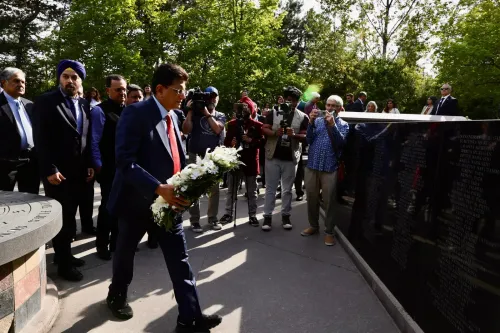
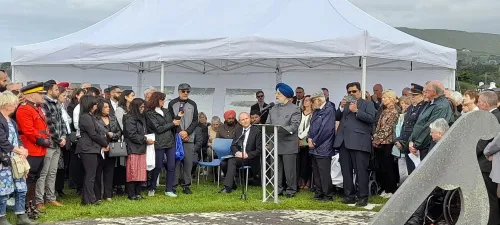
In its National Day of Remembrance for Victims of Terrorism statement, CSIS explicitly named the perpetrators for the first time in an official capacity. 'On June 23, 1985, a bomb planted by Canada-based Khalistani extremists destroyed the aircraft, killing everyone on board — most of them Canadians. It remains the deadliest terrorist attack in Canada's history and a defining moment for our national security community,' the agency stated. Of the 329 killed, 268 were Canadian citizens, many of Indian origin.
Decades of Denial and Documented Failures
According to an analysis published by Khalsa Vox, successive Canadian governments permitted Khalistani extremist groups to operate with relative impunity, sheltering behind frameworks of free speech and multiculturalism. The report cited the Major Commission inquiry, which documented intelligence lapses, surveillance failures, and evidence mishandling by CSIS itself. Talwinder Singh Parmar, identified as a key figure in the plot, evaded justice for years. Families of the victims reportedly waited in vain for full accountability.
The analysis noted that funding flowed to extremist networks, rallies glorified perpetrators, and political expediency — particularly the pursuit of diaspora votes — repeatedly outweighed decisive counter-terrorism action. This 'selective tolerance,' the report argued, strained bilateral relations, hindered extradition efforts, and allowed fringe elements to shape public narratives around Punjab and Sikh identity.
Why the Timing Matters
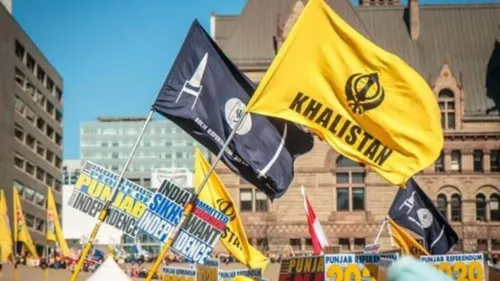
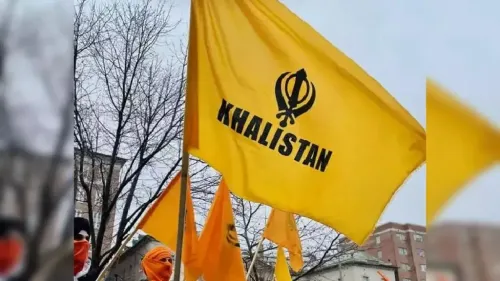
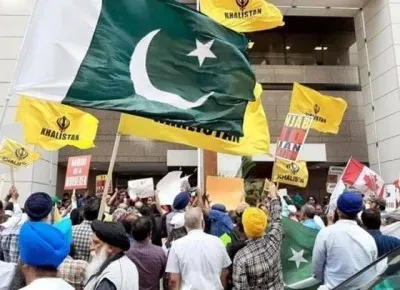
The CSIS statement comes amid heightened scrutiny of Khalistani networks operating on Canadian soil. Canadian intelligence has increasingly flagged these groups as 'national security threats,' citing the diversion of community funds and the exploitation of democratic institutions to further extremist objectives. The acknowledgment is being read, in part, as a response to sustained pressure on Ottawa to confront the domestic roots of transnational terrorism.
Notably, this admission arrives against the backdrop of a prolonged diplomatic strain between India and Canada, which deteriorated sharply in 2023 over allegations related to Khalistani operatives. The Kanishka bombing, the report underscored, should have unified both nations against extremism four decades ago — instead, it became a fault line.
India's Consistent Position
The report highlighted India's consistent cooperation with Canada on counter-terrorism through intelligence sharing and efforts to secure justice for its citizens and diaspora victims. New Delhi has long maintained that the bombing was conceived and executed from Canadian soil by extremists pursuing a violent separatist agenda — a position now formally echoed by Canada's own intelligence establishment.
The Khalsa Vox analysis called for action beyond the press statement: 'True reconciliation demands dismantling support networks, prosecuting remaining suspects, freezing assets, and rejecting the glorification of terrorists in public spaces.' Whether Ottawa translates this acknowledgment into concrete policy steps will determine its actual significance.
Point of View
Asset freezes, and a formal reckoning with the networks that still operate in Canada. If it does not, the statement risks becoming another data point in a long pattern: Canada naming the problem while declining to dismantle it. For India, the vindication is real but incomplete — justice for the 329 remains unfinished business.
NationPress
26 Sept 2026
Frequently Asked Questions
What did CSIS acknowledge about the 1985 Air India Flight 182 bombing?
The Canadian Security Intelligence Service (CSIS) officially stated that Canada-based Khalistani extremists planted the bomb that destroyed Air India Flight 182 on 23 June 1985, killing all 329 people on board. The agency called it the deadliest terrorist attack in Canada's history.
Why is the CSIS statement significant for India?
India has maintained since 1985 that the Kanishka bombing was planned and executed from Canadian soil by Khalistani extremists. The CSIS acknowledgment formally validates that position after more than four decades, lending official Canadian weight to what New Delhi has consistently argued.
Who was Talwinder Singh Parmar and what was his role?
Talwinder Singh Parmar has been identified as a key figure in the Kanishka bombing plot. Despite Canadian intelligence awareness, he evaded justice for years — a failure documented in the Major Commission inquiry into the attack.
What did the Major Commission inquiry find about Canada's handling of the case?
The Major Commission inquiry documented intelligence lapses, CSIS surveillance failures, and evidence mishandling that enabled the plot. It found that warning signs existed but were not acted upon adequately, contributing to the failure to prevent the attack.
What actions are analysts calling for following the CSIS statement?
Analysts and the Khalsa Vox report argue that a press statement is insufficient. They are calling for the dismantling of extremist support networks, prosecution of remaining suspects, freezing of assets linked to Khalistani groups, and an end to the public glorification of those connected to the bombing.