Khalistani groups planning major strike abroad, agencies warn of Kanishka-scale attack
Synopsis
Indian intelligence agencies are not just watching Punjab — they are watching the skies and streets overseas. Officials warn that Babbar Khalsa International, under ISI pressure and facing domestic setbacks, is planning a high-impact strike abroad, with the 1985 Kanishka bombing cited as the operational benchmark. The low-level incidents in Punjab, they say, are the decoy.
Key Takeaways
Indian intelligence agencies have issued a high-level alert on 8 June warning of a planned major Khalistani strike, potentially overseas.
Babbar Khalsa International (BKI) is reportedly planning an operation on the scale of the 1985 Kanishka bombing , which killed all 329 aboard Air India Flight 182.
Recent low-level attacks in Punjab and bomb threats to the Delhi Mayor are assessed as deliberate diversionary tactics.
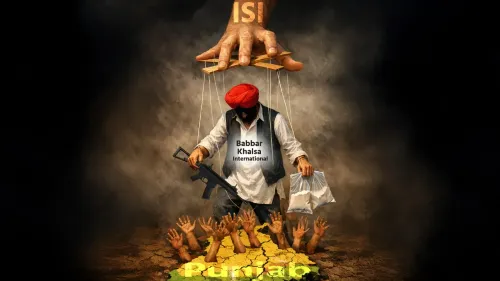
Pakistan's ISI is reportedly pressuring BKI to deliver results after years of sheltering Khalistani operatives who fled India.
A potential attack abroad is also reportedly aimed at disrupting India's diplomatic ties with Canada and the United Kingdom .
Officials describe this as one of the most dangerous phases of the Khalistan movement in recent decades, driven by operational desperation.
Indian intelligence agencies have issued a high-level alert warning of a significant strategic shift in the operations of pro-Khalistan groups, with officials cautioning that the next major attack could target Indian interests overseas rather than within the country. The warning, flagged on 8 June, points to a deliberate pattern of low-intensity diversionary incidents designed to mask preparations for a far larger operation.
The Diversion Strategy
According to an Intelligence Bureau official, recent incidents — including low-level attacks in Punjab and bomb threats directed at the Delhi Mayor — are not ends in themselves. 'The objective is to keep the situation simmering and divert attention, while the actual intent is to execute a much larger operation, potentially on the scale of the Kanishka bombing,' the official said.
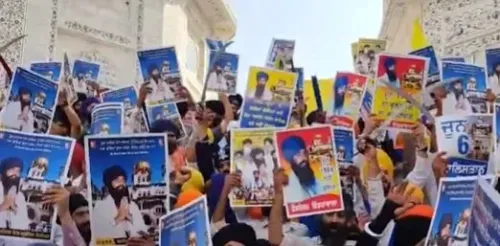
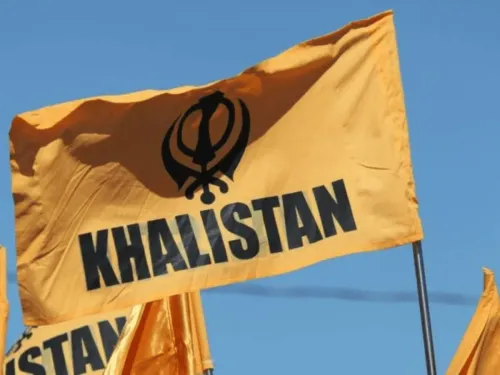
Officials note that unlike the 1980s and 1990s, when Khalistan-linked violence was concentrated in Punjab, the current phase places heavy emphasis on propaganda, international lobbying, and the co-option of criminal networks. Think tanks and pressure groups are reportedly being funded to build a narrative portraying India as failing to protect the human rights of Sikhs, while simultaneously rallying global support for a separate Khalistan state carved out of Punjab.
The Kanishka Benchmark
Officials have specifically invoked the Kanishka bombing of 23 June 1985 as the benchmark for what is being planned. On that date, operatives of the Babbar Khalsa International (BKI) planted a bomb aboard Air India Flight 182, which exploded mid-air off the coast of Ireland, killing all 329 people on board. It remains one of the deadliest acts of aviation terrorism in history.
'The plan is to carry out either a major assassination or a hijack, and even a bombing on the lines of the Kanishka incident,' an official said. The attack, according to intelligence assessments, may not necessarily occur on Indian soil, given that domestic agencies are maintaining close surveillance of known operatives.
Pakistan's ISI and the Pressure to Deliver
Officials say the BKI is operating under mounting pressure from Pakistan's Inter-Services Intelligence (ISI) to produce tangible results. Several Khalistani operatives who fled India after the movement was largely suppressed in the 1990s reportedly found refuge with the ISI, and the Pakistani spy agency is now, according to the intelligence assessment, seeking a return on that long-term support.
This pressure, combined with setbacks on multiple fronts — failed recruitment drives in Punjab, narcotics shipments being intercepted by agencies, and a propaganda campaign that has not gained the anticipated traction among Sikhs in Punjab — has left Khalistani outfits in what officials describe as a state of 'growing desperation.' That desperation, they warn, raises the risk of a high-impact operation aimed at reasserting relevance.
Overseas Targets and Diplomatic Disruption
The threat assessment extends beyond physical attacks. According to officials, BKI-linked operatives have been tasked with targeting Indian interests abroad and have already been linked to intimidation directed at members of the Indian diaspora. Gangsters have allegedly been recruited to keep security agencies stretched across multiple fronts simultaneously.
Notably, one official stated that a potential overseas attack is also being planned with the specific intent of derailing India's diplomatic ties with Canada and the United Kingdom — two countries with large Sikh diaspora populations where Khalistani sympathisers have maintained an organised presence. Agencies have flagged this as one of the most dangerous phases of the Khalistan movement in recent decades.
What Agencies Are Watching
Intelligence and security agencies are maintaining heightened surveillance on Punjab while simultaneously tracking the international coordination networks of these groups. Officials warn that the combination of ISI backing, diaspora financing, gangster networks, and a deliberate diversion strategy makes the current threat environment qualitatively different from earlier phases. The coming weeks are expected to be a period of elevated vigilance for both domestic and overseas Indian security infrastructure.
Point of View
Potentially, the capability exist for mass-casualty terrorism. What is striking is the explicit acknowledgement that the threat has migrated offshore, which reflects a broader failure: years of ISI-sponsored exile have allowed BKI to reconstitute outside India's enforcement reach. The diplomatic dimension — targeting ties with Canada and the UK — also reveals a sophisticated political objective beyond violence alone. The real question is whether India's overseas intelligence and diplomatic infrastructure is calibrated for a threat that is simultaneously kinetic, propagandistic, and geopolitically targeted.
NationPress
19 Sept 2026
Frequently Asked Questions
What is the Khalistani threat that Indian agencies have warned about?
Indian intelligence agencies have warned that pro-Khalistan groups, particularly the Babbar Khalsa International (BKI), are planning a major high-impact operation targeting Indian interests abroad, potentially on the scale of the 1985 Kanishka bombing. Officials say recent low-level incidents in Punjab are deliberate diversionary tactics to distract security agencies from the larger plan.
What was the Kanishka bombing?
The Kanishka bombing occurred on 23 June 1985, when BKI operatives planted a bomb on Air India Flight 182, which exploded mid-air off the coast of Ireland, killing all 329 people on board. It remains one of the deadliest acts of aviation terrorism in history and is now being cited by officials as the benchmark for what Khalistani groups are allegedly planning.
What role is Pakistan's ISI playing in the current Khalistan threat?
According to the intelligence assessment, Pakistan's ISI has sheltered several Khalistani operatives since the movement was suppressed in India in the 1990s and is now reportedly pressuring BKI to deliver tangible results. Officials say this pressure, combined with setbacks in Punjab, has pushed Khalistani outfits into a state of growing desperation that raises the risk of a high-impact strike.
Why are Canada and the United Kingdom specifically mentioned as concerns?
Officials have stated that a potential overseas attack is being planned partly with the intent of derailing India's diplomatic ties with Canada and the United Kingdom, both of which have significant Sikh diaspora populations where Khalistani sympathisers have maintained an organised presence. The attack is assessed as having a dual purpose — causing harm and triggering a diplomatic crisis.
How are Khalistani groups conducting their current operations?
Beyond low-level attacks in Punjab, pro-Khalistan groups are reportedly funding think tanks and pressure groups to build international narratives, organising referendums, recruiting gangsters to stretch security agencies across multiple fronts, and tasking operatives with intimidating members of the Indian diaspora abroad. Officials describe the current phase as heavily propaganda-driven compared to the 1980s-90s cycle of direct violence.