Pakistan-linked networks fuelling Khalistan extremism abroad: Report
Synopsis
A Khalsa Vox report published on 15 June lays out how Pakistan-linked networks are deliberately keeping Khalistan separatism alive in overseas communities — using historical grievances, disinformation, and the aftermath of a UK murder as leverage. The report argues this is hybrid warfare, not ideology, and that the mainstream Sikh community is its primary victim.
Key Takeaways
A Khalsa Vox report published on 15 June warns that Pakistan-linked networks are actively sustaining Khalistani extremism in overseas Sikh communities.
The Khalistani separatist movement has been eradicated within India's Punjab but persists among certain diaspora groups abroad.
The report links the discourse pivot to 1984 and Operation Blue Star to external actors seeking political relevance and financial leverage.
Following the killing of Henry Nowak in Southampton , mainstream UK Sikh leaders condemned the act; the Nowak family appealed for communal restraint.
The report characterises Pakistan's approach as hybrid warfare — sustaining historical grievances to impede India's national cohesion.
It calls on Sikh communities to prioritise integration, condemn violence, and reject the weaponisation of the past.
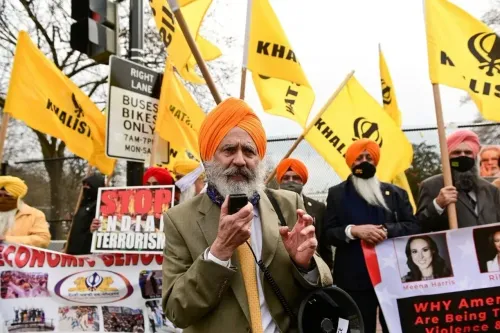
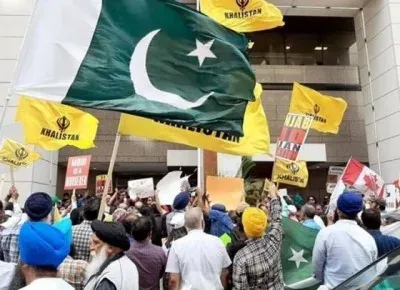
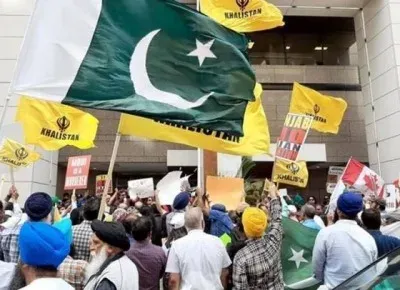
Pakistan-backed networks are actively sustaining Khalistani extremist sentiment among certain overseas Sikh communities, according to a report published by Khalsa Vox, even as the separatist movement has been effectively dismantled within India's Punjab. The report, flagged on 15 June, argues that nostalgic narratives, disinformation, and deliberate interference by Pakistan-linked actors are keeping a fringe ideology alive far from its country of origin.
Pakistan's Proxy Strategy
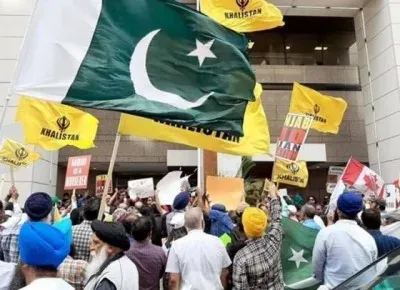
According to the report, Pakistan has for decades deployed proxy groups as instruments of pressure against India, backing militants and stoking separatist sentiment as part of a broader hybrid-warfare doctrine aimed at destabilising the neighbourhood. The report characterises this as a calculated effort to impede the deeper national cohesion that has underpinned India's emergence as a major power.
The strategy, it argues, is not ideological sympathy but strategic utility — sustaining historical grievances to keep a wound open that Pakistan itself inflicted through decades of covert support to armed groups.
The UK Sikh Community and the Nowak Killing
The report draws a direct line between this external manipulation and events in Britain. Following the killing of Henry Nowak in Southampton, the mainstream Sikh community in the UK reportedly offered swift and unequivocal condemnation, with community leaders emphasising that the act was that of a single individual and should not be attributed to any faith or community. The Nowak family itself appealed for restraint, urging the public not to allow a tragic murder to become a flashpoint for communal tension.
Yet, the report notes, parts of the public discourse rapidly pivoted to 1984 — invoking Operation Blue Star, longstanding demands for inquiries into Britain's alleged advisory role, and what it describes as a 'familiar cycle of grievance.' The report questions why an entire community should remain anchored in a past that certain actors exploit for political relevance, financial support, and leverage.
Conflating Sikh Identity With Separatism
'Conflating mainstream Sikh pride with Khalistani separatism does immense disservice to the community. True Sikh ethos, rooted in Guru Nanak's universal message and Guru Gobind Singh's call for dharma, aligns with justice within a pluralistic India, not ethno-religious balkanization,' the Khalsa Vox report stated.
The report argues that for some actors abroad, the Khalistan issue serves as a distraction from more pressing contemporary concerns — including integration in Western societies, radicalisation on the fringes, and the need to unequivocally condemn violence, whether in the name of faith or grievance.
The Fringe Versus the Future
'Those who weaponise it to divide Sikhs from India, or Sikhs from their neighbours, do no service to Guru's legacy,' the report stated, adding that 'the fringe that clings to division grows smaller every day. The future belongs to those who choose progress over perpetual grievance.'
The report concluded with a call for India and its Sikh community to move jointly toward what it termed Viksit Bharat — a developed, harmonious nation — with the past informing rather than imprisoning the present. As diaspora communities across the West grapple with questions of identity and belonging, the report's central argument is that external actors exploiting those tensions pose a risk not just to India but to the cohesion of Sikh communities themselves.
Point of View
But who is funding and amplifying that grievance and to what end. The conflation of Sikh cultural pride with separatist politics is not accidental; it is the mechanism. What the report does not fully address is the legitimate space for diaspora communities to seek accountability for 1984 without being co-opted by separatist networks — a distinction that India's own diplomatic posture has historically struggled to make.
NationPress
22 Sept 2026
Frequently Asked Questions
What does the Khalsa Vox report say about Khalistan extremism abroad?
The Khalsa Vox report, flagged on 15 June, states that Khalistani extremism persists in certain overseas Sikh communities sustained by nostalgic narratives, disinformation, and active support from Pakistan-linked networks. It argues the movement has been eradicated within India's Punjab but is being kept alive externally as a tool of hybrid warfare.
How is Pakistan linked to Khalistan extremism overseas?
According to the report, Pakistan has for decades used proxy groups to back militants and stoke separatist sentiment against India. The report describes this as a broader strategy to create unrest and impede India's national cohesion, characterising it as hybrid warfare rather than ideological support.
What was the Sikh community's response to the Henry Nowak killing in Southampton?
The mainstream Sikh community in the UK reportedly offered swift and unequivocal condemnation of the killing, stressing it was the act of a single individual not attributable to any faith or community. The Nowak family itself appealed for restraint and urged the public not to allow the murder to fuel communal tensions.
How does the report distinguish between Sikh identity and Khalistani separatism?
The report states that conflating mainstream Sikh pride with Khalistani separatism does 'immense disservice' to the community, arguing that true Sikh ethos — rooted in Guru Nanak's universal message — aligns with justice within a pluralistic India, not ethno-religious separatism.
What does the report say about the use of 1984 and Operation Blue Star in current discourse?
The report notes that parts of the UK public discourse pivoted sharply to 1984 and Operation Blue Star following the Nowak killing, describing this as a 'familiar cycle of grievance' exploited by certain actors for political relevance and financial support rather than genuine community interest.