Rajnath Singh honours soldiers at Sikkim war memorial on Diwali
Synopsis
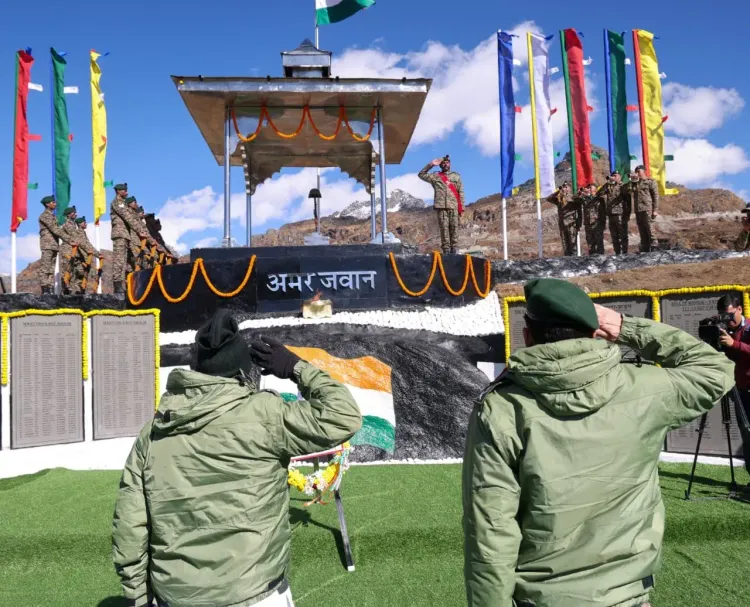
Union Defence Minister Rajnath Singh visited the Sherathang War Memorial in Sikkim on Diwali, paid homage to fallen soldiers, and met troops deployed in the high-altitude forward sector, calling jawans 'diyas' who spread the light of security to every Indian home.
Key Takeaways
Rajnath Singh visited the Sherathang War Memorial in Sikkim on Diwali, November 8, 2026 .
He paid homage to soldiers who made the supreme sacrifice in the line of duty.
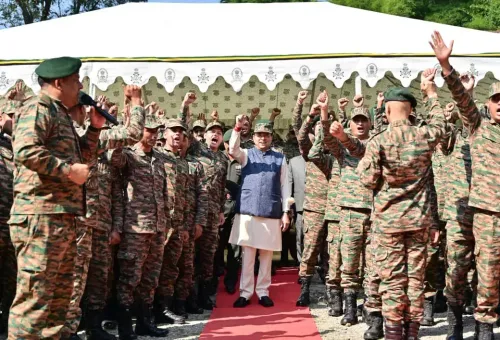
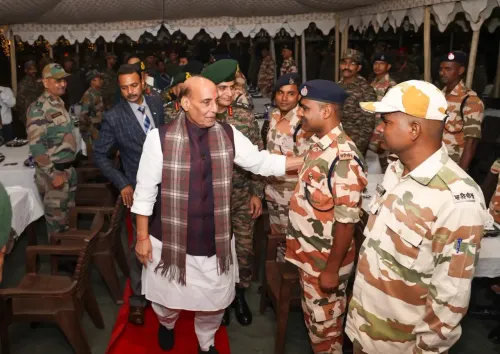
Singh met and interacted with troops deployed in a 'forward and challenging sector' along the border.
He described jawans as ' diyas ' — silently fighting darkness and spreading the light of security across the country.
The visit is part of a recurring tradition of senior defence leadership marking Diwali at forward posts and memorials.
He extended Diwali wishes to all border personnel and their families.
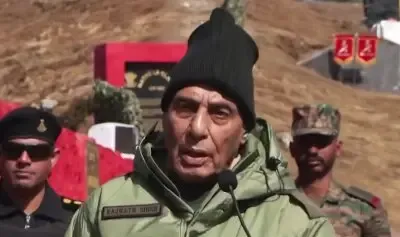
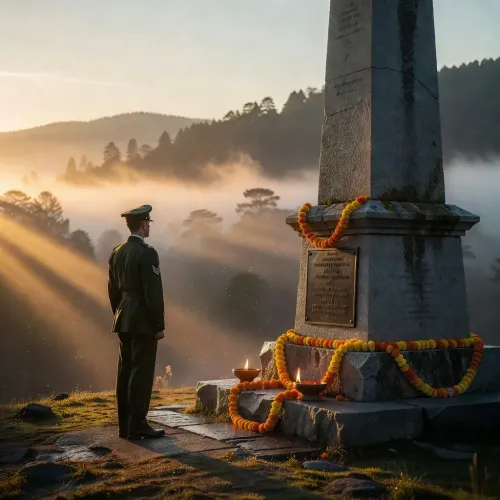
On a Diwali morning in the high Himalayas, Union Defence Minister Rajnath Singh stood at the Sherathang War Memorial in Sikkim and paid homage to the soldiers whose names are etched in stone there — a solemn gesture that turned one of India's most celebratory days into a moment of quiet reckoning with sacrifice.
A tribute at Sherathang, where the mountains keep the memory
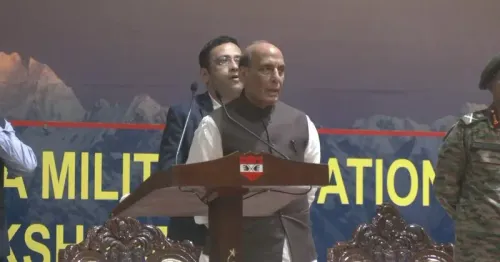
The Sherathang War Memorial sits in Sikkim's forward sector, a region of extreme altitude, brutal weather, and active deployment. Singh's visit on Sunday, November 8, 2026 followed a tradition that senior defence officials have maintained over the years — marking Diwali not in drawing rooms but at the front, among the men who hold it. Invoking a well-known maxim, he said: 'Monuments are for the living, not the dead — they stand to continuously inspire us and awaken our national pride.'
The sentiment was deliberate. A war memorial in a forward sector is not a museum; it is a living address to those still in uniform, a reminder of the stakes embedded in every rotation, every patrol, every sleepless night at altitude.
Meeting troops deployed in a 'forward and challenging sector'
Beyond the memorial ceremony, Singh met and spoke with jawans deployed in what he described as a 'forward and challenging sector' — the kind of language that signals proximity to the border without disclosing operational specifics. Sikkim shares a sensitive boundary with China, and its high-altitude posts demand year-round deployment in conditions that can drop to extreme sub-zero temperatures.
Singh reached for a Diwali metaphor that landed with force: 'Our jawans are like diyas themselves, silently fighting the darkness and spreading the light of security to every home in the country.' The image — the small earthen lamp against the dark — mapped cleanly onto soldiers who serve without fanfare in terrain most Indians will never see. He added that 'their unflinching vigil, boundless patriotism, and high morale burn brighter than a thousand lamps.'
Why these Diwali visits to the border carry weight beyond ceremony
Senior leadership visits to border posts during Diwali have become a fixture in India's civil-military calendar. They serve a dual purpose: they signal to troops that their deployment is seen and valued, and they remind the public that the festival's lights reach places far beyond the city skyline. For a Defence Minister, arriving at a memorial in Sikkim rather than attending a formal reception in New Delhi is itself a statement — one that requires no press release to land.
Singh closed by wishing 'all our brave personnel serving on the borders and their families a very Happy and Prosperous Diwali' — extending the gesture to families at home, who observe their own version of a soldier's Diwali: one lamp lit, one chair empty, one phone call hoped for.
The diyas burn at Sherathang. The names on the memorial do not change. But the living who read them carry those names forward — and that, the Defence Minister suggested, is the whole point.
Point of View
Given its proximity to the China border, adds a layer of strategic subtext to what is formally a ceremonial visit. The 'jawans as diyas' framing is rhetorically shrewd: it domesticates the soldier's sacrifice into the festival's most universal image, widening the emotional reach of the gesture well beyond the defence establishment. These visits rarely produce policy announcements but consistently shape the public narrative around civil-military relations.
NationPress
8 Nov 2026
Frequently Asked Questions
Where is the Sherathang War Memorial located?
The Sherathang War Memorial is located in Sikkim, in India's eastern Himalayas, and is dedicated to Indian soldiers who were killed in action while serving in the region.
Why did Rajnath Singh visit Sikkim on Diwali 2026?
Union Defence Minister Rajnath Singh visited Sikkim on Diwali to pay homage to fallen soldiers at the Sherathang War Memorial and to meet troops deployed in the high-altitude forward sector, continuing a practice of senior officials spending the festival with border personnel.
What did Rajnath Singh say about Indian soldiers on Diwali?
Singh called jawans 'diyas' — small lamps that silently fight darkness and spread the light of security to every home in the country — and said their vigil, patriotism, and morale 'burn brighter than a thousand lamps.'
Is it common for the Defence Minister to visit border posts on Diwali?
Yes, senior defence officials visiting war memorials and forward posts during Diwali has become a recurring ceremonial practice, intended to boost troop morale and publicly acknowledge ongoing deployments in difficult terrain.
Which border does Sikkim share that makes it a sensitive military zone?
Sikkim shares a border with China, making it a strategically sensitive zone with active high-altitude military deployments year-round.