UCC in Assam: Congress MP Rakibul Hussain seeks clarity on implementation
Synopsis
Congress MP Rakibul Hussain's position on the UCC is more nuanced than the BJP's framing suggests — he invokes Ambedkar to argue the principle is sound, but insists the Assam government owes communities a clear, detailed framework before implementation. It is a careful political tightrope, and it signals that the UCC debate in Assam is far from settled.
Key Takeaways
Congress MP Rakibul Hussain from Dhubri, Assam stated on 14 May that the Congress is not opposed to the UCC principle but demands clarity on its implementation.
Hussain traced the UCC debate to discussions held during the time of Jawaharlal Nehru and B.R.
Ambedkar , arguing the concept is not new.
He raised concerns about the impact on tribal groups and religious minorities who follow customary social and legal practices.
Hussain accused the BJP of misrepresenting the Congress position and using the UCC for political polarisation ahead of elections.
The UCC debate in Assam is intensifying under Chief Minister Himanta Biswa Sarma 's government, with opposition parties and civil society organisations voicing concerns.
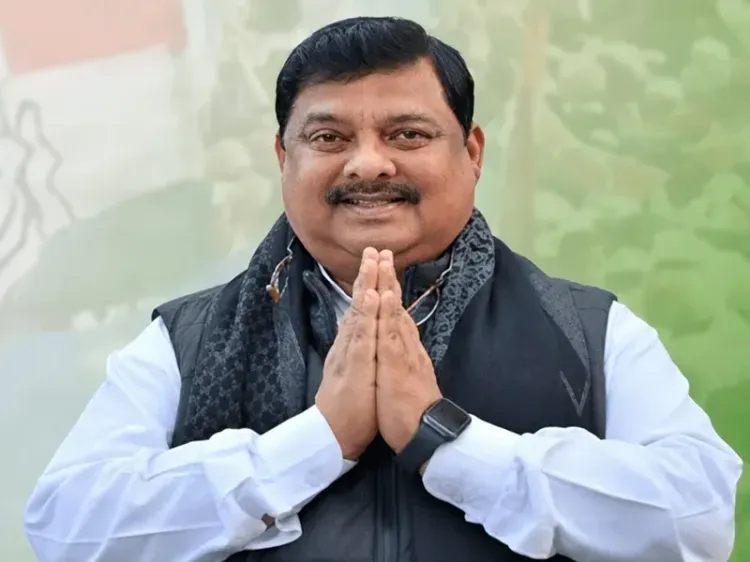
Congress MP from Dhubri, Rakibul Hussain, on Thursday, 14 May said the Indian National Congress was not opposed to the principle of a Uniform Civil Code (UCC) but raised pointed questions about its framing and implementation, particularly in the context of Assam. Hussain's remarks came amid a sharpening political battle over the proposed UCC rollout under Chief Minister Himanta Biswa Sarma's Bharatiya Janata Party (BJP) government.
What Hussain Said
Speaking to reporters in Guwahati, Hussain argued that the concept of a common civil law was far from new, tracing its lineage to debates held during the tenure of India's first Prime Minister Jawaharlal Nehru and Constitution architect B.R. Ambedkar. He noted that Ambedkar, while serving as Law Minister, had articulated the need for uniformity in certain civil laws and had championed the broader reform principle behind such a move.
'We need to examine the intention and the framework behind the UCC. The debate should not be reduced to slogans alone,' Hussain said.
Concerns Over Communities and Customary Practices
The Dhubri MP stressed that several communities — including tribal groups and religious minorities — maintained their own customary practices and social systems. He argued these needed careful consideration before any uniform legislation was introduced. Hussain also pointed to inheritance and property rights, noting that many Muslim families in Assam already extend property rights to daughters and women through established social and religious practices, suggesting that blanket reform may not account for existing ground realities.
Congress Pushes Back on BJP's Framing
Hussain alleged that the BJP and the Assam government were deliberately misrepresenting the Congress position, portraying the party as wholly opposed to the UCC. He rejected this characterisation.
'The All India Congress Committee has not rejected discussions on legal reforms. But there has to be clarity on what exactly is being proposed and how it will impact different communities,' he said.
He further accused the BJP of deploying the UCC issue as a tool for political polarisation ahead of elections — a charge the ruling party has not publicly addressed.
The Broader Debate in Assam
The political temperature around the UCC in Assam has been rising steadily. The BJP has been a vocal backer of the move, framing it as a step toward national integration and gender equality. Opposition parties and several civil society organisations, however, have raised concerns about its potential impact on cultural and religious practices, particularly those of indigenous and minority communities.
Notably, Assam would join a short list of states actively pursuing UCC implementation — a process that remains contested at the national level as well. The Congress's nuanced stance — neither outright rejection nor endorsement — reflects the party's attempt to navigate a politically sensitive issue without alienating either reform-minded or community-rights constituencies.
How the Sarma government responds to demands for a detailed framework will likely define the next phase of this debate.
Point of View
Precisely, would an acceptable UCC framework look like for the party? Until that is spelled out, the BJP's polarisation charge will find traction regardless of Hussain's historical citations.
NationPress
21 Sept 2026
Frequently Asked Questions
What is the Congress party's stand on the Uniform Civil Code in Assam?
Congress MP Rakibul Hussain clarified on 14 May that the party is not opposed to the principle of the UCC but has demanded clarity on its framework and implementation. The All India Congress Committee has not rejected legal reform discussions, but insists communities must understand how the code will affect them before it is enacted.
Why did Rakibul Hussain invoke B.R. Ambedkar in the UCC debate?
Hussain cited Ambedkar's tenure as Law Minister to argue that the idea of uniform civil laws is not a new or exclusively BJP-driven concept. He noted that Ambedkar had himself spoken about the need for uniformity in certain civil laws, using the reference to counter the BJP's framing of Congress as being categorically against the UCC.
What concerns has the Congress raised about UCC implementation in Assam?
The Congress has flagged the potential impact on tribal communities and religious minorities who follow customary practices and social systems. Hussain also pointed out that many Muslim families in Assam already extend property rights to women through existing religious and social norms, questioning whether a blanket uniform code accounts for these realities.
What is the BJP's position on the UCC in Assam?
The BJP, led by Chief Minister Himanta Biswa Sarma, has strongly backed the UCC in Assam, framing it as a step toward national integration and gender equality. The party has accused the Congress of being completely opposed to the measure, a characterisation Hussain has rejected.
How significant is the UCC debate in Assam's political landscape?
The UCC has become a major flashpoint in Assam politics, with opposition parties, civil society groups, and tribal organisations raising concerns about its cultural and religious implications. Assam would be among a very small number of states to actively pursue UCC implementation, making the outcome closely watched at the national level as well.