Lalan Singh Hits Back at Rahul Gandhi Over PM VGSY
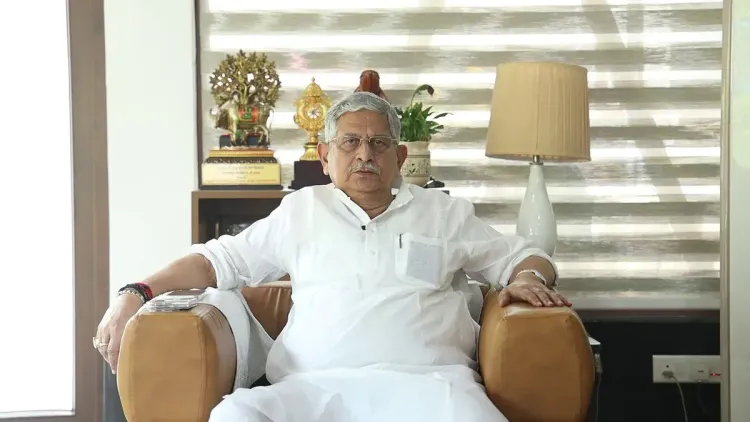
Synopsis
Union Minister Rajiv Ranjan Singh rebuked Rahul Gandhi on 6 November 2026, defending PM VGSY — a Panchayat training scheme using EPIC and Aadhaar biometrics to verify trainees and block middlemen from misusing welfare delivery.
Key Takeaways
Union Minister Lalan Singh publicly accused Rahul Gandhi of 'distorting facts' about central government welfare delivery on 6 November 2026 .
The Pradhan Mantri Viksit Gram Swaraj Yojana (PM VGSY) targets training and capacity-building for every eligible Panchayat representative and associated individuals.
Trainee identity will be verified through a dual layer: EPIC number and biometric Aadhaar authentication , specifically to exclude middlemen.
PM VGSY extends the lineage of the Rashtriya Gram Swaraj Abhiyan (2018) and the broader Direct Benefit Transfer architecture built after 2014.
Parliamentary scrutiny of PM VGSY coverage and rollout is expected during the upcoming winter session .
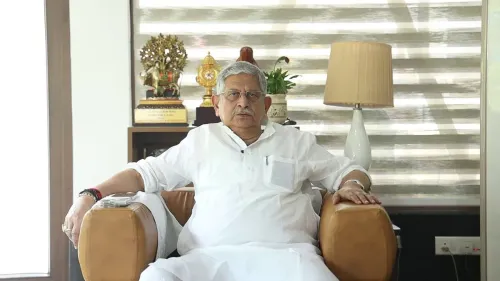
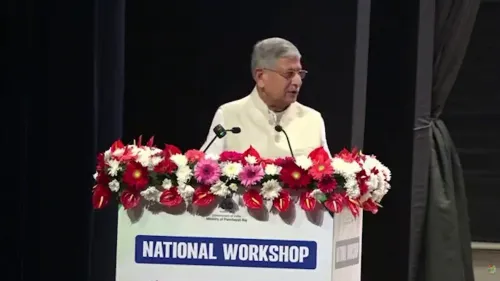
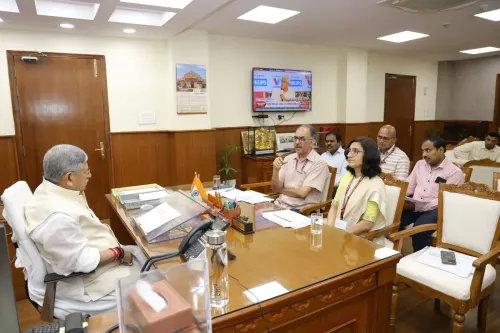
A sharp political exchange over rural welfare delivery landed in the public domain on Friday, 6 November 2026, when Union Panchayati Raj and Fisheries Minister Rajiv Ranjan Singh — popularly known as Lalan Singh — fired back at Congress leader Rahul Gandhi, accusing him of 'mastering the art of distorting facts' over the government's approach to Panchayat-level benefit delivery.
What sparked the clash — and what the minister is defending
Singh's post is a direct rebuttal to criticism from Rahul Gandhi, who has been a consistent voice against the central government's digital-mandate-heavy welfare architecture. The minister's response centres on the Pradhan Mantri Viksit Gram Swaraj Yojana (PM VGSY), a scheme designed to provide structured training and capacity-building to every eligible Panchayat representative and individuals associated with a Panchayat across the country.
At the heart of the scheme's design is an identity-verification layer: trainees will be authenticated using their EPIC number (Electors' Photo Identity Card) alongside biometric-based Aadhaar authentication. The logic is explicit — verify who is actually being trained, and close the door on anyone attempting to game the system in a representative's name.
The direct-benefit architecture behind PM VGSY
PM VGSY sits within a broader governance tradition that stretches back to the Rashtriya Gram Swaraj Abhiyan, launched in 2018 to strengthen Panchayati Raj Institutions through training and e-governance support. The new scheme extends that logic into the era of mandatory Aadhaar-linked verification — a standard that has been applied progressively across central welfare programmes since the expansion of the Direct Benefit Transfer architecture after 2014.
The dual-layer check — EPIC plus Aadhaar biometrics — is precisely the kind of mechanism the ministry argues eliminates middlemen. A ghost trainee cannot clear a fingerprint scan. That is the government's answer to allegations of leakage at the Panchayat level.
Why the opposition pushes back — and why it keeps mattering
Opposition criticism of Aadhaar-linked mandates has been a recurring feature of Indian political debate since the mid-2010s. Rahul Gandhi and the Congress have questioned whether digital authentication requirements exclude genuine rural beneficiaries — the elderly, the poor connectivity zones, those with biometric failures — rather than only the fraudulent. That tension, between anti-leakage rigour and last-mile accessibility, is the real fault line in this exchange.
Singh's framing places the government squarely on the side of 'genuine beneficiaries' and frames any criticism as fact-distortion — a combative but familiar posture ahead of what could be a pointed parliamentary interrogation during the upcoming winter session, where PM VGSY's coverage and rollout will almost certainly draw scrutiny.
What to watch as PM VGSY takes shape
Ministry of Panchayati Raj notifications on training schedules and official guidelines for PM VGSY will be the first real test of whether the scheme's identity-verification design holds up at scale. Parliamentary questions during the winter session are expected to press on coverage numbers and whether biometric authentication failures are creating exclusion at the village level.
The minister has drawn the battle line clearly. Now the scheme's implementation will have to prove him right — village by village, fingerprint by fingerprint.
Point of View
The Ministry of Panchayati Raj is signalling that digital verification will deepen, not retreat, at the village governance level. The Congress critique, meanwhile, threads a genuine policy needle: Aadhaar biometric failures and rural connectivity gaps are documented exclusion risks that cannot simply be dismissed as fact-distortion. How PM VGSY handles last-mile authentication failures will determine whether this exchange is a footnote or a flashpoint by the time the winter session opens.
NationPress
6 Nov 2026
Frequently Asked Questions
What is the Pradhan Mantri Viksit Gram Swaraj Yojana (PM VGSY)?
PM VGSY is a central government scheme aimed at providing essential training and guidance to every eligible Panchayat representative and individuals associated with a Panchayat, using EPIC number and Aadhaar biometric authentication to verify trainee identities.
Why did Lalan Singh criticise Rahul Gandhi?
Union Minister Rajiv Ranjan Singh, known as Lalan Singh, accused Rahul Gandhi of distorting facts about how the government ensures welfare benefits reach genuine beneficiaries, specifically in defence of PM VGSY's design and verification mechanism.
How does Aadhaar authentication work in PM VGSY?
Under PM VGSY, each trainee's identity is verified through two layers — their EPIC (Electors' Photo Identity Card) number and a biometric Aadhaar scan — to ensure only genuine Panchayat representatives and eligible individuals receive training, with no scope for middlemen to misuse the system.
What was the Rashtriya Gram Swaraj Abhiyan?
The Rashtriya Gram Swaraj Abhiyan was launched in 2018 to strengthen Panchayati Raj Institutions through training and e-governance support; PM VGSY is seen as an extension of that capacity-building mission with added digital verification safeguards.
What is the Congress criticism of Aadhaar-linked welfare schemes?
Congress, led by Rahul Gandhi, has argued that mandatory Aadhaar-biometric requirements risk excluding genuine rural beneficiaries — particularly those facing biometric failures or poor internet connectivity — from welfare programmes, a concern the government contests.