Amit Shah: Tribal communities exempt from UCC under Modi govt
Synopsis
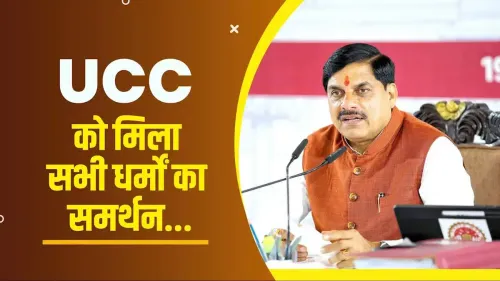
Union Home Minister Amit Shah on 24 May 2026 posted on X asserting that PM Modi has kept tribal communities outside the Uniform Civil Code, calling on people not to be swayed by misinformation. The statement underscores the BJP's long-standing position of advancing UCC while safeguarding tribal customary practices under constitutional protections.
Key Takeaways
Amit Shah stated on 24 May 2026 that tribal communities have been kept outside the Uniform Civil Code by the Modi government .
The post directly addressed what Shah called 'confusion or misleading claims' circulating about the UCC's applicability to tribal groups.
The Uniform Civil Code is a Directive Principle under Article 44 of the Indian Constitution and a long-standing BJP manifesto commitment.
The Fifth Schedule of the Constitution and various state laws already provide special protections to Scheduled Tribes for customary practices.
States with large tribal electorates — Jharkhand , Chhattisgarh , and Odisha — are key arenas where the UCC debate has political salience.
The key legislative test remains whether any UCC bill in Parliament explicitly codifies tribal exemptions in statutory language.
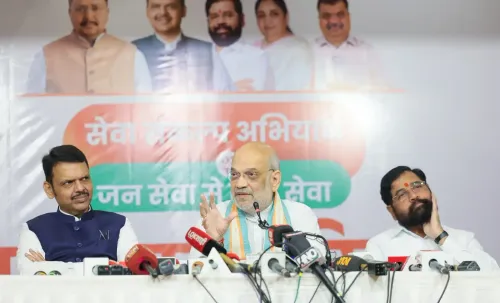
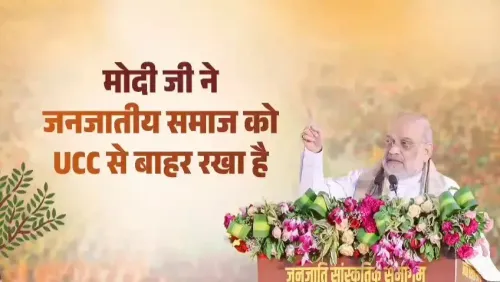
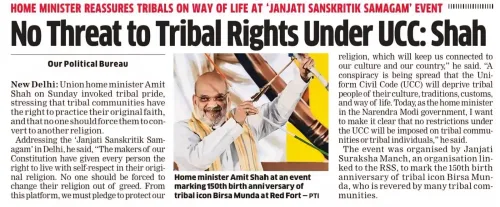
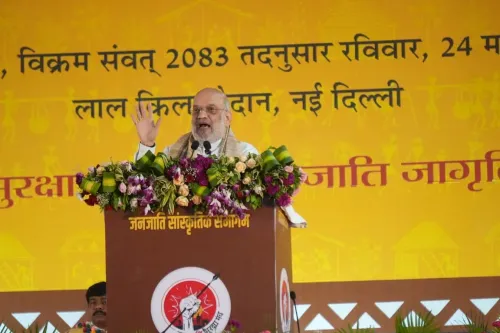
Union Home Minister Amit Shah on Sunday, 24 May 2026 took to X to directly address what he described as misinformation circulating about the Uniform Civil Code, asserting that Prime Minister Narendra Modi has kept tribal communities outside the ambit of the proposed legislation.
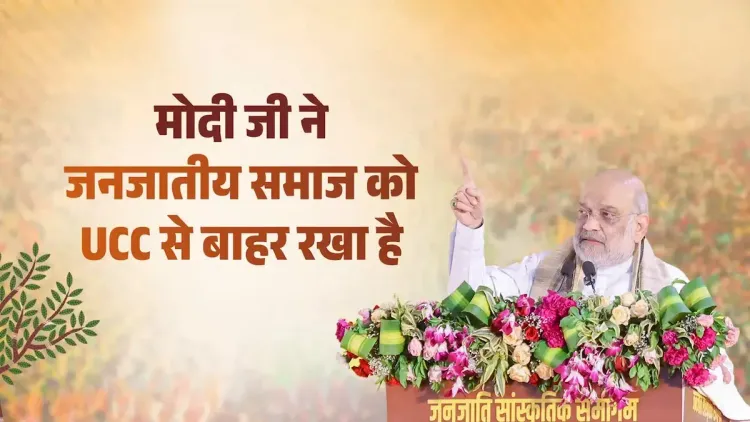
Shah's post in Hindi read: 'Modi ji ne janjatiya samaj ko UCC se bahar rakha hai, kisi ke bhram ya bahkave mein na aayen.' ['Modi ji has kept the tribal community outside the UCC; do not fall prey to anyone's confusion or misleading claims.'] The message was a pointed appeal to tribal citizens to disregard what the Home Minister characterised as deliberate misinformation.
Context
The Uniform Civil Code (UCC) proposes a common framework of civil laws — governing marriage, divorce, inheritance, and adoption — to replace the patchwork of religion-based personal laws currently in force across India. Article 44 of the Indian Constitution lists UCC as a Directive Principle of State Policy, directing the state to 'endeavour to secure' such a code for all citizens.
The Bharatiya Janata Party (BJP) has carried the UCC as a flagship commitment in its 2014 and 2019 national election manifestos. As the debate around its implementation has intensified, questions about the code's applicability to Scheduled Tribes — who follow distinct customary laws — have become a key flashpoint in states with large tribal populations.
Policy Backdrop
The Fifth Schedule of the Constitution grants special protections to tribal areas and communities, and various state laws additionally recognise customary practices among indigenous groups. The 21st Law Commission of India, in its 2018 consultation paper on family law reforms, acknowledged the complexity of applying uniform civil laws across India's diverse communities.
The BJP's calibrated position — advancing legal uniformity while signalling exemptions for tribal communities — has been consistently articulated in regions such as Jharkhand, Chhattisgarh, and Odisha, where tribal electorates form a decisive political constituency. Shah's post reiterates this position at a moment when the UCC debate appears to be generating fresh anxiety among tribal groups.
Stakeholders and Impact
India's Scheduled Tribe population, which numbers in the crores and is spread across central, eastern, and north-eastern states, has historically been protected by customary law provisions that govern land rights, inheritance, and community practices. Any perceived threat to these protections carries significant social and political weight.
Opposition parties and civil society groups have periodically raised concerns that a nationally enacted UCC could override tribal customs despite assurances to the contrary. Shah's intervention appears aimed at pre-empting such narratives before they take root, directly addressing tribal citizens rather than speaking through intermediaries.
What's Next
The immediate legislative watch is on whether a UCC bill is introduced in Parliament and whether its text explicitly codifies tribal exemptions — a step that would give legal force to the assurances being communicated politically. State-level debates in Jharkhand, Chhattisgarh, and Odisha are also likely to intensify as the UCC discussion advances. How the government translates Shah's political assurance into enforceable statutory language will determine whether tribal communities' concerns are durably addressed or remain a recurring point of contestation.
Point of View
Signalling that the BJP is acutely aware of the electoral sensitivity of the UCC debate in states like Jharkhand, Chhattisgarh, and Odisha. By invoking Modi's personal authority on the exemption, the party is trying to insulate itself from opposition messaging that frames UCC as a threat to tribal identity and customary rights. The durability of this assurance, however, will ultimately depend on whether the exemption is written into binding statutory text rather than communicated through social media posts. Until that happens, the gap between political promise and legislative reality remains a vulnerability the opposition is likely to exploit.
NationPress
8 Oct 2026
Frequently Asked Questions
Are tribal communities exempt from the Uniform Civil Code in India?
Union Home Minister Amit Shah stated on 24 May 2026 that PM Modi has kept tribal communities outside the UCC. However, a formal statutory exemption would need to be written into any UCC legislation passed by Parliament.
What is the Uniform Civil Code and why does it matter for tribal communities?
The Uniform Civil Code is a proposed common set of civil laws — covering marriage, divorce, inheritance, and adoption — meant to replace religion-based personal laws. Tribal communities follow distinct customary practices recognised under the Fifth Schedule of the Constitution, making their inclusion or exclusion a sensitive legal and political question.
What does Article 44 of the Indian Constitution say about UCC?
Article 44 is a Directive Principle of State Policy that directs the state to 'endeavour to secure' a Uniform Civil Code for all citizens. It is not a justiciable right but a constitutional goal successive governments have been expected to pursue.
Why did Amit Shah post about UCC and tribal communities?
Shah's post addressed what he described as misinformation or misleading claims circulating about the UCC's impact on tribal communities, urging people not to be confused or misled. The post appears aimed at reassuring tribal citizens ahead of anticipated legislative or political developments.
Which states have large tribal populations affected by the UCC debate?
Jharkhand, Chhattisgarh, and Odisha are among the states with substantial Scheduled Tribe populations where the UCC debate carries significant political and social weight. North-eastern states, which have their own constitutional protections, are also closely watched in this context.