Giriraj Singh backs Amit Shah's UCC tribal assurance
Synopsis
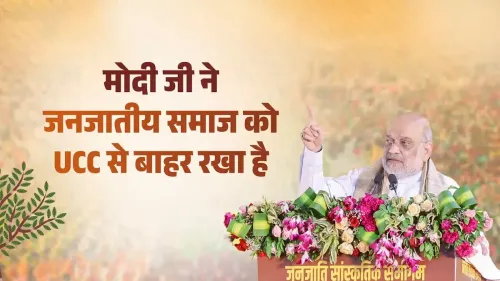
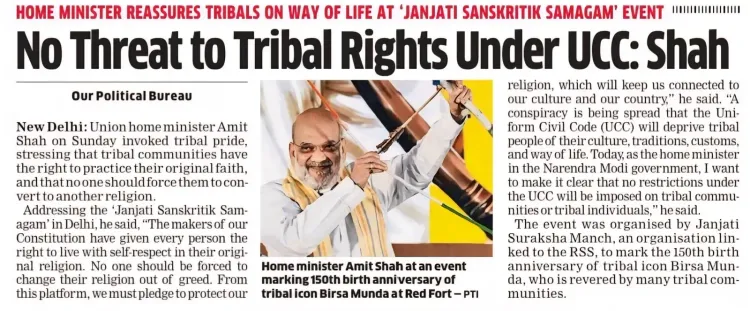
Union Textiles Minister Giriraj Singh backed Home Minister Amit Shah's pledge at the Janjati Sanskritik Samagam in New Delhi that the Uniform Civil Code will leave tribal culture, traditions, and rights untouched — reinforcing the BJP's dual message of national integration and Adivasi protection.
Key Takeaways
Giriraj Singh publicly endorsed Amit Shah 's assurance at the Janjati Sanskritik Samagam in New Delhi on 25 May 2026 .
Shah assured tribal communities that the Uniform Civil Code (UCC) will not harm Adivasi culture, traditions, or rights.
Uttarakhand enacted India's first state-level UCC in 2024 , with explicit exemptions for Scheduled Tribe customary practices — a likely national template.
The BJP has committed to UCC in every election manifesto since 2014 , consistently pairing it with tribal-protection guarantees under Article 44 .
The messaging aligns with BJP campaigns such as #VikasBhiVirasatBhi and #SabkaSaathSabkaVikas , framing development and cultural heritage as complementary goals.
Formal consultations with the National Commission for Scheduled Tribes are being watched as the next key step toward any national UCC legislation.
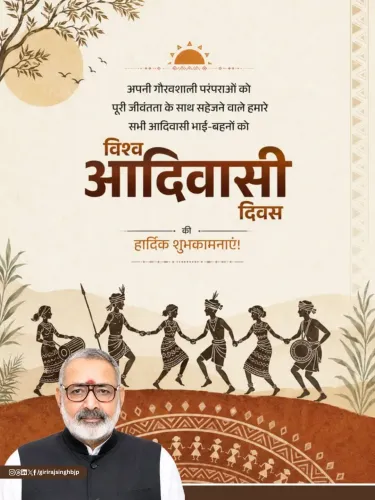
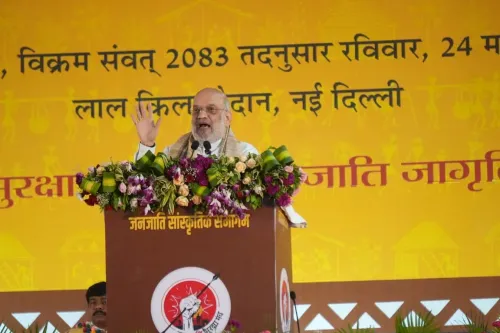
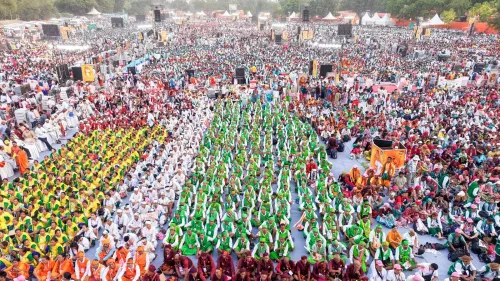
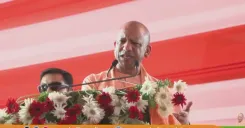
Union Textiles Minister Giriraj Singh on Monday, 25 May 2026 amplified Union Home Minister Amit Shah's assurance to tribal communities that the proposed Uniform Civil Code will not disturb Adivasi culture, traditions, or rights. Singh shared the remarks made at the 'Janjati Sanskritik Samagam' (Tribal Cultural Gathering) held in New Delhi, endorsing the BJP government's dual pledge of national integration and cultural protection.
Context
The Janjati Sanskritik Samagam brought together tribal representatives in New Delhi, where Home Minister Amit Shah addressed concerns about the Uniform Civil Code's potential impact on Scheduled Tribe customary practices. Singh, in his post, quoted the assurance that 'aadivasi bhai-bahanon ki sanskriti, paramparaon aur adhikaron par koi aanch nahi aayegi' — 'no harm will come to the culture, traditions, and rights of tribal brothers and sisters.'
Singh added that 'our own culture is the identity of our roots, connecting us to the glory of history and providing a strong foundation for national progress.' He framed the BJP government's position with the phrase 'sabka saath, sabka vikas' — 'together with all, development for all' — as a commitment to respecting every community's heritage.
Policy Backdrop
The Uniform Civil Code is a directive principle under Article 44 of the Indian Constitution, calling for a unified set of personal laws governing marriage, divorce, inheritance, and adoption across religions and communities. The BJP has included its enactment in every election manifesto since 2014, consistently coupling the commitment with explicit promises to protect tribal customary law.
Uttarakhand became the first Indian state to pass a UCC law in 2024, and its legislation included provisions that explicitly exempted Scheduled Tribe practices from the code's ambit — establishing a legislative precedent that the BJP now cites in reassuring Adivasi groups nationally. The hashtags #VikasBhiVirasatBhi ('Development as well as Heritage') and #EkBharatShreshthaBharat used in Singh's post are part of a coordinated BJP communication framework pairing progress with cultural identity.
Stakeholders and Impact
India's Scheduled Tribes constitute approximately 8.6 per cent of the population and have historically maintained distinct customary laws on matters of marriage, land inheritance, and community governance. Tribal advocacy groups and Opposition parties have repeatedly flagged concerns that a nationwide UCC could override these protections, making the BJP's public reassurances at events such as the Janjati Sanskritik Samagam politically significant.
By amplifying Amit Shah's statement, senior leaders like Giriraj Singh — a Lok Sabha MP from Begusarai, Bihar and a prominent voice within the party — signal that the tribal-protection message is a pan-leadership consensus, not confined to the Home Ministry alone. Bihar and Jharkhand, states with substantial Adivasi populations, are key constituencies where such messaging carries electoral weight.
What's Next
The immediate question is whether the Central Government will introduce a national UCC bill in Parliament and what formal mechanisms — such as consultations with the National Commission for Scheduled Tribes or tribal advisory councils — will be built into the process. The Uttarakhand model's tribal exemption clause is likely to serve as a template, but its adequacy remains contested among Adivasi rights organisations.
How the government translates its public assurances into statutory safeguards within a national UCC framework will determine whether tribal communities and their political representatives move from cautious acceptance to active support for the legislation.
Point of View
A state with significant Adivasi and OBC constituencies — the party is broadening the reassurance beyond the Home Ministry to signal collective cabinet ownership. This mirrors the Uttarakhand playbook, where statutory tribal exemptions were built in before the law passed, suggesting the Centre may pursue a similar route nationally. The strategy reveals that tribal consent, or at least tribal non-opposition, is seen as a prerequisite before any UCC bill is tabled in Parliament.
NationPress
12 Oct 2026
Frequently Asked Questions
Will the Uniform Civil Code apply to tribal communities in India?
The BJP government has repeatedly assured that tribal customary laws on marriage, inheritance and culture will be protected under any national UCC. Uttarakhand's 2024 UCC law, the first in India, explicitly exempts Scheduled Tribe practices and is considered a likely template for central legislation.
What is the Janjati Sanskritik Samagam?
The Janjati Sanskritik Samagam is a tribal cultural gathering organised in New Delhi where government leaders engage with Adivasi communities. At the 2026 event, Home Minister Amit Shah addressed concerns about the Uniform Civil Code's impact on tribal rights.
What did Amit Shah say about UCC and tribal rights?
Amit Shah assured tribal communities at the Janjati Sanskritik Samagam that the Uniform Civil Code will not harm the culture, traditions, or rights of Adivasi brothers and sisters.
What is the BJP's position on UCC and tribal communities?
The BJP has committed to enacting a Uniform Civil Code in every election manifesto since 2014 under Article 44 of the Constitution, while explicitly promising that tribal customary practices will be safeguarded through specific legal exemptions.
Why is Giriraj Singh commenting on UCC and tribal issues?
As a senior BJP leader and Union Minister, Giriraj Singh regularly amplifies key party positions. His endorsement of Amit Shah's tribal assurance signals that the UCC-with-tribal-protection message is a unified cabinet stance, not just the Home Ministry's position.