Amit Shah to Address 550+ Tribal Communities at Delhi Samagam
Synopsis
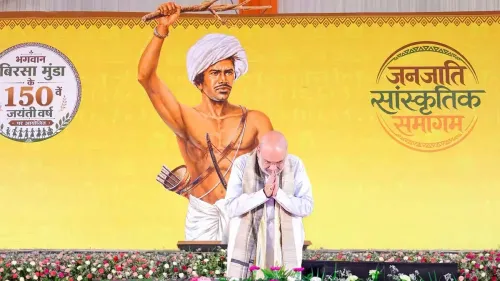
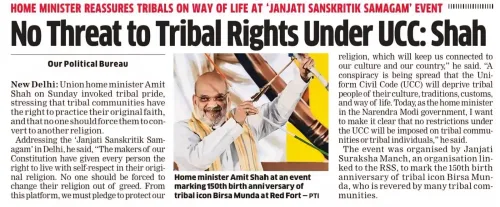
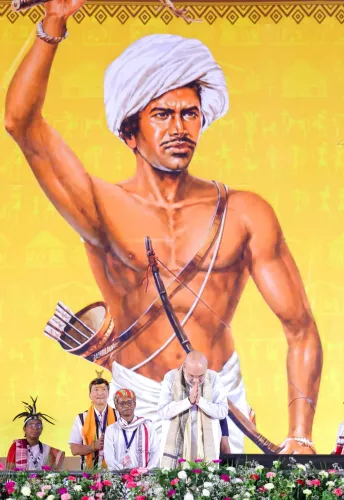
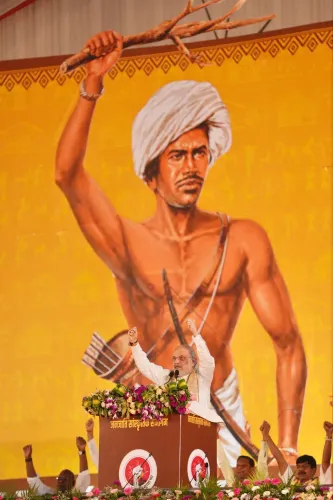
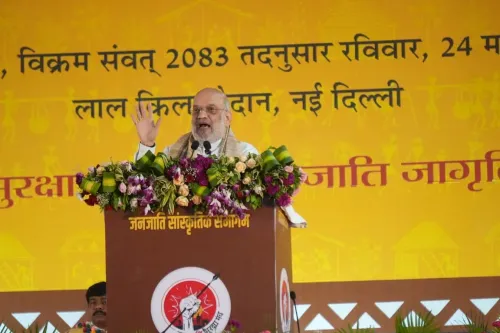
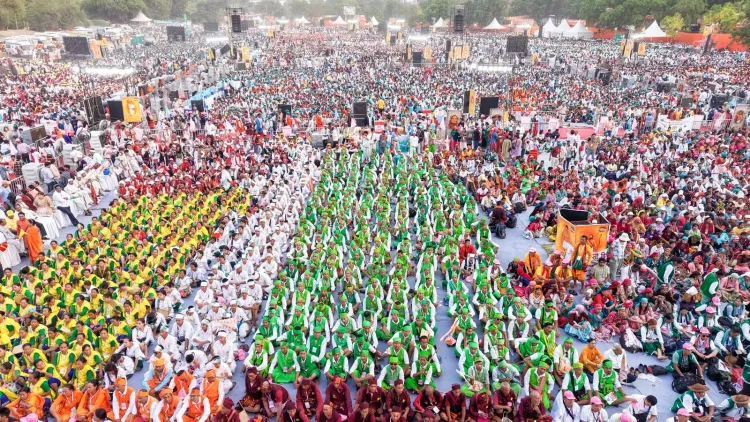
Union Home Minister Amit Shah addressed the Janjati Sanskritik Samagam in New Delhi on 24 May 2026, speaking to representatives from more than 550 tribal communities across India — one of the largest national-level tribal cultural gatherings at the capital in recent years.
Key Takeaways
Union Home Minister Amit Shah addressed the Janjati Sanskritik Samagam in New Delhi on 24 May 2026 .
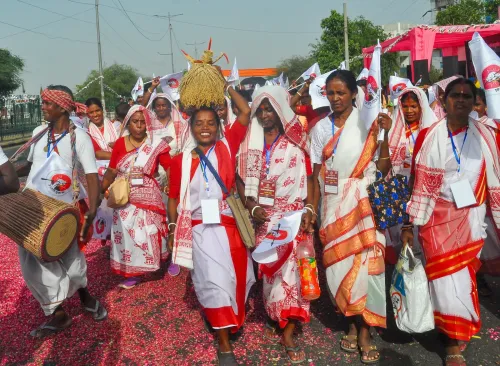
The samagam brought together representatives from more than 550 tribal communities from across India.
India officially recognises over 700 Scheduled Tribe communities spread across every region of the country.
The Ministry of Tribal Affairs , established in 1999 , oversees welfare, development and cultural programmes for Scheduled Tribes.
The event follows a pattern of national tribal cultural gatherings that includes the Aadi Mahotsav festival series (launched 2017 ) and the annual Janjatiya Gaurav Divas (instituted 2021 ).
Observers will watch for any announcements on cultural-preservation grants or revisions to tribal welfare schemes.
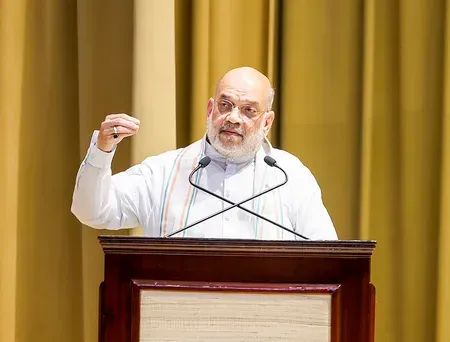
Union Home Minister Amit Shah announced on Sunday, 24 May 2026, that he was set to address the 'Janjati Sanskritik Samagam' in New Delhi, a cultural congregation bringing together representatives from more than 550 tribal communities drawn from across India.
Context
Shah posted on X that he would shortly be attending the samagam to address 'sisters and brothers from more than 550 tribal communities from different parts of India.' The gathering is among the larger national-level cultural assemblies organised to bring tribal representatives from India's diverse Scheduled Tribe communities to the capital in a single forum.
India is home to more than 700 Scheduled Tribe communities, recognised under the Constitution and spread across every region of the country — from the northeastern highlands to the forests of central India and the coastal communities of the Andaman Islands.
Policy Backdrop
The event fits within a policy lineage that spans more than two decades. The Ministry of Tribal Affairs, established in October 1999, was created specifically to give focused, coordinated attention to the welfare, development and cultural preservation of Scheduled Tribe communities. Since then, successive central administrations have periodically organised national-level cultural gatherings as a complement to legislative and programmatic interventions.
On the legislative side, the Scheduled Tribes and Other Traditional Forest Dwellers (Recognition of Forest Rights) Act, 2006 recognised tribal communities' rights over forest land — a landmark measure that remains central to tribal policy discourse. More recently, the central government instituted Janjatiya Gaurav Divas in 2021 as an annual observance to honour tribal freedom fighters and promote indigenous cultural heritage. The 'Aadi Mahotsav' national tribal festival series, launched in 2017, has similarly brought tribal art, craft and culture to major Indian cities.
Events like the Janjati Sanskritik Samagam sit at the intersection of these two tracks — publicly recognising distinct tribal cultural identities while reinforcing the Centre's engagement with Scheduled Tribe organisations and communities.
Stakeholders and Impact
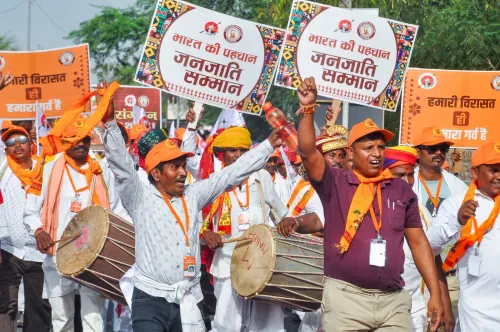
The congregation draws representatives from tribal communities across multiple states and union territories, making it a rare moment of pan-India tribal cultural visibility at the national capital. For Scheduled Tribe organisations and community leaders, such samagams offer a platform to engage directly with senior Union government figures and signal policy priorities.
Shah's presence as Union Home Minister — one of the most senior members of the Union Cabinet — lends the gathering significant political weight. Observers will watch closely for any announcements on cultural-preservation grants, revisions to tribal welfare schemes, or new programmatic commitments that may be signalled from the stage.
What's Next
The immediate focus will be on Shah's address to the assembled tribal representatives and whether the samagam produces any formal policy announcements or declarations. Any follow-up commitments on tribal cultural preservation funding or scheme revisions would be tracked by the Ministry of Tribal Affairs and Scheduled Tribe welfare bodies. The event also sets a marker ahead of future observances, including the annual Janjatiya Gaurav Divas cycle.
Point of View
Signalling that tribal cultural identity has a place at the Centre's table. The event also reinforces the government's Janjatiya Gaurav Divas framework, which repositions tribal heritage as a matter of national pride rather than purely a welfare concern. Whether the samagam translates into concrete policy announcements will determine its lasting significance beyond the optics of the gathering.
NationPress
15 Oct 2026
Frequently Asked Questions
What is the Janjati Sanskritik Samagam?
The Janjati Sanskritik Samagam is a national-level cultural congregation that brings together representatives from tribal communities across India for a collective cultural and policy engagement event, held in New Delhi.
How many tribal communities were represented at the Delhi samagam in May 2026?
More than 550 tribal communities from different parts of India were represented at the Janjati Sanskritik Samagam addressed by Union Home Minister Amit Shah on 24 May 2026.
What is Janjatiya Gaurav Divas?
Janjatiya Gaurav Divas is an annual observance instituted by the central government in 2021 to honour tribal freedom fighters and promote indigenous cultural heritage across India.
What is the Ministry of Tribal Affairs?
The Ministry of Tribal Affairs is a central government ministry established in October 1999 to provide focused coordination of welfare, development and cultural programmes for India's Scheduled Tribe communities.
What is the Aadi Mahotsav tribal festival?
Aadi Mahotsav is a national tribal festival series launched in 2017 by the central government to showcase tribal art, craft and culture in major Indian cities, organised under the Ministry of Tribal Affairs.