Mahua Moitra urges Wangchuk to end fast, back Ladakh youth
Synopsis
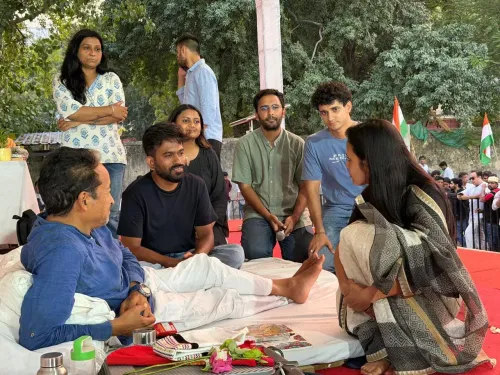
TMC MP Mahua Moitra on 14 July 2026 publicly urged Ladakhi activist Sonam Wangchuk to call off his fast, saying it had already united India's youth for justice while warning the government appears indifferent to his life and the aspirations of crores of young Indians.
Key Takeaways
Mahua Moitra , TMC Lok Sabha MP from Krishnanagar , appealed to Sonam Wangchuk on 14 July 2026 to end his ongoing fast.
Moitra said the fast had already 'united this country's youth in their war for justice,' arguing its symbolic goal had been achieved.
She accused the government of being indifferent to Wangchuk 's life and the futures of 'crores of youth.' Wangchuk has led campaigns for Ladakh 's statehood and Sixth Schedule tribal protections since the region became a legislature-less Union Territory in 2019 .
The appeal reflects a broader Opposition pattern of extending solidarity to activists pressing for autonomy in reorganised Union Territories.
The next critical juncture is whether the Home Ministry agrees to formal talks with Ladakh representatives on statehood and tribal safeguards.
TMC MP Mahua Moitra on Tuesday, 14 July 2026, publicly appealed to Ladakhi activist and engineer Sonam Wangchuk to call off his ongoing fast, saying his life matters even if the government does not appear to value it or the aspirations of crores of young Indians.
Context
In her post addressed directly to Wangchuk, the Krishnanagar MP wrote: 'Your fast has united this country's youth in their war for justice. Your goal is reached. Govt doesn't care about your life or that of crores of youth. But your life matters to us. Pls call off fast and continue the fight.'
The appeal frames the fast as having already achieved its symbolic purpose — rallying young Indians around a demand for justice — and urges Wangchuk to preserve his health so he can sustain the broader campaign.
Policy Backdrop
Sonam Wangchuk, founder of the Students' Educational and Cultural Movement of Ladakh (SECMOL) and the innovator behind ice stupa water-conservation projects, has been a leading voice demanding statehood and Sixth Schedule tribal protections for Ladakh since the region was carved into a Union Territory without a legislature in 2019 following the revocation of Article 370.
The absence of an elected assembly has left Ladakh governed directly from New Delhi, a structure that local activists and political leaders argue strips residents — particularly youth — of a democratic voice over land, employment, and cultural identity. Demands for Sixth Schedule inclusion would extend constitutional tribal safeguards to the region's indigenous communities.
Stakeholders and Impact
Ladakhi youth have repeatedly mobilised around these twin demands, with Wangchuk emerging as the most prominent national face of the movement. His fasts and climate marches have drawn attention well beyond the region, and Moitra's intervention signals continued Opposition interest in amplifying the issue on a national platform.
Opposition parliamentarians from multiple parties have periodically extended solidarity to activists in reorganised Union Territories pressing for autonomy, using such moments to highlight what they describe as centralised decision-making over Himalayan border regions. Moitra's post fits squarely within that pattern, adding a parliamentarian's public voice to calls for the government to engage with Wangchuk's demands.
What's Next
Attention will now turn to whether the central government responds to the renewed pressure — either through a scheduled meeting between Home Ministry officials and Ladakh representatives, or through a parliamentary statement addressing statehood and Sixth Schedule demands.
If Wangchuk heeds the appeal and ends his fast, the movement's next phase will likely shift back to legislative lobbying and sustained public mobilisation ahead of any formal dialogue with New Delhi. The episode underscores a persistent fault line in post-2019 governance of Ladakh — one that shows no sign of resolution without direct political engagement at the highest level.
Point of View
' she signals that the movement has won the battle for public sympathy even if it has not yet won policy concessions — a framing designed to let Wangchuk step back without appearing to concede defeat. The intervention also keeps Ladakh's unresolved constitutional status visible in the national conversation at a moment when Opposition parties are keen to highlight gaps in the post-2019 reorganisation. Whether it accelerates government engagement or remains a symbolic gesture will depend on whether other parliamentarians and civil society actors sustain the pressure in the weeks ahead.
NationPress
12 Oct 2026
Frequently Asked Questions
Why is Sonam Wangchuk on a fast in 2026?
Sonam Wangchuk has been fasting to press demands for Ladakh's statehood and inclusion under the Sixth Schedule of the Constitution, which would extend tribal protections to the region's indigenous communities. Ladakh has been governed as a Union Territory without a legislature since 2019.
What did Mahua Moitra say about Sonam Wangchuk's fast?
TMC MP Mahua Moitra on 14 July 2026 urged Wangchuk to call off his fast, saying it had already united the country's youth for justice and that his life matters even though the government appears indifferent to it.
What is the Sixth Schedule demand for Ladakh?
The Sixth Schedule of the Indian Constitution provides autonomous governance structures and land protections to tribal communities in certain north-eastern states. Ladakhi activists want the region brought under this schedule to protect indigenous land rights and cultural identity after the 2019 reorganisation.
What happened to Ladakh after Article 370 was revoked?
When Article 370 was revoked in August 2019, Ladakh was bifurcated from Jammu and Kashmir and made a Union Territory without a state legislature, placing it under direct central administration and triggering sustained local protests for statehood.
Which party is Mahua Moitra from and what constituency does she represent?
Mahua Moitra is a Lok Sabha MP from the All India Trinamool Congress (TMC), representing the Krishnanagar constituency in West Bengal.