CM Dhami: Dehradun Science City to be India's innovation hub
Synopsis
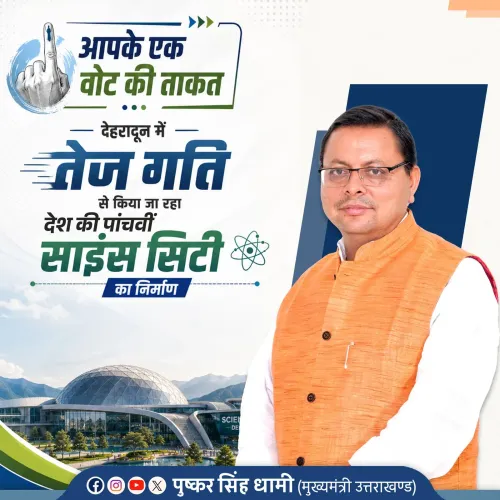
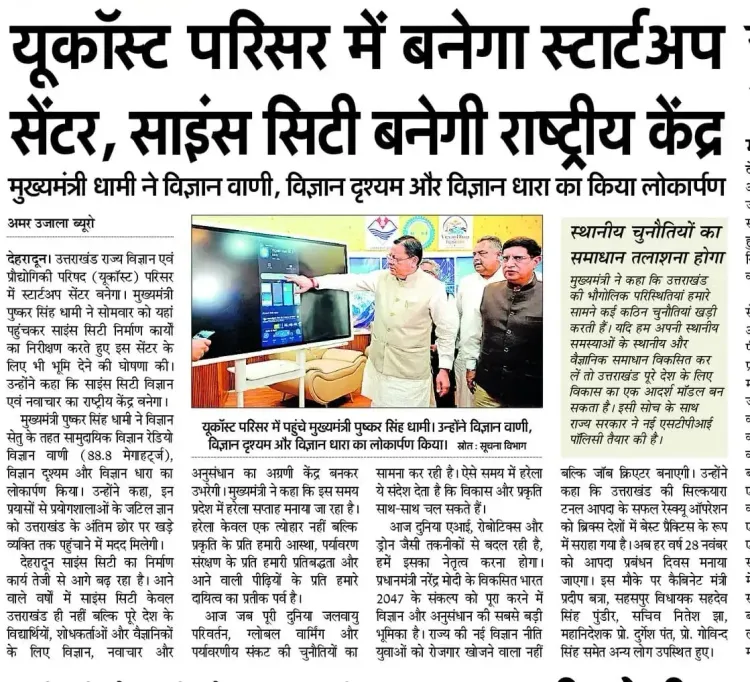
Chief Minister Pushkar Singh Dhami has declared that Dehradun Science City will be developed into India's national centre for science and innovation, building on the city's existing cluster of premier research institutions and Uttarakhand's drive to grow a knowledge-based economy.
Key Takeaways
CM Pushkar Singh Dhami announced on 14 July 2026 that Dehradun Science City will become a national centre for science and innovation.
Dehradun already hosts major scientific bodies including the Forest Research Institute and the Wadia Institute of Himalayan Geology .
The project aligns with the framework of the National Council of Science Museums , which has built science cities across multiple Indian states since 1978 .
Primary beneficiaries include students, researchers, and educators in Uttarakhand and neighbouring hill states.
Key next steps involve central funding approvals, formal MoUs, and a phased construction timeline for the campus.
The initiative is part of Uttarakhand's broader strategy to diversify beyond tourism and hydropower into knowledge-based industries.
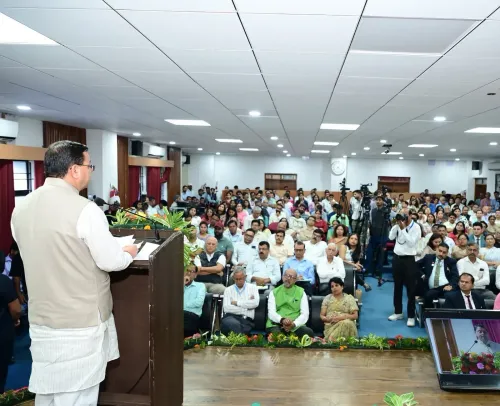
The Chief Minister's Office of Uttarakhand announced on Tuesday, 14 July 2026 that Chief Minister Pushkar Singh Dhami has declared Dehradun Science City will be developed into a national centre for science and innovation, signalling a major push to position the state capital as a knowledge and research destination.
Context
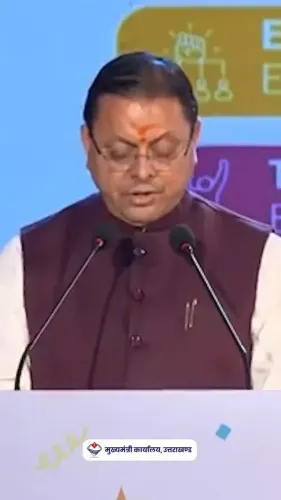
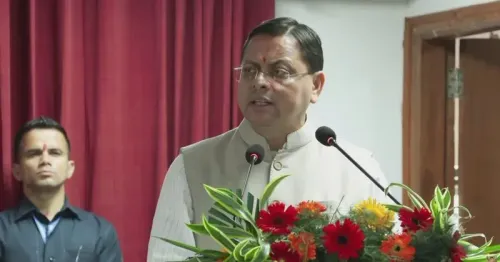
Speaking on the planned project, CM Dhami stated — 'Vigyan aur navachar ka rashtriya kendra banegi Dehradun Science City' ('Dehradun Science City will become the national centre for science and innovation'). The announcement underlines the state government's intent to transform the existing science city proposal into a flagship infrastructure project with national relevance.
Dehradun, the capital of Uttarakhand, already hosts a cluster of premier scientific institutions including the Forest Research Institute and the Wadia Institute of Himalayan Geology, giving the city a natural foundation for an expanded science and innovation ecosystem.
Policy Backdrop
The Dehradun Science City is a planned science museum and public innovation facility designed to promote scientific temper and technology outreach among students, educators, and the wider public. Such projects typically align with the framework of the National Council of Science Museums, an autonomous body established in 1978 under the Union government that has developed science cities in several states across India.
Uttarakhand has consistently sought to diversify its economy beyond its traditional pillars of tourism and hydropower. Successive state administrations have pursued knowledge-based infrastructure projects to leverage the state's existing concentration of research bodies and educational institutions. CM Dhami's declaration fits squarely within this longer policy arc.
Stakeholders and Impact
The primary beneficiaries of the project would be students, researchers, and local educators across Uttarakhand and neighbouring hill states, who currently have limited access to large-scale interactive science infrastructure. A national-level science city in Dehradun could also attract researchers, science communicators, and academic institutions from across the country.
Broader economic spillovers — including employment in construction, operations, and ancillary services — are anticipated for the Dehradun region. The project also aligns with wider national efforts to establish regional science hubs outside major metropolitan centres, reducing the concentration of innovation infrastructure in cities such as Mumbai, Bengaluru, and Delhi.
What's Next
Key milestones to watch include formal approvals for central government funding, potential MoUs with the National Council of Science Museums, and the release of a phased construction timeline for the Science City campus. The state government's ability to secure Union support and private partnerships will be critical to translating the Chief Minister's vision into a ground-level project.
If realised at the scale envisioned, Dehradun Science City could set a precedent for how smaller state capitals leverage existing scientific infrastructure to build nationally significant innovation institutions — a model other hill states may look to replicate.
Point of View
Crucially, the implied ask from New Delhi. The move also fits a recognisable pattern in Uttarakhand politics: using the state's inherited concentration of scientific institutions as leverage to attract fresh public investment. Whether this translates into a funded, time-bound project or remains an aspirational statement will depend almost entirely on the state's success in securing a formal partnership with the National Council of Science Museums and a committed capital outlay.
NationPress
12 Oct 2026
Frequently Asked Questions
What is Dehradun Science City?
Dehradun Science City is a planned science museum and public innovation facility in the Uttarakhand capital, intended to promote scientific awareness and technology education among students, researchers, and the general public.
What did CM Pushkar Singh Dhami say about Dehradun Science City?
CM Dhami stated that Dehradun Science City will become the national centre for science and innovation in India, signalling the state government's intent to develop it as a flagship knowledge infrastructure project.
Which scientific institutions are already in Dehradun?
Dehradun hosts several premier institutions including the Forest Research Institute and the Wadia Institute of Himalayan Geology, giving the city an established base for science and research activities.
What is the National Council of Science Museums and how is it relevant?
The National Council of Science Museums is an autonomous body set up in 1978 under the Union government that has developed science cities in multiple Indian states; similar projects typically require its involvement for planning and funding.
What are the next steps for the Dehradun Science City project?
Key milestones include securing central government funding approvals, signing formal MoUs with relevant Union bodies such as the National Council of Science Museums, and finalising a phased construction timeline for the campus.