CM Dhami Launches Uttarakhand STI Policy 2026

Synopsis
Uttarakhand's Chief Minister Pushkar Singh Dhami has released the state's Science, Technology and Innovation Policy-2026, targeting AI, blockchain, drones and traditional knowledge integration. The policy mandates a state advisory body, STI units across departments, science cities, AI labs and a digital research data repository to position Uttarakhand as a national STI hub.
Key Takeaways
The Uttarakhand Science, Technology and Innovation Policy-2026 was formally released on 10 June 2026 by the Department of IT, Good Governance and Science Technology.
The policy covers emerging technologies including AI, blockchain, robotics, drones, AR, VR and MR .
A state-level advisory body and a state-level coordination committee will be constituted for implementation and oversight.
STI units are to be established across government departments, public sector undertakings, private companies and startups.
Infrastructure to be set up includes science cities, AI laboratories, Atal Tinkering Labs, planetariums and a Science, Technology and Innovation Observatory .
Research data from publicly funded projects will be digitally stored and made accessible under the 'One Nation, One Subscription' framework.
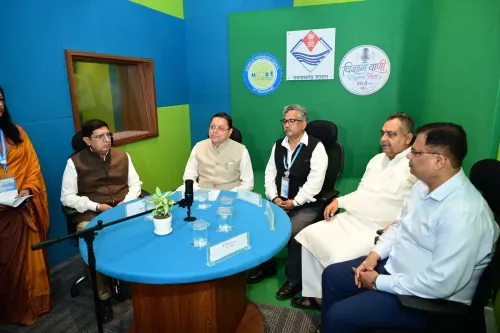
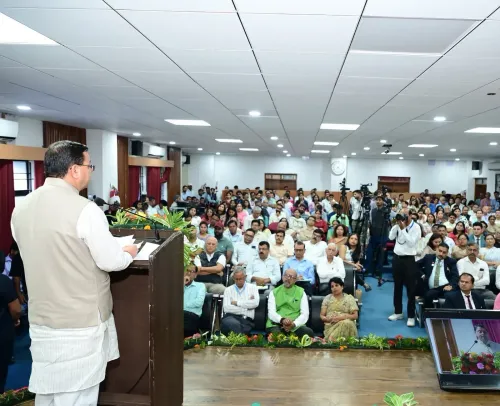
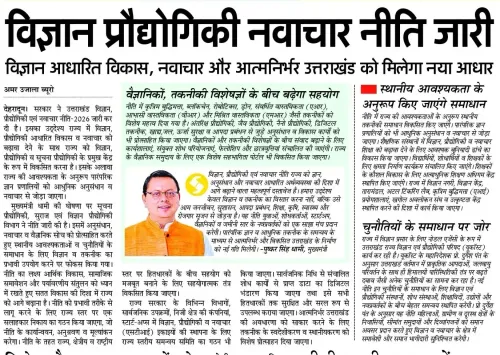
The Chief Minister's Office of Uttarakhand announced on Wednesday, 10 June 2026 that the Uttarakhand Science, Technology and Innovation Policy-2026 has been formally released by the Department of Information Technology, Good Governance and Science Technology, in pursuance of a declaration by Chief Minister Pushkar Singh Dhami. The policy aims to develop Uttarakhand into a leading hub for science, technology and information technology while promoting research, innovation and scientific thinking across the state.
Context
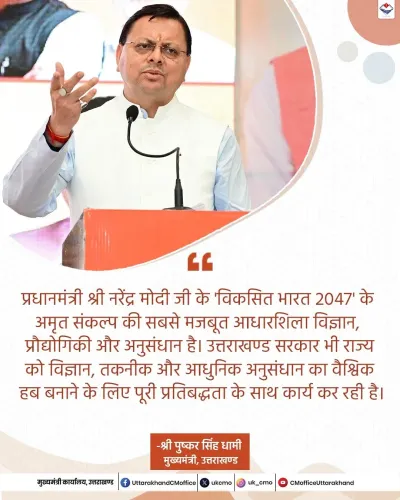
The policy was released following a formal announcement by CM Dhami, with the Department of Information Technology, Good Governance and Science Technology as the nodal agency. In his statement, Dhami described the policy as 'ज्ञान, अनुसंधान और नवाचार आधारित अर्थव्यवस्था' — 'a knowledge, research and innovation-based economy' — calling it 'an important document' to move the state forward. He emphasised that the goal is not merely to expand science and technology, but to connect it with 'common people's lives, good governance, disaster management, education, agriculture, health and employment generation.'
The policy explicitly frames Uttarakhand as a prospective national hub for STI (Science, Technology and Innovation), with a mandate to balance economic growth, social inclusion and environmental sustainability — considerations especially pertinent to a Himalayan state with significant ecological sensitivities and recurring disaster risks.
Policy Backdrop
The Uttarakhand STI Policy-2026 aligns with India's broader national frameworks, including the National Education Policy 2020, which mandated technology-enabled learning and teacher capacity building, and the Central government's 'One Nation, One Subscription' initiative, which provides nationwide access to scientific journals and research archives. The new state policy explicitly references both, signalling integration with the national innovation architecture.
Indian states have increasingly adopted dedicated STI policies in recent years to operationalise the goals of Digital India and Atmanirbhar Bharat at the sub-national level. The emphasis on open data repositories, traditional knowledge integration and public-private coordination mirrors patterns seen in comparable state-level frameworks elsewhere. For Uttarakhand specifically, the convergence of technology with disaster management and mountain agriculture addresses long-standing local vulnerabilities.
The policy gives special prominence to emerging technologies including Artificial Intelligence (AI), blockchain, robotics, drones, Augmented Reality (AR), Virtual Reality (VR) and Mixed Reality (MR). A dedicated Science, Technology and Innovation Observatory is to be established in the state, alongside modern online learning platforms to support research and innovation.
Stakeholders and Impact
The policy is designed to serve a wide range of beneficiaries: students, researchers, teachers, startups, scientists and grassroots innovators. CM Dhami stated it will provide 'a common platform' for all these groups. Capacity-building programmes will be run for students, researchers and educators, while state-of-the-art teaching-learning centres will be set up in alignment with the National Education Policy.
On the institutional side, a state-level advisory body will be constituted for effective implementation, alongside a state-level coordination committee to ensure the establishment of STI units across government departments, public sector undertakings, private companies and startups. Research data from publicly funded projects will be stored digitally and made available securely to all stakeholders.
Infrastructure plans include Vigyan Nagari (science cities), science centres, planetariums, Atal Tinkering Labs, AI laboratories, astronomy observation societies and centres of excellence across the state. Traditional knowledge systems are to be formally linked with modern research and innovation — a distinctive feature given Uttarakhand's rich heritage in Ayurveda, agro-biodiversity and indigenous ecological practices.
What's Next
Attention will now turn to the constitution of the proposed advisory body and state-level coordination committee, which will be the first concrete institutional steps under the policy. The rollout of AI labs, science centres and the digital research data repository will be key milestones to watch. The policy also calls for developing local technological solutions tailored to the state's specific needs, with special encouragement for indigenisation and localisation of technology under the 'Atmanirbhar Uttarakhand' vision. How swiftly these institutional mechanisms are operationalised will determine the pace at which the policy translates from document to ground-level impact.
Point of View
The policy acknowledges Uttarakhand's unique geographic and cultural context rather than simply replicating a generic state STI template. The inclusion of institutional mechanisms — an advisory body, a coordination committee and STI units in every department — suggests an intent to embed the policy structurally rather than leave it as an aspirational document. Whether the proposed bodies are constituted and operationalised in a time-bound manner will be the true test of the policy's ambition.
NationPress
26 Oct 2026
Frequently Asked Questions
What is the Uttarakhand Science Technology and Innovation Policy 2026?
The Uttarakhand Science, Technology and Innovation Policy-2026 is a state government policy released on 10 June 2026 to promote research, innovation and emerging technologies, with the goal of developing Uttarakhand into a major STI hub.
What technologies does the Uttarakhand STI Policy 2026 focus on?
The policy gives special focus to AI, blockchain, robotics, drones, Augmented Reality (AR), Virtual Reality (VR) and Mixed Reality (MR), alongside support for traditional knowledge systems and local technological solutions.
What new institutions will be set up under the Uttarakhand STI Policy?
A state-level advisory body, a state-level coordination committee, STI units across departments and PSUs, a Science Technology and Innovation Observatory, AI laboratories, science cities, Atal Tinkering Labs and planetariums are all planned under the policy.
How does the Uttarakhand STI Policy connect with central government schemes?
The policy integrates with the Central government's 'One Nation, One Subscription' initiative for access to research archives and aligns with the National Education Policy 2020 for technology-enabled learning and teacher skill development.
What did CM Dhami say about the new technology policy?
CM Pushkar Singh Dhami said the policy is an important document to move the state towards a knowledge, research and innovation-based economy, and that its aim is to connect science and technology with everyday life, governance, disaster management, education, agriculture, health and employment generation.