CM Dhami Launches Uttarakhand STI Policy-2026, GEP Reports
Synopsis
Uttarakhand CM Pushkar Singh Dhami launched the STI Policy-2026 and GEP technical reports for 2023-25 at a high-level meeting with PMO scientific adviser Prof. Ajay Sood, ANRF chief, IIT Roorkee director, and environmentalist Dr. Anil Prakash Joshi, directing officials to embed carbon credits and simplify water harvesting.
Key Takeaways
Uttarakhand Science, Technology and Innovation Policy-2026 was formally released at CM Dhami's official residence on 26 September 2026 .
GEP technical reports for 2023-24 and 2024-25 were unveiled, providing a two-year data trail for Uttarakhand's environment-as-economy framework.
CM Dhami directed officials to incorporate carbon credits into the STI Policy-2026 and make water harvesting accessible to common citizens.
Ajay Sood , Principal Scientific Adviser to the PM, led the visiting delegation alongside ANRF CEO Prof.
Shiv Kumar and IIT Roorkee Director Prof.
HESCO founder and Himalayan sustainability champion Dr.
Anil Prakash Joshi also participated, lending grassroots credibility to the policy exercise.
The meeting reflects a broader push by Himalayan states to build knowledge and research-based economies without sacrificing ecological assets.
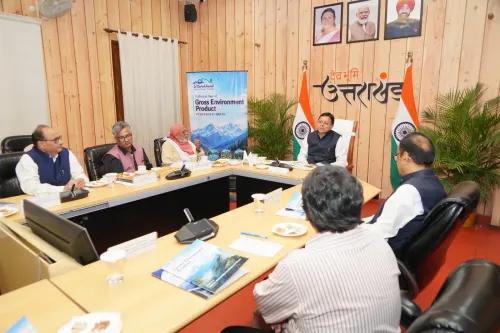
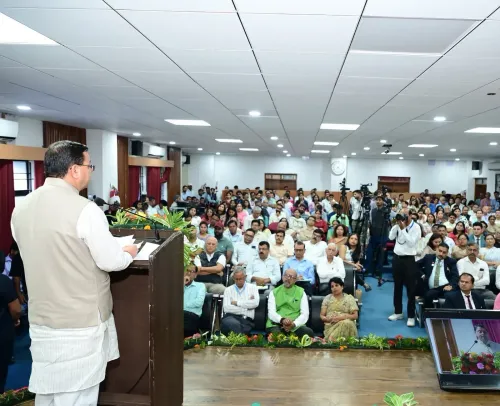
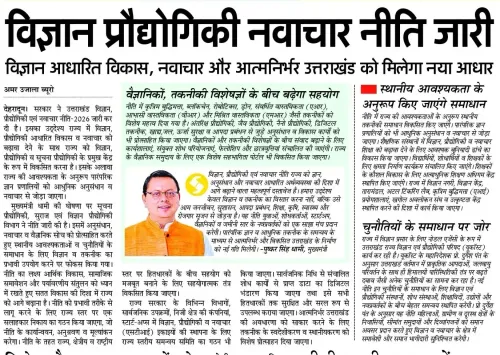
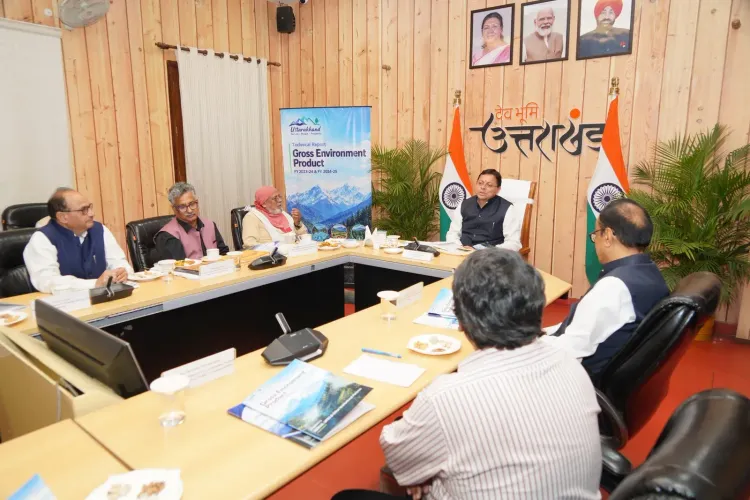
A Himalayan state just rewrote how it measures its own worth. Uttarakhand Chief Minister Pushkar Singh Dhami convened a high-powered meeting at his official residence on Saturday, 26 September 2026, bringing together the country's top scientific minds to formally release the Uttarakhand Science, Technology and Innovation Policy-2026 alongside technical reports on the state's pioneering Gross Environment Product (GEP) framework for the years 2023-24 and 2024-25.
The centrepiece of the conclave was a direct, urgent directive from CM Dhami to state officials: integrate carbon credits into the newly released STI Policy-2026, and make water harvesting simpler, more accessible, and genuinely practical for ordinary citizens. Two asks — but together they signal an ambitious bet that Uttarakhand can turn its ecological wealth into a structured economic advantage.
Prof. Ajay Sood and a Room Full of Firepower
Prof. Ajay Sood, the Principal Scientific Adviser to the Prime Minister, led the visiting delegation — a presence that underscores how seriously the Centre is watching Uttarakhand's experiment with green-economy metrics. Alongside him sat Prof. Shiv Kumar, Chief Executive Officer of the Anusandhan National Research Foundation (ANRF) — the national body created to supercharge India's research ecosystem — and Dr. Paraminder Maan, a senior scientist. Dr. Anil Prakash Joshi, the Padma Bhushan-awarded founder of HESCO and one of the Himalayas' most recognised sustainability voices, was also present, as was Prof. K.K. Pant, Director of IIT Roorkee, giving the gathering both policy heft and ground-level credibility.
Why GEP Changes the Equation for a Mountain State
The Gross Environment Product framework, which Uttarakhand began championing around 2021-22, is a direct challenge to the standard GDP lens: it assigns measurable value to forests, rivers, clean air, and biodiversity — the very assets a state like Uttarakhand holds in abundance but which conventional accounting ignores. The release of GEP technical reports for two successive years is a quiet but significant milestone: it means the state now has a longitudinal data trail to take to climate-finance negotiations and carbon-market platforms.
The directive to fold carbon credits into the STI Policy-2026 is the logical next step — converting that environmental accounting into actual revenue streams. If implemented, Uttarakhand's forest cover and ecological services could generate tradable credits, opening a funding channel that does not depend on central transfers or extractive industry.
From Knowledge Economy to Kitchen Tap
CM Dhami framed the overarching vision clearly: 'uttarakhand ki samridh prakritik virasat ko sanrakshit rakhte hue...' — preserving Uttarakhand's rich natural heritage while moving the state toward a knowledge, research, and innovation-based economy. The water-harvesting directive, however, pulls the agenda from the abstract to the immediate. Making rainwater collection 'simple, smooth and practical' for common citizens means the policy ambition has to reach the village level, not just the research lab.
The ANRF connection matters here too. Established under the 2021 Union Budget to bridge the gap between Indian academia and real-world application, ANRF's presence at this meeting suggests that state-level pilot projects — linking IIT Roorkee's research capacity with Uttarakhand's terrain-specific challenges — could follow as a concrete next step.
A mountain state with more glaciers than industries is betting that measuring its trees is the first step to cashing them in — without cutting a single one down.
Point of View
Broadening its constituency. If carbon credit provisions are operationalised within the STI-2026 framework, Uttarakhand could become the first Indian state to formally monetise its forest cover through a state-level policy instrument.
NationPress
26 Sept 2026
Frequently Asked Questions
What is the Uttarakhand Science Technology and Innovation Policy 2026?
The Uttarakhand STI Policy-2026 is a state-level policy framework designed to advance science, technology, and innovation in Uttarakhand while aligning with environmental goals such as carbon credits and water harvesting. It was formally released on 26 September 2026 at a meeting chaired by CM Pushkar Singh Dhami.
What is Gross Environment Product (GEP) and why does it matter for Uttarakhand?
GEP is a metric that quantifies the economic value of a state's environmental assets — forests, rivers, clean air — as a complement to GDP. Uttarakhand has championed this framework since around 2021-22 because it allows a biodiversity-rich mountain state to demonstrate and potentially monetise its ecological contributions.
Who is Prof. Ajay Sood and why was he at this meeting?
Prof. Ajay Sood is the Principal Scientific Adviser to the Prime Minister, responsible for advising on national science and technology priorities. His presence at the Uttarakhand meeting signals central government interest in the state's science-environment integration strategy.
What is the Anusandhan National Research Foundation (ANRF)?
ANRF is a national body announced in the Union Budget 2021 to fund and coordinate research across Indian academic and scientific institutions. Its CEO, Prof. Shiv Kumar, attended the Uttarakhand meeting, suggesting potential collaboration between the foundation and state-level research initiatives.
What did CM Dhami direct officials to do regarding carbon credits and water harvesting?
CM Dhami directed officials to incorporate carbon credit provisions into the STI Policy-2026 and to design water harvesting mechanisms that are simple, accessible, and practical for ordinary citizens — linking the state's green-economy ambitions to everyday community needs.