CM Dhami Pitches Science & Innovation as Uttarakhand's Growth Engine
Synopsis
Uttarakhand CM Pushkar Singh Dhami on 27 July 2026 unveiled the state's first Science, Technology and Innovation Policy and flagged rapid progress on Dehradun's Science City — India's fifth — while calling for AI, robotics and drone-led growth to make youth job creators.
Key Takeaways
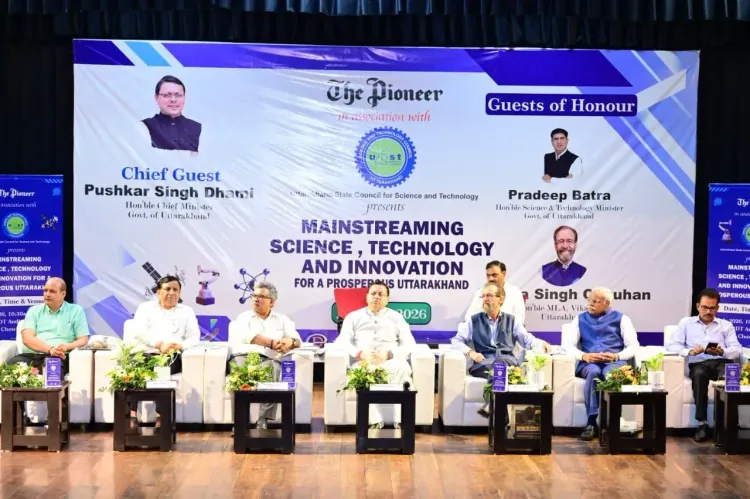
CM Pushkar Singh Dhami addressed the 'Mainstreaming Science, Technology and Innovation for a Prosperous Uttarakhand' programme at the IRDT auditorium, Dehradun on 27 July 2026 .
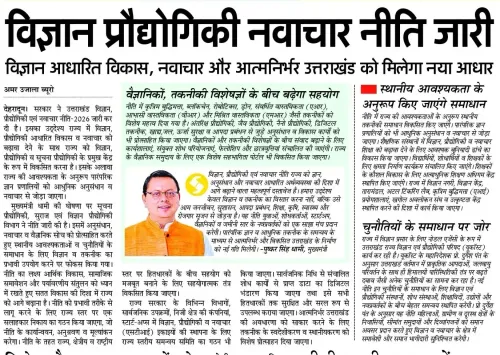
Uttarakhand has implemented its first Science, Technology and Innovation (STI) Policy , aimed at converting youth from job seekers into job creators.
Construction of the fifth Science City in India , located in Dehradun , is said to be progressing rapidly.
CM Dhami directed officials to organise regular school student visits to the Science City to build scientific temperament among children.
The state is expanding STEM Labs, Labs on Wheels, GIS dashboards, Patent Information Centres and pre-incubation labs across Uttarakhand.
State initiatives are framed as complementary to central missions including Digital India, Startup India, National Quantum Mission and the India Semiconductor Mission .
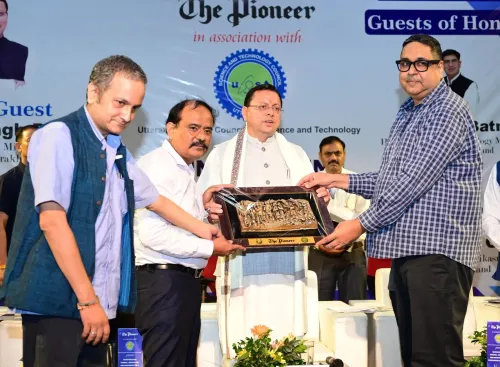
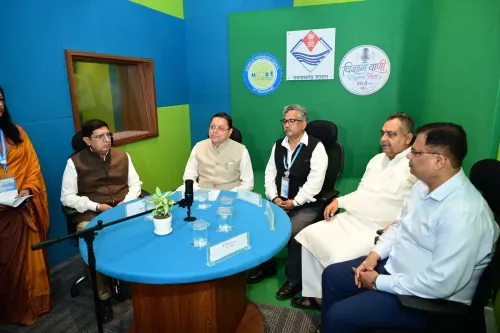
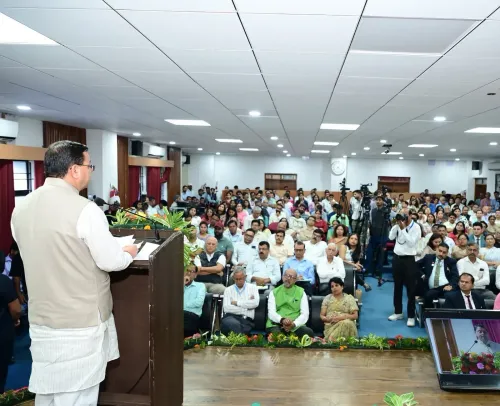
Chief Minister Pushkar Singh Dhami participated in a programme titled 'Mainstreaming Science, Technology and Innovation for a Prosperous Uttarakhand' organised jointly by the Pioneer newspaper group and UCOST at the IRDT auditorium on Monday, 27 July 2026. Addressing the gathering, Dhami declared that science, technology and innovation are the cornerstones of a developed Uttarakhand, and reiterated the state government's commitment to making the hill state a leading centre of research and modern technological advancement.
Context
Speaking at the event, CM Dhami emphasised that the biggest need of the hour is to connect science with the lives of ordinary people rather than confining it to laboratories and textbooks. He stated, 'Today, the progress of the world is determined not by natural resources but by the capacity of knowledge, science, research and innovation.' The Chief Minister highlighted the transformative role of technologies such as AI, robotics, drones and semiconductors across sectors including health, education, agriculture, tourism and disaster management.
Dhami added that promoting innovation in these sectors can generate new employment and entrepreneurship opportunities for the youth. The event brought together legislators, academics and senior officials from state science and technology bodies, signalling a coordinated push to embed technology at the heart of Uttarakhand's development agenda.
Policy Backdrop
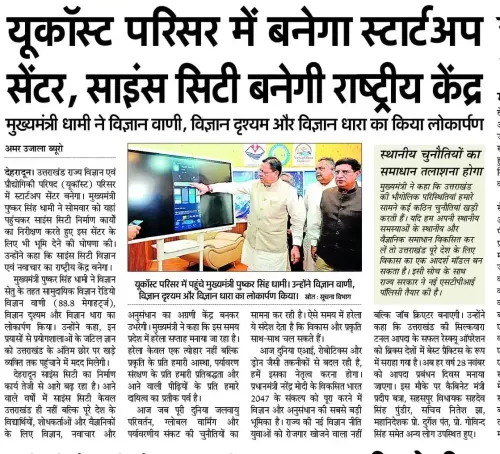
CM Dhami announced that the state government has implemented Uttarakhand's first Science, Technology and Innovation (STI) Policy, with the explicit goal of turning youth into job creators rather than job seekers. He also disclosed that construction of the country's fifth Science City in Dehradun is progressing rapidly, a facility expected to give Uttarakhand a new identity in the field of science and innovation.
The Chief Minister directed officials to arrange regular visits by school students from across the state to the upcoming Science City, so as to nurture curiosity, a scientific temperament and a spirit of innovation among children. At the national level, Dhami linked these state initiatives to Prime Minister Narendra Modi's Viksit Bharat 2047 vision, noting that central missions — Digital India (launched 2015), Startup India (launched 2016), the National Quantum Mission (approved 2023) and the India Semiconductor Mission (announced 2021) — are collectively propelling India towards becoming a global technology power.
The state is simultaneously expanding infrastructure such as Science and Innovation Centres, Labs on Wheels, GIS-based dashboards, digital libraries, Patent Information Centres and STEM Labs. Pre-incubation labs and a broader startup ecosystem are also being actively promoted to provide youth with world-class opportunities within Uttarakhand itself.
Stakeholders and Impact
Students, researchers, startups and rural communities stand to benefit most directly from these initiatives. The Labs on Wheels concept, in particular, is designed to carry hands-on science exposure to remote areas of the mountainous state where fixed infrastructure is difficult to establish. The Patent Information Centre and pre-incubation labs are aimed at converting student and researcher ideas into viable commercial ventures.
UCOST Director General Prof. Durgesh Pant, Pantanagar University's Prof. J.P. Jaiswal, UCOST Joint Director Dr. D.P. Uniyal, MLA Munna Singh Chauhan, Padma Shri Dr. B.K. Sanjay and Director General of Information Banshidhar Tiwari were among the dignitaries present, reflecting broad institutional support for the initiative.
What's Next
The immediate focus will be on operationalising the provisions of Uttarakhand's first STI Policy — rolling out STEM labs, GIS dashboards and pre-incubation facilities across the state. The pace of construction and the eventual inauguration of the Dehradun Science City will be a key milestone to watch, as will the formalisation of student visit programmes to the facility once it opens.
Broader alignment with central missions on semiconductors and quantum technology could unlock additional funding and institutional partnerships for Uttarakhand, positioning the state as a model for how smaller, geographically challenging states can build a knowledge economy from the ground up.
Point of View
The Chief Minister is positioning Uttarakhand to compete for federal science funding and private investment. The emphasis on converting youth into job creators rather than job seekers also addresses a politically sensitive concern: the state's historically high out-migration of educated young people. The Dehradun Science City, if delivered on schedule, could become the most tangible symbol of this pivot.
NationPress
26 Oct 2026
Frequently Asked Questions
What is Uttarakhand's first Science, Technology and Innovation Policy?
Uttarakhand's first STI Policy is a state government framework aimed at promoting research and innovation, expanding technology infrastructure, and turning youth into job creators rather than job seekers, as announced by CM Pushkar Singh Dhami on 27 July 2026.
Where is India's fifth Science City being built?
India's fifth Science City is being built in Dehradun , Uttarakhand. CM Dhami stated on 27 July 2026 that construction is progressing rapidly and the facility is expected to give Uttarakhand a new identity in science and innovation.
What is UCOST and what role does it play in Uttarakhand?
UCOST, the Uttarakhand Council for Science and Technology, is the state agency responsible for promoting scientific research, innovation and technology outreach. It co-organised the 27 July 2026 event at which CM Dhami announced key science policy initiatives.
How does Uttarakhand's science policy connect to Viksit Bharat 2047?
CM Dhami explicitly linked the state's STI initiatives to PM Narendra Modi's Viksit Bharat 2047 vision, noting that central missions such as Digital India, Startup India, the National Quantum Mission and the India Semiconductor Mission form the national backbone that state-level policies are designed to complement.
What technology infrastructure is Uttarakhand expanding for youth?
Uttarakhand is expanding Science and Innovation Centres, Labs on Wheels, GIS-based dashboards, digital libraries, Patent Information Centres, STEM Labs, pre-incubation labs and a startup ecosystem to provide youth with world-class opportunities within the state, as outlined by CM Dhami on 27 July 2026.