CM Dhami Backs Science & Innovation at Dehradun Seminar
Synopsis
Uttarakhand CM Pushkar Singh Dhami addressed a Dehradun seminar on mainstreaming science, technology and innovation, invoking PM Modi's 'Jai Anusandhan' mantra and the Viksit Bharat 2047 vision. He highlighted NEP 2020 implementation and youth skilling in AI, quantum technology and advanced manufacturing as pillars of the state's development agenda.
Key Takeaways
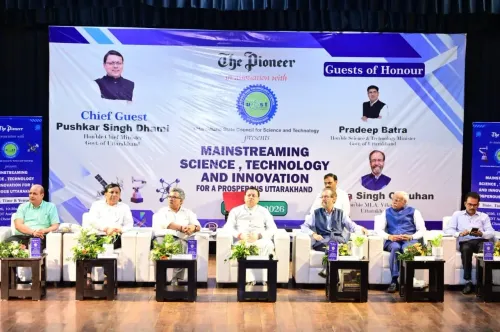
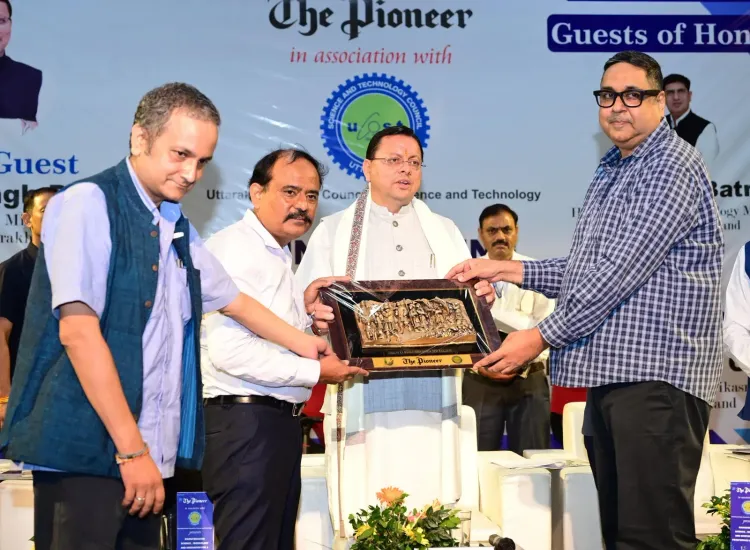
CM Pushkar Singh Dhami addressed the 'Mainstreaming Science, Technology and Innovation for a Prosperous Uttarakhand' seminar in Dehradun on 27 July 2026 .
He invoked PM Narendra Modi 's mantra 'Jai Jawan, Jai Kisan, Jai Vigyan, Jai Anusandhan' as the guiding principle for the state's science-led development.
The Viksit Bharat 2047 vision was cited as the overarching framework, with scientific thinking and innovation described as its foundational pillars.
Effective implementation of the National Education Policy 2020 is being used to foster research, entrepreneurship, and a startup culture in Uttarakhand.
Youth skilling in Artificial Intelligence, Quantum Technology, and Advanced Manufacturing is a stated priority of the state government.
Sanjay and MLA Munna Chauhan were among the notable attendees at the seminar.
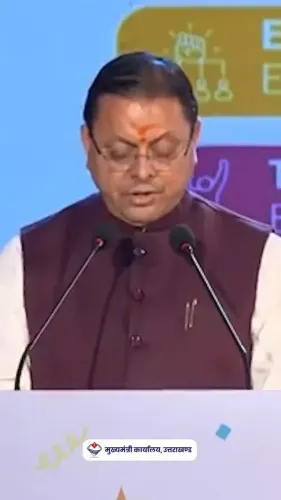
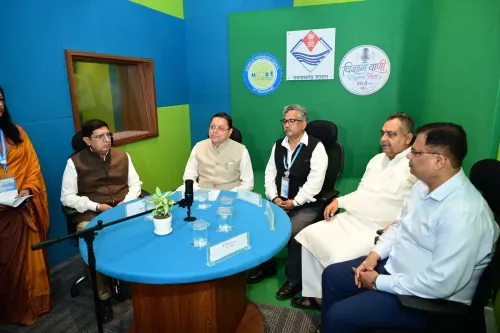
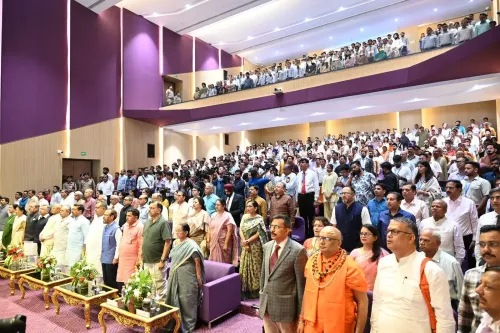
Uttarakhand Chief Minister Pushkar Singh Dhami on Monday, 27 July 2026, addressed a seminar in Dehradun themed 'Mainstreaming Science, Technology and Innovation for a Prosperous Uttarakhand,' reaffirming the state government's commitment to positioning science and technology as the primary drivers of development.
Context
Addressing attendees at the seminar, CM Dhami drew directly from Prime Minister Narendra Modi's expanded national mantra — 'Jai Jawan, Jai Kisan, Jai Vigyan, Jai Anusandhan' ('Hail the soldier, hail the farmer, hail science, hail research') — framing it as the guiding inspiration for the state's development strategy. He stated that the foundation of the Viksit Bharat 2047 vision rests on scientific thinking, research, innovation, and modern technology. Padma Shri awardee Dr. B.K. Sanjay and legislator Munna Chauhan were also present at the event.
Policy Backdrop
The seminar reflects Uttarakhand's alignment with the central government's Viksit Bharat 2047 framework, which envisions India as a fully developed nation by the centenary of independence. CM Dhami highlighted the effective implementation of the National Education Policy (NEP) 2020 as a key instrument for promoting scientific temper, research, entrepreneurship, and a startup culture across the state. The NEP, introduced in 2020, overhauled curricula at school and higher education levels with an explicit mandate to embed multidisciplinary learning and innovation.
Beyond foundational education reform, the Chief Minister pointed to active efforts to equip Uttarakhand's youth with skills in cutting-edge domains including Artificial Intelligence, Quantum Technology, and Advanced Manufacturing. This signals the state's intent to move beyond traditional industry sectors and build capacity in emerging technology fields.
Stakeholders and Impact
The primary beneficiaries of this push are Uttarakhand's youth, startups, and research community. By anchoring skilling programmes to AI, quantum computing, and advanced manufacturing, the state aims to create a pipeline of innovation-ready talent that can attract investment and reduce the region's historical dependence on tourism and agriculture alone. The participation of Padma Shri Dr. B.K. Sanjay at the seminar underscores the effort to bring recognised scientific voices into state-level policy dialogue.
India's broader pattern of centre-state coordination on emerging technologies is clearly visible here. States like Uttarakhand are increasingly using NEP implementation as a lever to build local innovation ecosystems that feed into the national research and startup base.
What's Next
Attention will now turn to whether the seminar's deliberations translate into concrete budget allocations — specifically, new state funding lines for AI and quantum technology skilling programmes or the establishment of NEP-linked innovation cells and incubation centres within Uttarakhand's educational institutions. The state's ability to move from policy articulation to institutional infrastructure will determine how meaningfully it contributes to the Viksit Bharat 2047 goal. If Uttarakhand follows through with dedicated incubation support, it could serve as a model for other hill states seeking to diversify their economies through technology-led growth.
Point of View
Dhami signals ideological synchrony while also staking a claim for Uttarakhand in the emerging national innovation map. The emphasis on NEP implementation as a vehicle for AI and quantum skilling is strategically sound: it leverages an existing central mandate rather than requiring new state-level legislation. The real test, however, will be whether institutional infrastructure — incubators, research grants, industry linkages — follows the rhetoric.
NationPress
26 Oct 2026
Frequently Asked Questions
What was the Dehradun science seminar addressed by CM Dhami about?
The seminar was themed 'Mainstreaming Science, Technology and Innovation for a Prosperous Uttarakhand' and focused on making science, technology, and innovation the primary drivers of the state's development, aligned with the Viksit Bharat 2047 vision.
What is the Viksit Bharat 2047 vision?
Viksit Bharat 2047 is the central government's framework to make India a fully developed nation by 2047, the centenary of independence, with scientific thinking, research, and advanced technology identified as foundational elements.
How is Uttarakhand using the National Education Policy for innovation?
Uttarakhand is implementing NEP 2020 to promote scientific temper, research, entrepreneurship, and a startup culture in the state, while also using it as a platform to skill youth in AI, quantum technology, and advanced manufacturing.
Who is Padma Shri Dr. B.K. Sanjay?
Dr. B.K. Sanjay is a Padma Shri awardee who participated in the Dehradun seminar alongside CM Dhami and other state officials, representing the scientific community in the state-level policy dialogue.
What technologies is Uttarakhand focusing on for youth skilling?
CM Dhami highlighted Artificial Intelligence, Quantum Technology, and Advanced Manufacturing as the key emerging technology domains in which the state government is working to equip Uttarakhand's youth with modern knowledge and skills.