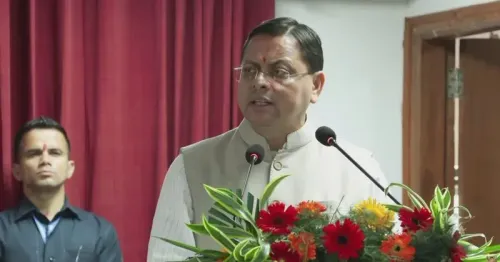
CM Dhami: Science City in Dehradun Under Rapid Construction
Synopsis
Chief Minister Pushkar Singh Dhami has declared that construction of a Science City in Dehradun is advancing rapidly, underlining Uttarakhand's push to make its education system modern, quality-driven and technology-based in line with NEP 2020 goals.
Key Takeaways
CM Pushkar Singh Dhami reaffirmed on 19 July 2026 that the Uttarakhand government is continuously working to modernise the state's education system.
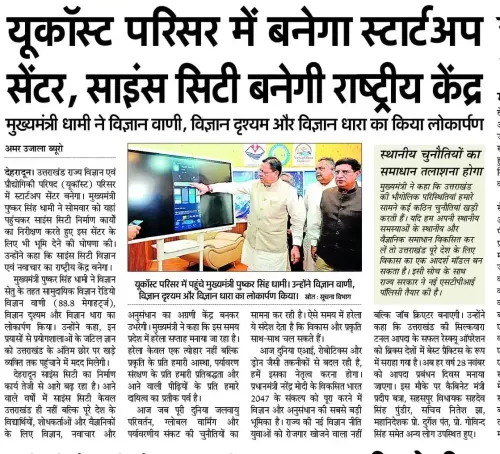
Construction of a Science City in Dehradun is described as progressing rapidly, moving the project from planning into active execution.
The initiative aligns with National Education Policy 2020 , which Uttarakhand adopted from 2021 onward.
The Science City aims to provide technology-based, experiential learning infrastructure for students across Uttarakhand .
No specific completion date or total project cost was disclosed in the statement.
Uttarakhand's approach mirrors a broader national pattern of states building science centres and innovation hubs to operationalise NEP 2020 goals.
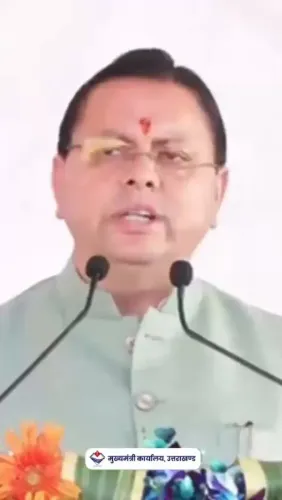
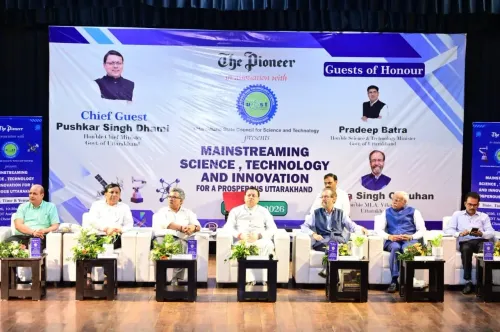
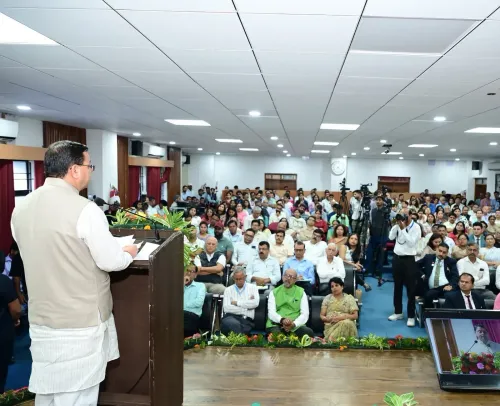
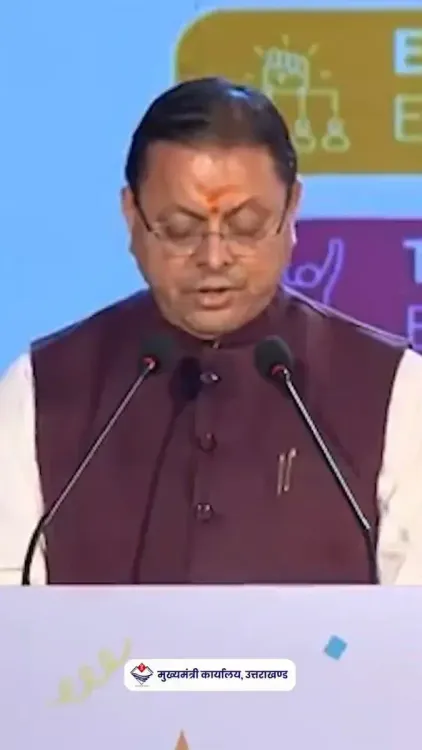
The Chief Minister's Office of Uttarakhand shared a statement by Chief Minister Pushkar Singh Dhami on Sunday, 19 July 2026, reaffirming the state government's commitment to modernising education through technology and announcing that construction of a Science City in Dehradun is progressing at pace.
In the post, CM Dhami stated — 'हमारी सरकार शिक्षा व्यवस्था को आधुनिक, गुणवत्तापूर्ण और तकनीकी आधारित बनाने के लिए निरंतर कार्य कर रही है।' ('Our government is continuously working to make the education system modern, quality-driven and technology-based.') He added that construction of the Science City in Dehradun is moving ahead rapidly.
Context
Dehradun, the capital of Uttarakhand, already hosts several prominent educational and research institutions, making it a natural anchor for a flagship science infrastructure project. The Science City is envisioned as a facility to promote science education, technology awareness, and hands-on experiential learning for students across the state. The Chief Minister's statement signals that the project has moved beyond planning into active construction.
Policy Backdrop
Uttarakhand adopted the National Education Policy (NEP) 2020 and began rolling out related curriculum and infrastructure reforms from 2021 onward, coinciding with CM Dhami's tenure. NEP 2020 places strong emphasis on technology integration, quality improvement, and experiential learning — goals that a dedicated Science City directly supports. Across India, multiple states have invested in science centres and innovation hubs since 2020 as a concrete expression of these national education priorities.
The Uttarakhand government has framed its education agenda around three pillars: modernisation, quality enhancement, and technology adoption. The Science City project sits at the intersection of all three, intended to give students access to infrastructure that is otherwise concentrated in larger metros.
Stakeholders and Impact
The primary beneficiaries are students and science educators across Uttarakhand, particularly those in government schools who currently lack access to advanced laboratory and demonstration infrastructure. A functional Science City would provide immersive learning environments — planetariums, interactive science galleries, and technology labs — that supplement classroom instruction. Youth in the hill state, where quality STEM exposure has historically been limited, stand to gain the most from such a facility.
Broader stakeholders include the state's higher education institutions and skill-development ecosystem, which could use the Science City as a bridge between school-level curiosity and vocational or research pathways.
What's Next
The government has not publicly announced a specific completion date or the total project outlay in this statement. Observers will watch for updates on construction milestones, budget utilisation, and any formal timeline for opening the facility to schools and the public. The pace of delivery will be a key indicator of whether Uttarakhand's education modernisation agenda translates from policy intent into on-ground outcomes ahead of the state's electoral cycle.
Point of View
Inspectable outcome. The statement fits a wider pattern among BJP-governed hill states of using NEP 2020 infrastructure as a development narrative ahead of electoral cycles. The real test will be whether construction timelines and school-linkage plans are made public, converting a political statement into an accountable commitment.
NationPress
19 Oct 2026
Frequently Asked Questions
What is the Science City being built in Dehradun?
The Science City in Dehradun is a planned facility by the Uttarakhand government designed to promote science education, technology awareness, and hands-on experiential learning for students. CM Dhami confirmed on 19 July 2026 that its construction is progressing rapidly.
Who announced the Science City in Dehradun?
Chief Minister Pushkar Singh Dhami of Uttarakhand announced that the Science City's construction is underway, reiterating his government's focus on modern, technology-based education.
How does the Dehradun Science City relate to NEP 2020?
Uttarakhand adopted the National Education Policy 2020 from 2021 and the Science City is a direct infrastructure expression of NEP 2020's goals of experiential, technology-driven and quality-focused learning.
When will the Dehradun Science City be completed?
No specific completion date has been announced by the Uttarakhand government in the July 2026 statement. Construction is described as progressing at pace, but an opening timeline has not been made public.
Which students will benefit from the Uttarakhand Science City?
Students across Uttarakhand, particularly those in government schools with limited access to advanced science infrastructure, are the primary intended beneficiaries of the Dehradun Science City.