CM Mohan Yadav Pushes UCC in Madhya Pradesh, Seeks Public Input
Synopsis
Madhya Pradesh Chief Minister Dr. Mohan Yadav declared on 1 June 2026 that his government is moving to implement the Uniform Civil Code in the state and appealed to citizens to submit suggestions to the designated committee, advancing a key BJP policy priority after Uttarakhand's landmark 2024 legislation.
Key Takeaways
Mohan Yadav announced on 1 June 2026 that the Madhya Pradesh government is actively advancing Uniform Civil Code implementation.
Citizens have been urged to submit suggestions to the state-appointed UCC committee , indicating the process is in a public consultation phase.
Uttarakhand enacted India's first state-level UCC on 7 February 2024 , serving as the primary legislative model for other BJP-ruled states.
The BJP's 2024 Lok Sabha manifesto included a national UCC commitment, and multiple BJP-governed states are now pursuing parallel consultations.
Goa retains a Portuguese-era common civil code, cited as a longstanding historical precedent in UCC debates.
No timeline for tabling a UCC bill in the Madhya Pradesh Legislative Assembly has been officially announced.
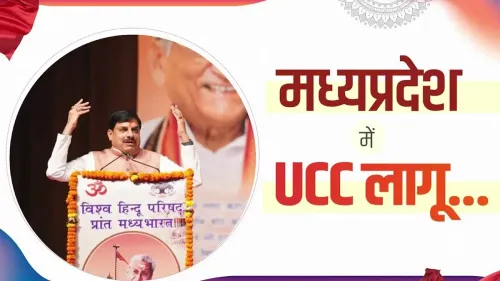
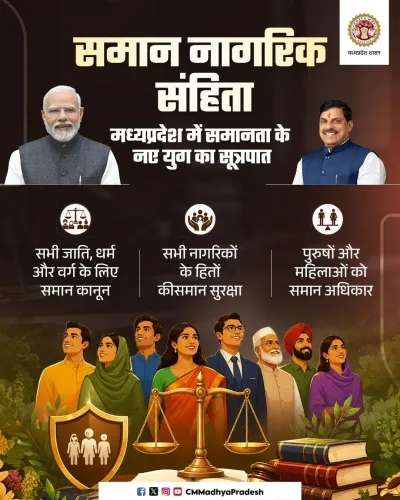
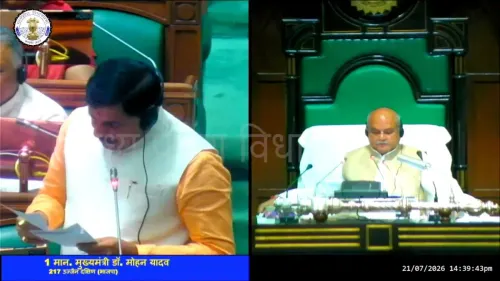
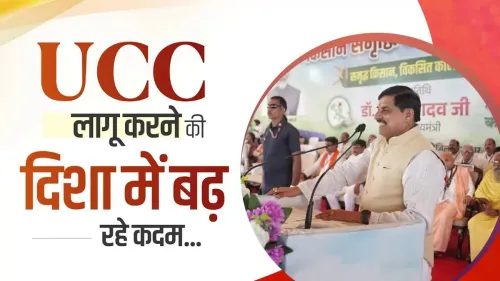
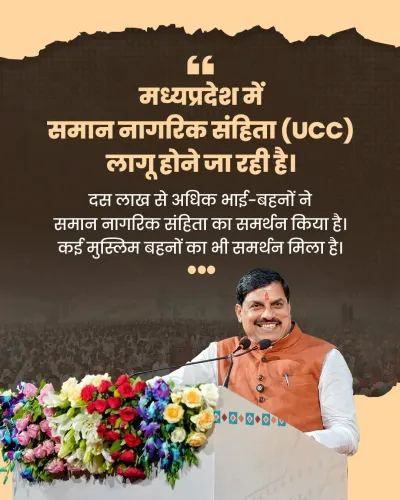
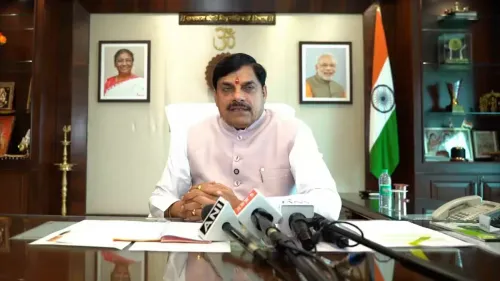
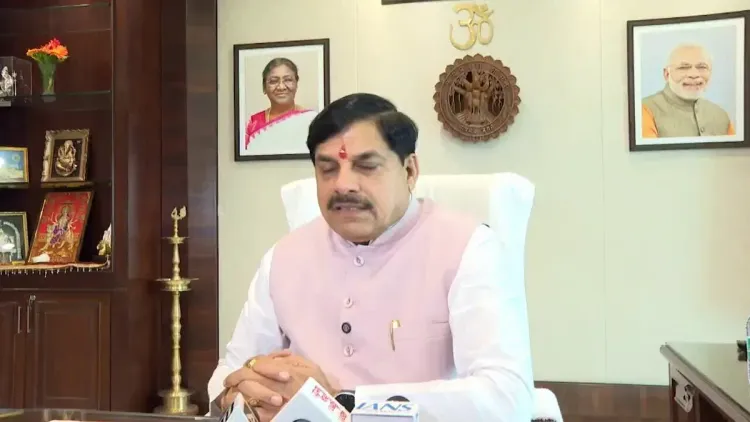
Madhya Pradesh Chief Minister Dr. Mohan Yadav announced on Monday, 1 June 2026 that his government is actively moving towards implementing the Uniform Civil Code (UCC) in the state, and called on citizens to submit their suggestions to the designated committee.
In his post on X, the Chief Minister wrote: 'हमारी सरकार मध्यप्रदेश में समान नागरिक संहिता लागू करने की दिशा में आगे बढ़ रही है।' ('Our government is moving forward towards implementing the Uniform Civil Code in Madhya Pradesh.') He added a direct appeal: 'I urge the people of the state to give their suggestions to the committee.'
Context
The Uniform Civil Code refers to a common set of personal laws — governing marriage, divorce, inheritance, and adoption — applicable to all citizens regardless of religion, as envisioned under Article 44 of the Indian Constitution's Directive Principles of State Policy. Madhya Pradesh, a BJP-governed state since 2003, has long been aligned with the party's ideological position on replacing religion-specific personal laws with a unified framework.
Dr. Yadav, who succeeded Shivraj Singh Chouhan as Chief Minister in late 2023, has signalled UCC implementation as a governance priority. The public consultation appeal suggests the state is currently in a pre-legislative phase, using a committee process to build a draft and gauge citizen input before any bill is tabled in the assembly.
Policy Backdrop
Uttarakhand became the first Indian state to enact a UCC law when its legislative assembly passed the bill on 7 February 2024, following a committee process headed by Justice Ranjana Desai. That process — including a structured public consultation phase — has since served as a reference model for other BJP-ruled states considering similar legislation.
Goa retains a common civil code inherited from Portuguese-era law, frequently cited as a historical precedent in UCC debates. The BJP's 2024 Lok Sabha election manifesto reiterated the party's commitment to a nationwide UCC. The 21st Law Commission of India, in its 2018 consultation paper, had observed that a UCC was 'neither necessary nor desirable' at that stage — a position the current federal push by BJP-ruled states effectively challenges from the bottom up.
Stakeholders and Impact
A UCC would affect personal law practices across religious communities — including Hindu, Muslim, Christian, and tribal populations — in Madhya Pradesh, which has a large and diverse population spread across urban and rural areas. Women's organisations have historically been among the most vocal advocates for UCC provisions related to equal inheritance and divorce rights, while some minority religious groups and legal practitioners have raised concerns about the erasure of community-specific customs.
The committee's public consultation process is designed to incorporate this diversity of views before a draft is finalised. Parallel deliberations in states such as Gujarat and Rajasthan suggest a coordinated regional approach that could build political momentum for eventual national legislation.
What's Next
The immediate next step is the committee's receipt and processing of public suggestions, after which a draft proposal is expected to be prepared for government review. A timeline for tabling a UCC bill in the Madhya Pradesh Legislative Assembly has not been publicly announced. How the state navigates the legal and social complexities of the consultation — particularly regarding tribal customary laws and minority community concerns — will determine both the pace and the political reception of any eventual legislation.
If Madhya Pradesh advances a UCC bill, it would mark a significant expansion of state-level UCC legislation in India and could intensify pressure on the central government to move on a national framework.
Point of View
Using Uttarakhand's 2024 law as both a legal template and a political proof of concept. By framing the move as a consultative, citizen-inclusive process, the Madhya Pradesh government seeks to pre-empt criticism that UCC is being imposed without democratic input. The timing — pinned on his official account — signals this is a sustained political priority, not a one-off statement. Whether the committee process translates into a tabled bill before the next state election cycle will be the real test of the government's resolve.
NationPress
17 Oct 2026
Frequently Asked Questions
What is the Uniform Civil Code and why is Madhya Pradesh pursuing it?
The Uniform Civil Code is a proposed common set of personal laws on marriage, divorce, inheritance and adoption for all citizens regardless of religion, as directed by Article 44 of the Indian Constitution. Madhya Pradesh, under the BJP government of CM Dr. Mohan Yadav, is pursuing it as part of the party's long-standing policy commitment to replace religion-specific personal laws.
Which Indian state first enacted a Uniform Civil Code?
Uttarakhand became the first Indian state to pass a UCC law, with its legislative assembly approving the bill on 7 February 2024 following a committee process led by Justice Ranjana Desai.
How can Madhya Pradesh residents submit UCC suggestions to the committee?
CM Mohan Yadav has appealed to all residents of Madhya Pradesh to submit their suggestions directly to the state-appointed UCC committee. Specific submission channels or deadlines had not been publicly confirmed at the time of the announcement.
Does India already have a Uniform Civil Code anywhere?
Goa has retained a common civil code inherited from Portuguese colonial rule, making it the only Indian state with a functioning unified personal law framework. It is frequently cited as a historical precedent in national UCC debates.
What happens after the Madhya Pradesh UCC committee receives public suggestions?
After the public consultation phase, the committee is expected to compile the inputs and prepare draft proposals for government review. A bill would then need to be tabled and passed in the Madhya Pradesh Legislative Assembly before the UCC becomes law in the state.