CM Rekha Gupta Thanks Jal Shakti Minister Patil for Yamuna Push

Synopsis
Delhi Chief Minister Rekha Gupta publicly thanked Union Jal Shakti Minister C.R. Patil on 19 July 2026 for his guidance and support on Yamuna rejuvenation and water infrastructure in Delhi, underscoring active Centre-state coordination on one of the capital's most persistent environmental challenges.
Key Takeaways
Delhi CM Rekha Gupta thanked Union Jal Shakti Minister C.R.
Patil on 19 July 2026 for his goodwill message and ongoing support.
Gupta credited Patil's guidance as key to advancing Yamuna revival , water management, and better water facilities in Delhi .
The Yamuna Action Plan , launched in 1993 , and the Namami Gange framework (expanded in 2019 ) form the policy backbone for Yamuna clean-up efforts.
Both the Delhi government and the Centre are BJP-led , enabling closer coordination on centrally sponsored water and river projects.
The Yamuna Monitoring Committee is the key institutional body expected to next review water quality data and project timelines.
Delhi's approximately 2 crore residents are the primary beneficiaries of any meaningful improvement in Yamuna water quality and drinking water supply.
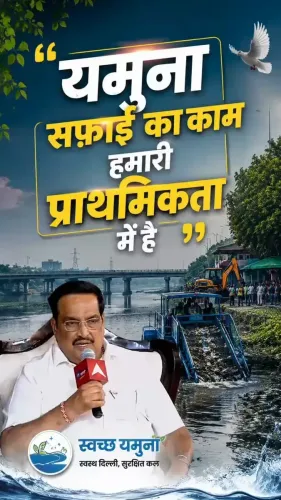
Delhi Chief Minister Rekha Gupta on Sunday, 19 July 2026, publicly thanked Union Jal Shakti Minister C.R. Patil for his goodwill message and ongoing support for Yamuna river rejuvenation and improved water infrastructure in the national capital.
In her post on X, Gupta wrote — translated from Hindi — 'Hridaya se aabhar' (heartfelt gratitude) to Patil, acknowledging that his 'continuous guidance and cooperation have been extremely important for the revival of the Yamuna, strengthening water management, and better water facilities in Delhi.' She added that his support was giving 'new momentum to the resolve of a clean Yamuna and a developed Delhi.'
Context
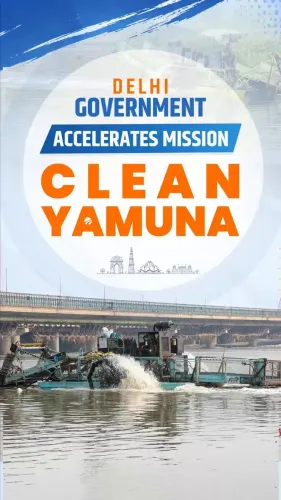
The exchange comes against the backdrop of long-standing coordination between the Union Ministry of Jal Shakti and the Delhi government on the Yamuna's rehabilitation. The river, which passes through the heart of the national capital, has faced acute pollution for decades, driven by inadequate sewage treatment capacity and industrial effluent discharge. Delhi residents and urban water utilities remain the most directly affected stakeholders.
Gupta's public acknowledgement of Patil's message signals an active working relationship between the BJP-led Delhi government and the BJP-led Centre — a political alignment that has been cited by both sides as an advantage for fast-tracking joint projects since the Delhi assembly elections of February 2025, which brought Gupta to power.
Policy Backdrop
Efforts to clean the Yamuna have a long policy lineage. The Yamuna Action Plan, launched in 1993 with central assistance, sought to reduce river pollution through sewage treatment plants along its banks. By 2019, the central government had folded the Yamuna into an integrated basin management approach linked to the Namami Gange framework, extending the programme's scope to include tributary stretches passing through urban centres.
The Jal Shakti Ministry, under Patil, has overseen fund releases and inter-state water coordination for polluted river stretches as part of this broader national push. Such public exchanges between the Delhi CM and the Union minister typically accompany or follow joint review meetings, fund disbursements, or milestone completions in sewage infrastructure projects.
Stakeholders and Impact
Delhi's approximately 2 crore residents stand to benefit most directly from any meaningful improvement in Yamuna water quality and drinking water supply. The river also serves as a partial source for the city's raw water intake, making its rejuvenation a public health priority alongside an environmental one.
Urban water utilities managing treatment and distribution infrastructure are key operational stakeholders, as upgrades to sewage treatment plants and riverfront sanitation directly affect their capacity and compliance obligations. Civil society groups monitoring Yamuna water quality data have consistently highlighted the gap between policy announcements and measurable improvement in the river's biochemical oxygen demand levels.
What's Next
Observers will watch for the next sitting of the Yamuna Monitoring Committee, where updated water quality data and project completion timelines are typically reviewed. A joint review meeting between the Jal Shakti Ministry and the Delhi government — or a formal announcement of new fund releases for sewage infrastructure — would be the clearest indicator that the goodwill expressed in this exchange is translating into on-ground action. The broader test remains whether the Namami Gange-linked interventions can demonstrably reduce pollution loads in the Yamuna stretch flowing through Delhi within the government's stated timelines.
Point of View
A cause that has historically been a point of friction between the state and the Union. The post fits a well-established pattern where Centre-state alignment on river rejuvenation is projected as a governance dividend of political congruence. For Gupta, associating her administration with Yamuna progress helps counter a decade of criticism that Delhi's governments have failed to deliver on clean-river promises. Whether this coordination produces measurable results — rather than messaging — will define the political legacy of this particular alignment.
NationPress
19 Jul 2026
Frequently Asked Questions
What did Delhi CM Rekha Gupta say about Jal Shakti Minister C.R. Patil?
Rekha Gupta thanked C.R. Patil on 19 July 2026 for his goodwill message and for providing continuous guidance and cooperation on Yamuna rejuvenation, water management, and better water facilities in Delhi.
What is the current status of Yamuna river clean-up in Delhi?
The Yamuna clean-up in Delhi is an ongoing effort under the Namami Gange framework and the older Yamuna Action Plan. Sewage treatment capacity and industrial effluent control remain key challenges, with the Yamuna Monitoring Committee overseeing project timelines and water quality data.
What is the Namami Gange programme and how does it relate to the Yamuna?
Namami Gange is a centrally sponsored river rejuvenation programme launched in 2014. In 2019, the Yamuna was included under an integrated basin management approach linked to this framework, extending clean-up efforts to its urban stretches including those passing through Delhi.
Who is C.R. Patil and what is his role in Delhi's water issues?
C.R. Patil is the Union Minister for Jal Shakti, responsible for national water policy, river rejuvenation schemes, and inter-state water coordination. His ministry oversees fund releases and project approvals that directly affect Delhi's water and sewage infrastructure.
Why is the Yamuna river important for Delhi's water supply?
The Yamuna serves as a partial source of raw water for Delhi's drinking water intake, making its water quality a direct public health concern for the city's approximately 2 crore residents, in addition to its environmental and ecological significance.