Owaisi Signals AIMIM Push in Uttar Pradesh

Synopsis
AIMIM president Asaduddin Owaisi on 19 July 2026 declared 'only plan MIM will run' in Uttar Pradesh, signalling a bold electoral push in India's largest state ahead of the 2027 assembly elections and complicating opposition consolidation efforts.
Key Takeaways
AIMIM president Asaduddin Owaisi posted on 19 July 2026 declaring a 'plan MIM' for Uttar Pradesh .
The Hindi-language post translates as: 'In Uttar Pradesh, now only plan MIM will run.' AIMIM has previously contested Uttar Pradesh assembly elections, including in 2022 , building limited but real organisational presence.
Uttar Pradesh has 403 assembly seats and a Muslim electorate estimated at roughly 19 per cent of voters.
The announcement complicates opposition vote-consolidation strategies being assembled ahead of the 2027 state polls.
AIMIM's ability to convert Owaisi's social-media reach into ground-level votes remains the key test for the party's UP ambitions.
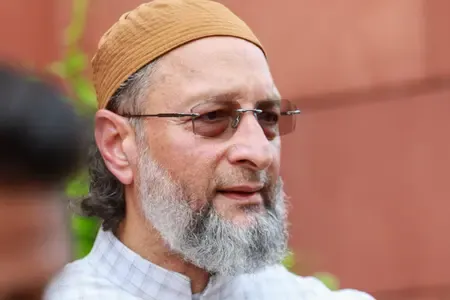
AIMIM president Asaduddin Owaisi on Sunday, 19 July 2026, declared his party's intent to expand its footprint in Uttar Pradesh, posting a pointed message on X that signalled a renewed political offensive in India's most populous state.
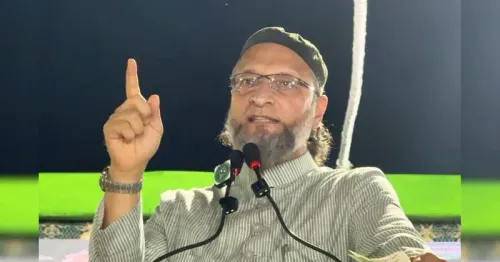
Owaisi's post, written in Hindi, read: 'Uttar Pradesh mein ab sirf plan "MIM" chalega' — translated as 'In Uttar Pradesh, now only plan MIM will run.' The statement, terse and deliberate, was accompanied by a video and quickly drew attention as a declaration of competitive intent ahead of the 2027 Uttar Pradesh assembly elections.
Context
AIMIM — the All India Majlis-e-Ittehadul Muslimeen — is headquartered in Hyderabad and has historically drawn its electoral strength from Telangana. Over the past decade, the party has made deliberate attempts to plant roots in the Hindi belt, fielding candidates in Uttar Pradesh assembly polls and contesting seats in Bihar and Maharashtra. Owaisi has consistently positioned AIMIM as an independent political voice for Muslims, arguing that established parties take the community's votes for granted.
Uttar Pradesh, with a population exceeding 24 crore, carries the largest share of Lok Sabha seats — 80 — and its assembly of 403 seats makes it the single most consequential state election in India. The state's Muslim electorate, estimated at roughly 19 per cent of voters, has historically been courted by the Samajwadi Party and, to a lesser extent, the Congress.
Policy Backdrop
AIMIM's expansion strategy in Uttar Pradesh has been a recurring point of debate in Indian electoral politics. Critics from opposition parties have argued that AIMIM's presence in multi-cornered contests fragments the non-BJP vote, effectively benefiting the ruling party. Owaisi has firmly rejected this framing, insisting that Muslim voters deserve a party that places their concerns at the centre of its agenda rather than treating them as a captive vote bank.
The 2022 Uttar Pradesh assembly elections saw AIMIM field candidates across several constituencies, though the party's overall tally remained modest. The experience, however, built organisational groundwork and name recognition that the party appears to be leveraging ahead of the next cycle. Owaisi's 19 July 2026 post suggests the party is moving from groundwork to active campaign signalling more than a year before polling is expected.
Stakeholders and Impact
The post carries direct implications for Samajwadi Party chief Akhilesh Yadav and the broader INDIA bloc alliance, which has been working to consolidate opposition votes against the BJP in the state. Any meaningful AIMIM campaign in Uttar Pradesh could complicate seat-sharing arithmetic and vote-transfer calculations in constituencies with significant Muslim populations, particularly in western UP, Awadh, and Purvanchal regions.
For Muslim voters in the state, Owaisi's declaration offers an alternative political identity, though whether that translates into seats depends on candidate selection, local alliances, and ground-level organisation — factors that remain to be seen as the 2027 election approaches.
What's Next
Political observers will watch whether AIMIM follows this social-media signal with concrete steps: announcing a UP-specific campaign structure, holding public rallies, or naming a state leadership team. Owaisi has a track record of using sharp, viral statements to anchor media cycles and test public response before committing organisational resources. The coming weeks should clarify whether 'plan MIM' is a fully formed electoral strategy or an opening salvo designed to stake out negotiating space in a crowded opposition landscape.
With the 2027 Uttar Pradesh assembly elections drawing closer, every party's positioning in the state will be scrutinised. AIMIM's ability to convert Owaisi's considerable social-media influence into votes on the ground remains the central question for the party's UP ambitions.
Point of View
Quotable statement that dominates a news cycle and forces rival parties to respond on his terms. In the context of the 2027 Uttar Pradesh elections, it puts the Samajwadi Party and the broader opposition on notice that Muslim votes will not flow automatically to any single bloc. The move fits a longer arc in which AIMIM has systematically attempted to build a Hindi-belt presence, accepting short-term electoral limitations in exchange for long-term identity-politics positioning. Whether this translates into seats or primarily serves as leverage in potential alliance negotiations will define the real impact of this announcement.
NationPress
18 Oct 2026
Frequently Asked Questions
What did Owaisi say about Uttar Pradesh on 19 July 2026?
Owaisi posted in Hindi on X saying 'In Uttar Pradesh, now only plan MIM will run,' signalling AIMIM's intent to mount an active electoral campaign in the state ahead of the 2027 assembly elections.
What is AIMIM's history in Uttar Pradesh elections?
AIMIM has contested Uttar Pradesh assembly elections, including the 2022 polls, fielding candidates across multiple constituencies. The party's seat tally remained limited, but it used those elections to build organisational presence in the state.
How many assembly seats does Uttar Pradesh have?
Uttar Pradesh has 403 assembly seats, making it the largest state legislature in India and the most consequential state election for national political parties.
Does AIMIM contesting UP elections hurt opposition parties?
Critics from the Samajwadi Party and Congress argue that AIMIM's presence splits the non-BJP vote in Muslim-majority constituencies. Owaisi rejects this, saying Muslim voters deserve an independent political platform rather than being taken for granted by established parties.
When are the next Uttar Pradesh assembly elections?
The next Uttar Pradesh assembly elections are expected in early 2027. Political parties, including AIMIM, have begun positioning themselves well in advance of the polling cycle.