CM Majhi Hails ABVP Sweep, Campus Poll Revival in Odisha
Synopsis
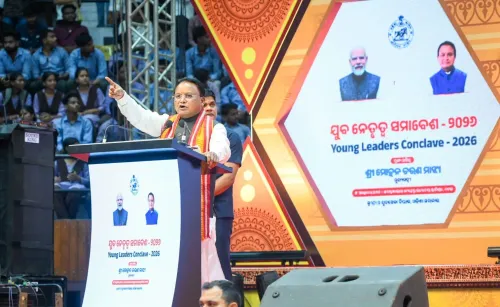
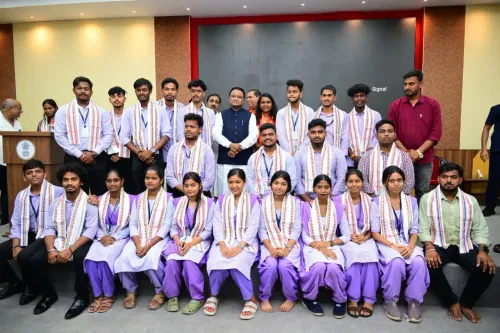
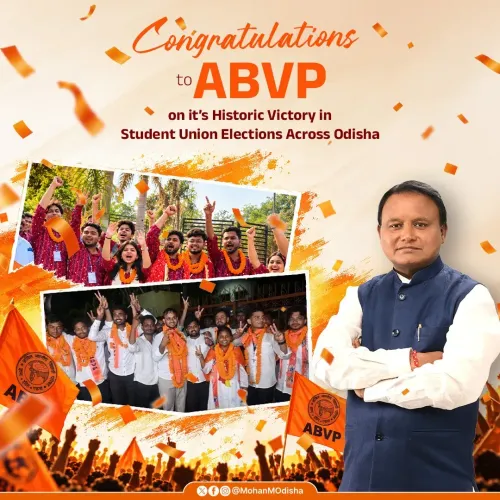
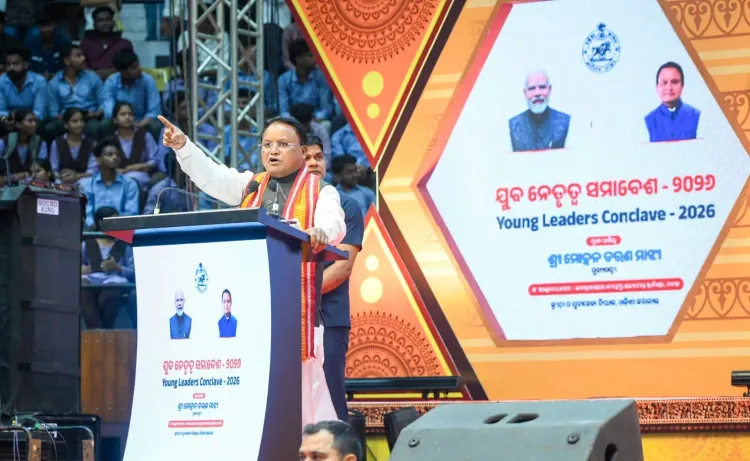
Odisha CM Mohan Charan Majhi addressed newly elected student union leaders at Cuttack Indoor Stadium, celebrating ABVP's sweep of revived campus elections — the first in nearly a decade — as a youth endorsement of PM Modi's development agenda and a rebuke of the BJD's 2017 poll ban.
Key Takeaways
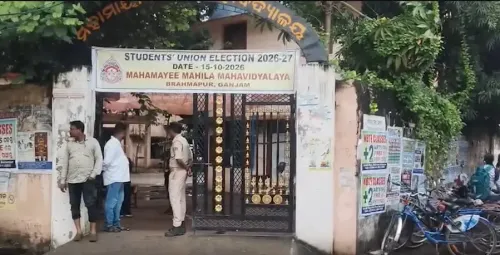
Odisha's campus elections were revived after a nearly nine-year ban imposed by the previous BJD government in 2017 .
ABVP swept student union polls across Odisha campuses, a result CM Majhi compared to the organisation's performance at Delhi University .
Majhi addressed newly elected student representatives at Cuttack Indoor Stadium on October 18, 2026 , calling the peaceful elections a 'triumph of democratic faith over fear.' The CM outlined an agenda for new student leaders: resolving academic and hostel issues, pledging drug-free campuses , and countering 'malicious narratives' through positive engagement.
Majhi accused former BJD leaders of staying 'cowardly silent' when their own government banned student polls despite having a history of student activism.
After nearly a decade of silence, student democracy is back on Odisha's campuses — and Odisha Chief Minister Mohan Charan Majhi wasted no time framing the results as a political verdict that echoes all the way to New Delhi. Addressing newly elected student union representatives at the Cuttack Indoor Stadium on Sunday, October 18, 2026, Majhi declared the peaceful conduct of the elections a 'triumph of democratic faith over fear.'
A Ban Lifted, a Mandate Delivered
The backdrop matters. The previous Biju Janata Dal-led government under former Chief Minister Naveen Patnaik had banned campus elections in 2017 — a restriction that stood for nearly nine years. When the BJP took power in Odisha in June 2024, reviving student polls became a stated priority. Majhi did not let critics who warned of restlessness among Gen Z voters deter him. 'Voices urged us to delay under the pretext that Gen Z is upset,' he noted, but his government chose to trust the youth instead.
That trust, he argued, was rewarded. The elections, held across university campuses in the state, were conducted peacefully, with Majhi describing the mandate as 'disciplined and decisive.' He took particular aim at the BJD's record, accusing the party's leaders — who 'once boasted of student activism' — of remaining 'cowardly silent under their boss's diktat' when the ban was imposed.
ABVP's Odisha Wave Mirrors Delhi University
The ideological dividend was unmistakable. The Akhil Bharatiya Vidyarthi Parishad (ABVP), the RSS-affiliated student organisation, swept campuses across Odisha. Majhi explicitly linked the outcome to results at Delhi University, framing both as evidence that the nation's youth stand 'resolutely behind Modi ji's vision of development.' The comparison is deliberate: Delhi University's student union polls have long served as a national barometer for youth political sentiment, and drawing a parallel elevates the Odisha results to that same register.
ABVP has consistently been a vehicle through which the BJP builds a bench of young cadres, and a clean sweep across Odisha's campuses represents both an organisational achievement and a political signal heading into the 2026-27 academic year.
What Majhi Told the Winners
Majhi used the occasion to set an expectation baseline for the new student leaders — and the message was pointed. Winning, he told them, is 'not a matter of arrogance, but the commencement of hard work and solemn responsibility.' He laid out a clear agenda: resolve academic and hostel grievances, make campuses drug-free, and counter what he called 'malicious narratives' through positive engagement.
The drug-free campus pledge in particular signals a governance priority that the newly elected representatives will now be expected to deliver on — not as distant policy, but as ground-level accountability. These young leaders are being handed both credit and a scorecard simultaneously.
Nine years of banned student politics did not extinguish the appetite for it. If the conduct of these elections and the mandate they produced hold up, the revival could define Odisha's campus culture for a generation.
Point of View
Majhi is consciously nationalising a state-level result — turning it into evidence for a pan-India youth mandate behind the Modi government's development agenda. The explicit contrast with the BJD's 2017 ban also serves a long-term narrative purpose: positioning the BJP not just as the party of governance, but as the party that trusted students when its predecessor did not. Whether the newly elected representatives can deliver on the drug-free campus pledge and hostel grievance resolution will determine if this revival retains its political shine through the 2026-27 academic year.
NationPress
18 Oct 2026
Frequently Asked Questions
Why were campus elections banned in Odisha?
The previous BJD-led Odisha government under Chief Minister Naveen Patnaik imposed a ban on campus elections in 2017, a restriction that remained in place for nearly nine years until the BJP government revived them after coming to power in June 2024.
What did ABVP achieve in the Odisha campus elections?
ABVP, the RSS-affiliated student organisation, swept student union polls across Odisha campuses in 2026. CM Mohan Majhi compared the scale of the victory to ABVP's performance at Delhi University.
What did CM Majhi say to newly elected student union representatives?
Majhi told the new student leaders at Cuttack Indoor Stadium that winning is 'not a matter of arrogance, but the commencement of hard work and solemn responsibility,' and asked them to resolve academic and hostel grievances, pledge drug-free campuses, and counter misinformation positively.
When were Odisha's campus elections revived?
Campus elections in Odisha were revived under the BJP government that took power in June 2024, with the first cycle of polls resulting in the student union representatives addressed by CM Majhi at Cuttack Indoor Stadium on October 18, 2026.
How does the Odisha student election result connect to national politics?
CM Majhi explicitly linked ABVP's statewide sweep to the organisation's results at Delhi University, framing both as evidence that India's youth support PM Narendra Modi's vision of development — a framing that situates a state campus poll within a broader national political narrative.