CM Dhami Hails ABVP's Win in Odisha Student Union Polls

Synopsis
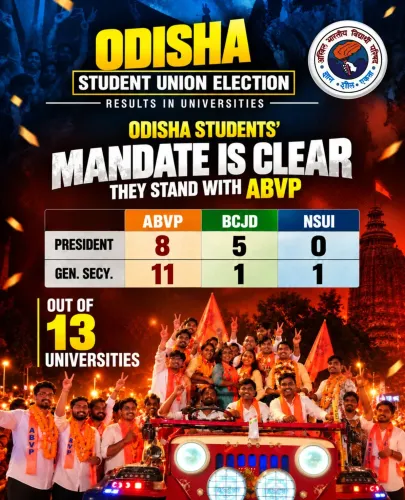
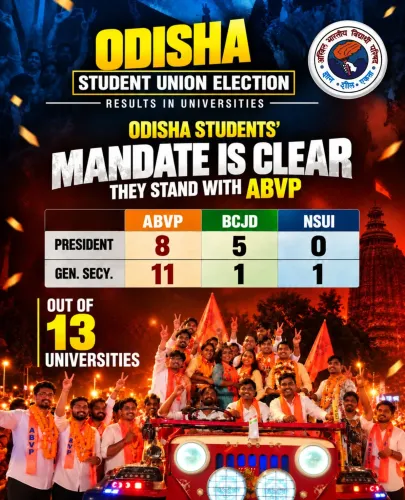
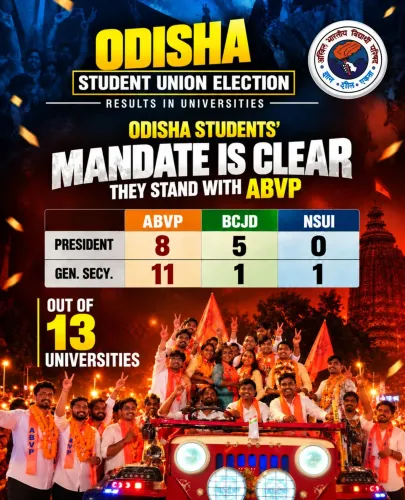
Uttarakhand CM Pushkar Singh Dhami congratulated ABVP on its student union election win in Odisha on 17 October 2026, framing the result as a rejection of forces promoting anarchy and a reaffirmation of youth commitment to national unity.
Key Takeaways
Uttarakhand Chief Minister Pushkar Singh Dhami publicly congratulated ABVP on its student union election victory in Odisha on 17 October 2026 .
ABVP is an RSS -affiliated national student organisation with an active presence in university elections across India.
Dhami framed the victory as a 'clear message' to forces that 'mislead youth and promote anarchy and disorder.' The CM stressed that India's youth is focused on 'nation-building' and stands firm on 'unity, integrity, and national interest.' BJP leaders routinely use ABVP campus victories as indicators of youth sentiment and ideological reach in non-electoral spaces.
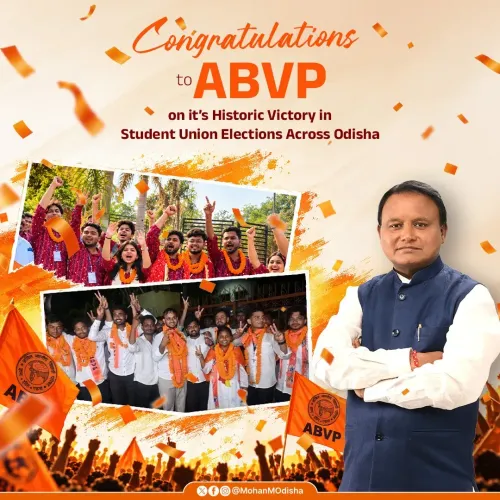
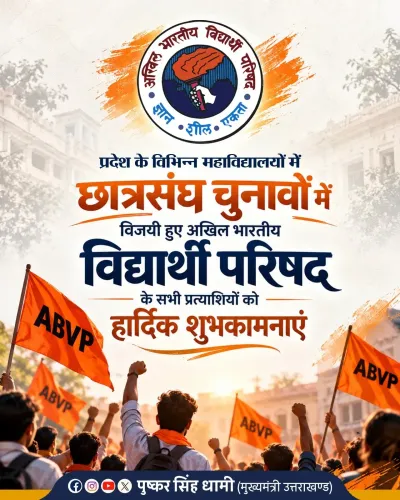
A student union election result in Odisha has drawn congratulations from the highest political level in Uttarakhand — and a pointed political message along with it. Uttarakhand Chief Minister Pushkar Singh Dhami took to X on Saturday, 17 October 2026, to congratulate the Akhil Bharatiya Vidyarthi Parishad (ABVP) on what he described as a 'shaaandar jeet' — a spectacular victory — in the state's student union elections.
The post, written in Hindi, carried congratulations but also a sharp political edge. Dhami framed the win as a 'clear message to those forces that wish to mislead youth and promote anarchy and disorder,' adding that 'the country's youth is channelling its energy into nation-building and standing firmly with the resolve to uphold India's unity, integrity, and national interest.'
ABVP's Campus Footprint in Odisha
The ABVP, affiliated with the Rashtriya Swayamsevak Sangh (RSS), is one of India's largest and most active student organisations, contesting university and college elections across nearly every state. Its campus presence in Odisha has been a long-running feature of student politics in the eastern state, with the organisation regularly fielding candidates in university student union polls.
BJP leaders have a consistent pattern of publicly amplifying ABVP victories, using them as a barometer of youth sentiment and ideological reach beyond the formal electoral arena. For a sitting Chief Minister like Dhami to weigh in signals the political weight the party attaches to campus outcomes — particularly in a state like Odisha where opposition student groups have also maintained organised networks.
The 'Anarchy' Charge and What It Signals
The language Dhami deployed — contrasting 'nation-building' youth against forces promoting 'anarchy and disorder' — is a recurring rhetorical frame in BJP political messaging around campus elections. It positions the ABVP victory not merely as an organisational win but as a referendum on which vision of student engagement — constructive nationalism versus, in the BJP's framing, disruptive radicalism — commands more support among young voters.
Student union elections, while small in scale, are closely watched as early signals of ground-level organisation and youth mobilisation ahead of larger state and national polls. Odisha, which has seen significant political realignment in recent years, makes such signals particularly relevant to both ruling and opposition strategists.
India's campus battleground just delivered a verdict — and the political establishment is already reading the tea leaves.
Point of View
Especially in states with competitive opposition student networks. By invoking 'anarchy,' the CM sharpens the contrast between the BJP-ABVP ecosystem and rival campus movements, a frame that resonates with the party's law-and-order branding. Odisha's shifting political landscape gives the result added salience — ABVP consolidating campus ground there could foreshadow deeper organisational gains. The post also serves an internal function, visibly rewarding grassroots workers with national-level recognition from a senior leader.
NationPress
17 Oct 2026
Frequently Asked Questions
What did CM Pushkar Singh Dhami say about ABVP's Odisha win?
CM Dhami congratulated ABVP workers on their student union election victory in Odisha, calling it a 'clear message' to forces that seek to mislead youth and promote anarchy, and praised young people for channelling their energy into nation-building.
What is ABVP and which organisation is it affiliated with?
ABVP, or Akhil Bharatiya Vidyarthi Parishad, is one of India's largest student organisations, affiliated with the RSS. It actively contests student union elections at universities and colleges across the country.
Why do BJP leaders publicly comment on ABVP student election wins?
BJP leaders regularly highlight ABVP campus victories as a signal of youth support for their ideological agenda. It also serves to motivate grassroots student workers and frame campus politics within a broader narrative of nationalism versus disruption.
Why is Odisha significant for student union election results?
Odisha has experienced notable political shifts in recent years, making student union results a closely watched indicator of ground-level organisational strength for parties and their affiliated student wings ahead of future elections.
When did Dhami post about the ABVP Odisha victory?
Dhami posted his congratulations on Saturday, 17 October 2026 , via his official X account, tagging both the national ABVP handle and its Odisha unit.