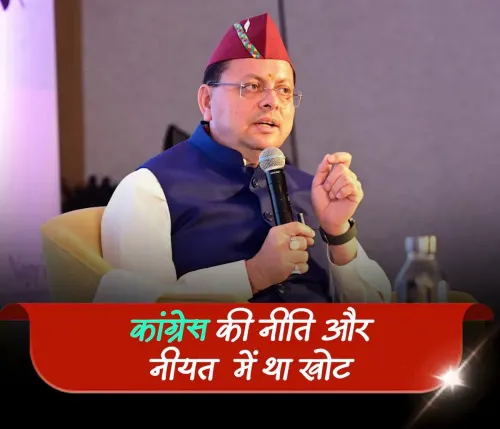
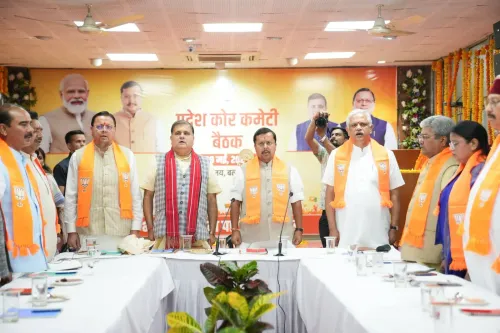
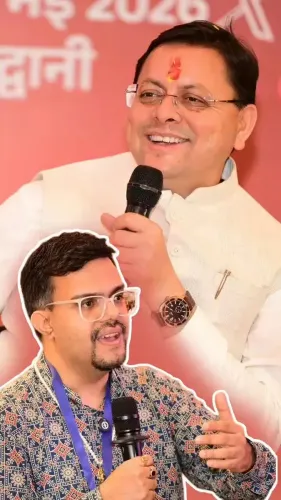
CM Dhami Hails ABVP's College Poll Sweep in Uttarakhand
Synopsis
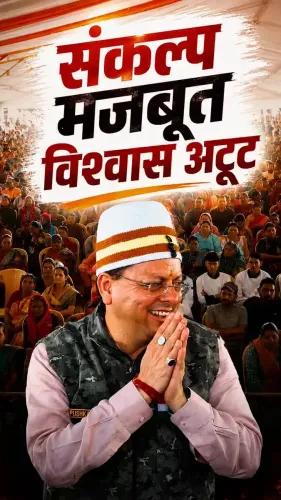
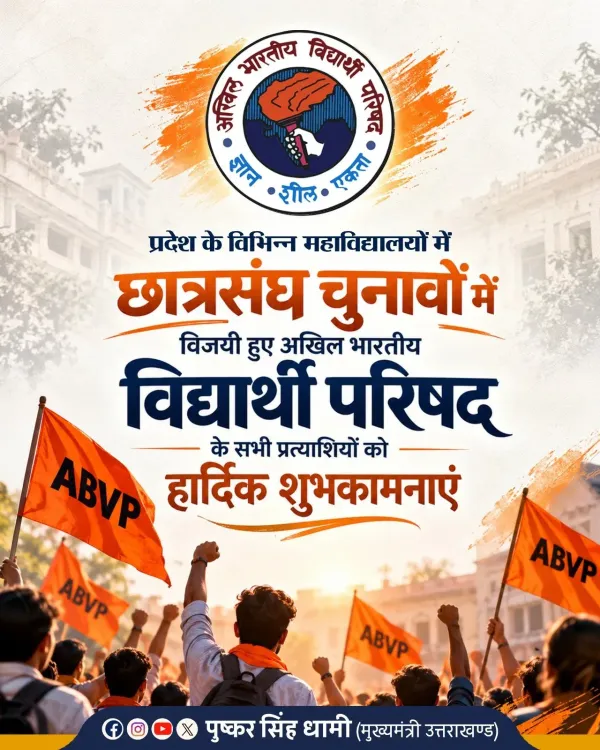
Uttarakhand CM Pushkar Singh Dhami hailed ABVP's sweep of state college student union elections on 29 September 2026, framing the results as youth endorsement of nationalism and a rebuke of what he called forces promoting casteism and anti-army sentiment.
Key Takeaways
ABVP won student union elections across colleges in Uttarakhand , according to CM Dhami's post dated 29 September 2026 .
CM Pushkar Singh Dhami framed the victories as proof that Uttarakhand's youth backs a nationalist, student-welfare-oriented organisation.
Dhami's post targeted unnamed forces he accused of using 'comedy, casteism, and insults to the army and national icons' to mislead students.
ABVP , founded in 1949 and RSS-affiliated, has a seven-decade history of contesting campus elections on a nationalist platform.
The post tagged PM Narendra Modi and Home Minister Amit Shah , elevating a state campus result into national BJP messaging.
A roar from Uttarakhand's campuses has handed Chief Minister Pushkar Singh Dhami a political talking point he is wasting no time amplifying — the Akhil Bharatiya Vidyarthi Parishad (ABVP) swept student union elections across state colleges, and Dhami called it a decisive rejection of what he termed forces that mislead youth through 'comedy, casteism, and the insult of the armed forces and national icons.'
What the Campus Verdict Said, in Dhami's Words
Posting on 29 September 2026, Dhami congratulated all winning ABVP candidates with the declaration: 'Yuvaon ki hunkar se benaqab hui jhooth ki goonj' — 'the roar of youth has unmasked the echo of lies.' He argued the results proved that Uttarakhand's youth stands with a nationalist ideology and student-welfare-focused organisation, not with ideas that 'confuse youth with falsehoods.' The post tagged Prime Minister Narendra Modi, Union Home Minister Amit Shah, and the official ABVP handle, signalling the message was pitched well beyond state borders.
ABVP's Long Campaign Trail Through Indian Campuses
ABVP, founded in 1949 and aligned with the RSS ideological ecosystem, has contested student union elections across India for over seven decades. In BJP-governed states, its campus victories are routinely framed by party leaders as proof of grassroots youth endorsement for the nationalist platform — a pattern that plays out with particular intensity in states like Uttarakhand, which Dhami and the BJP brand as Devbhoomi (land of the gods), carrying a cultural-nationalist charge. Dhami himself, Chief Minister since 2021, has consistently positioned youth outreach as a pillar of his governance pitch.
The Implicit Target: A Sharpened Political Edge
Dhami's post does not name any rival organisation, but the language is pointed. References to 'comedy, casteism' and 'insulting the army and national icons' echo a line of attack BJP leaders have directed at opposition-aligned youth groups and certain public figures in recent political discourse. The phrase 'desh todne wali vichaardhara' — 'ideology that breaks the nation' — is a recurring rhetorical marker in BJP messaging against groups it frames as anti-national. By routing this framing through a student election result, Dhami ties campus politics directly to the larger ideological contest the party is fighting at the state and national level.
Student union polls in Indian colleges rarely carry binding policy consequence, but their symbolic weight in a state's political calendar is real. For the BJP, an ABVP wave in Uttarakhand's colleges is a signal to project; for opposition student outfits like the NSUI or SFI, the results will sharpen the question of how to compete on campuses where the ruling party's student wing holds structural advantages.
Uttarakhand's youth have voted — and the Chief Minister is making sure the country hears it.
Point of View
High-visibility proxy for broader political momentum, and Dhami's post fits squarely into that playbook. By tagging the Prime Minister and Home Minister, he converts a campus sweep into a national signal of ideological health for the party's youth base. The sharp language targeting 'comedy, casteism, and army insults' suggests the BJP is actively trying to define the cultural battlefield ahead of future electoral cycles in Uttarakhand. Whether ABVP's campus dominance translates into durable youth loyalty at the ballot box — or remains a symbolic win in a controlled electoral environment — is the question opposition student groups will be forced to answer.
NationPress
29 Sept 2026
Frequently Asked Questions
What is ABVP and why does it matter in Indian student politics?
ABVP, or Akhil Bharatiya Vidyarthi Parishad, is India's largest student organisation, founded in 1949 and ideologically aligned with the RSS. It contests student union elections in colleges and universities across India on a nationalist platform and is widely seen as the student wing of the BJP's broader ideological ecosystem.
What did CM Dhami say about the Uttarakhand student union election results?
CM Pushkar Singh Dhami congratulated all ABVP winners and said the results showed Uttarakhand's youth stands with nationalist ideology, rejecting forces he accused of misleading students through 'comedy, casteism, and insults to the army and national icons.'
Which colleges in Uttarakhand held student union elections?
The exact list of participating colleges cannot be independently confirmed from available information; Dhami's post refers broadly to colleges across the state without specifying institutions or margins.
Who are the rival student organisations to ABVP in Uttarakhand?
The main rival student organisations contesting campus elections against ABVP nationally include the NSUI (affiliated with the Indian National Congress) and the SFI (affiliated with the Left). Their specific performance in the referenced Uttarakhand elections has not been detailed in available information.
Why did CM Dhami tag PM Modi and Amit Shah in his student election post?
Tagging PM Narendra Modi and Home Minister Amit Shah is a common BJP state-leader practice to amplify state-level wins into national party messaging, signalling ideological alignment and seeking wider visibility for the results.