CM Dhami: Today's Youth Votes on Work, Not Words
Synopsis
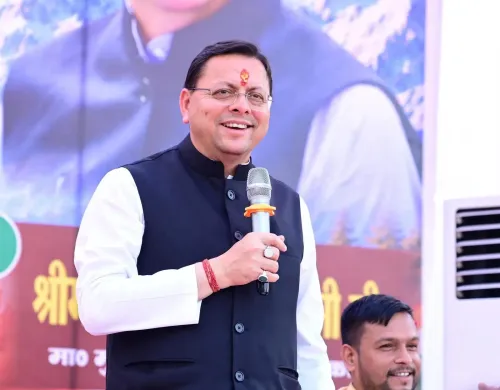
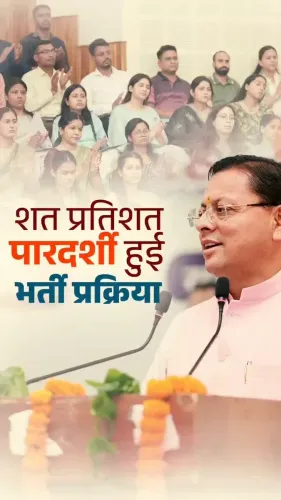
Uttarakhand Chief Minister Pushkar Singh Dhami posted on X that today's youth votes on work, not words — a pointed signal of the BJP's performance-first electoral strategy ahead of the 2027 state assembly elections.
Key Takeaways
CM Pushkar Singh Dhami posted on 26 May 2026 that today's youth votes on work, not rhetoric.
The post is widely seen as an early framing of the BJP 's pitch for the 2027 Uttarakhand assembly elections .
In the 2022 assembly polls , the BJP won 47 of 70 seats on a platform of visible development delivery.
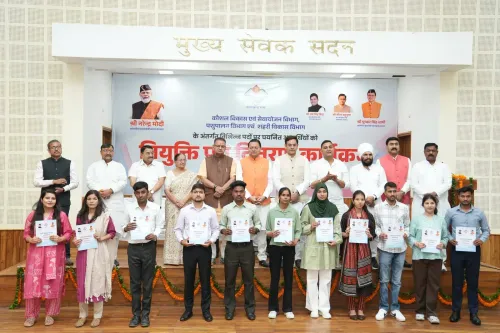
Post-2022, the Uttarakhand government expanded skill-development and self-employment schemes for the 18-35 age group .
By anchoring the electoral argument in measurable outcomes, Dhami raises the bar for his own administration's performance over the next year.
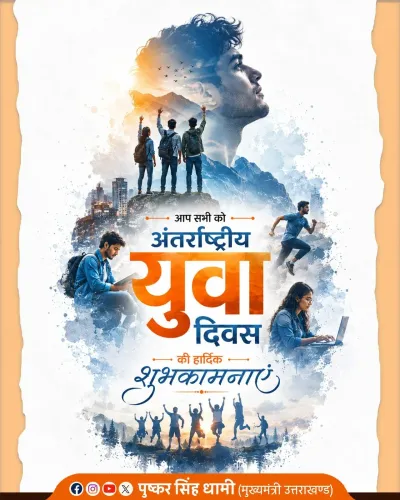
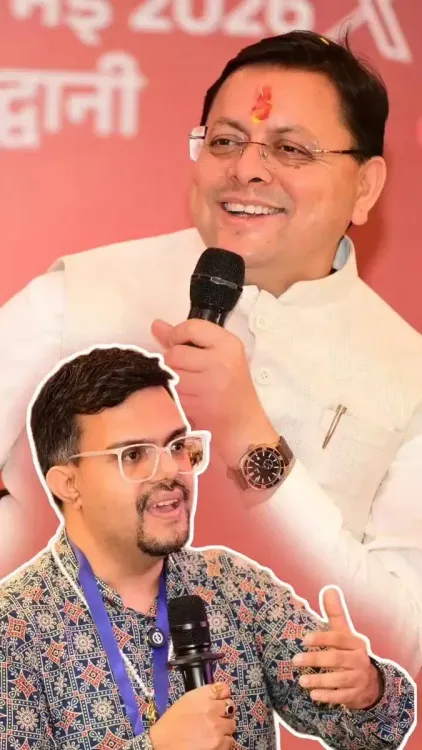
Uttarakhand Chief Minister Pushkar Singh Dhami on Tuesday, 26 May 2026, posted a pointed political message on X, declaring that the new generation of voters judges governments on performance and delivery rather than rhetoric. The post, shared at 8:30 PM IST, comes as political activity in Uttarakhand begins to build ahead of the 2027 state assembly elections.
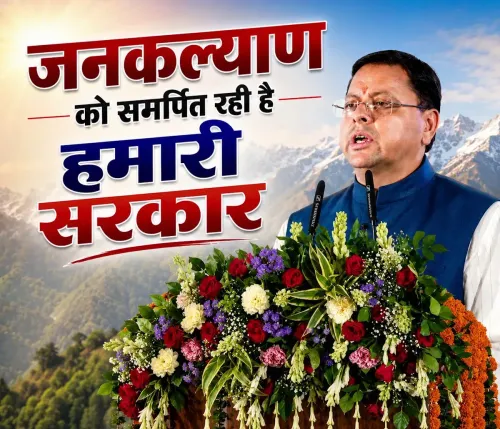
In his post, Dhami wrote: 'Aaj ka yuva ab kewal baaton par nahin, kaam par vote deta hai' — 'Today's youth no longer votes on words alone, but on work.' The statement, brief but deliberate, frames the Bharatiya Janata Party's anticipated re-election pitch around a governance-first narrative.
Context
The remark arrives roughly a year before Uttarakhand is scheduled to go to the polls for its next assembly election. Chief Minister Dhami, who has led the state since 2021, has consistently positioned his administration as one focused on completing projects rather than making fresh promises. The post appears to be a pre-emptive framing of the electoral argument his party intends to make.
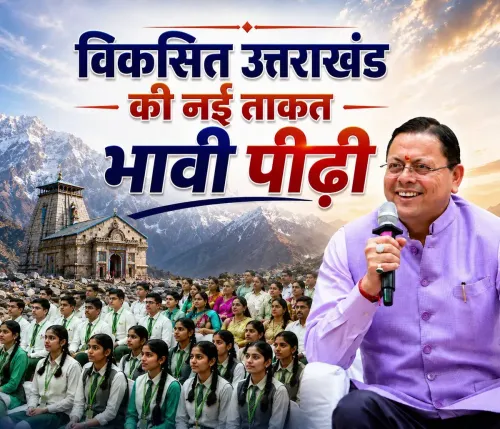
Younger voters — broadly the 18-35 age group — constitute a significant share of the electorate in Uttarakhand, a state with high rates of youth out-migration historically linked to limited local employment opportunities. Any party seeking a majority must speak credibly to this demographic.
Policy Backdrop
The 2022 Uttarakhand assembly elections offered an early test of this approach. The BJP under Dhami campaigned heavily on visible infrastructure delivery and welfare transfers, securing 47 seats in the 70-member assembly. The result was widely read as a validation of the 'double-engine governance' model — the argument that a state government aligned with the central government delivers faster and more visibly.
Following that victory, the Uttarakhand government expanded skill-development and self-employment schemes targeting young residents. These programmes have been central to the administration's claim that it governs for outcomes, not optics.
Across India, state-level campaigns since 2014 have increasingly anchored electoral appeals in measurable outputs: roads built, houses delivered, accounts credited. The BJP in multiple Hindi-belt states has used this framework to consolidate younger voters, whose turnout and preferences now shape close contests.
Stakeholders and Impact
The most direct audience for Dhami's message is the youth electorate of Uttarakhand, particularly first-time and second-time voters who have grown up in an era of direct-benefit transfers and smartphone-visible infrastructure projects. For this cohort, the gap between political promise and ground reality is more immediately visible than it was for earlier generations.
Opposition parties in the state will likely respond by contesting the government's record on employment generation and the pace of scheme delivery — the very metrics Dhami is inviting voters to judge him on. By setting 'work' as the standard, the Chief Minister simultaneously claims credit and raises the stakes for his own administration's performance over the next year.
What's Next
All eyes will now be on the Uttarakhand government's policy announcements and project completion reports in the months leading up to the 2027 assembly elections. Candidate selection, youth-focused employment schemes, and infrastructure completion timelines are likely to become the primary battlegrounds. Dhami's post signals that the ruling party intends to fight the next election on its record — a high-confidence but high-risk strategy that leaves little room for unmet benchmarks.
Point of View
He simultaneously claims ownership of Uttarakhand's development record and dares the opposition to contest it on those terms. The framing mirrors a broader BJP playbook — visible welfare transfers and infrastructure as electoral currency — that has proved durable across Hindi-belt states since 2014. The risk is self-evident: every unfinished road or delayed scheme becomes a liability in precisely the accountability frame he has chosen to set.
NationPress
10 Oct 2026
Frequently Asked Questions
What did Uttarakhand CM Pushkar Singh Dhami say on X on 26 May 2026?
CM Dhami posted that today's youth no longer votes on words alone but on work, signalling a performance-based electoral pitch ahead of the 2027 Uttarakhand assembly elections.
When are the next Uttarakhand assembly elections?
The next Uttarakhand legislative assembly elections are scheduled for 2027 , roughly a year after Dhami's post.
How did the BJP perform in the 2022 Uttarakhand elections?
The BJP under CM Dhami won 47 seats in the 70-member Uttarakhand assembly in the 2022 elections, campaigning on completed development projects and welfare delivery.
What schemes has the Uttarakhand government launched for youth?
After the 2022 victory, the Uttarakhand government expanded skill-development and self-employment schemes specifically targeting residents in the 18-35 age group .
What is the double-engine governance model Dhami refers to?
The double-engine governance model argues that a state government aligned with the central government can deliver infrastructure and welfare faster and more visibly — a key BJP campaign theme in Uttarakhand and other states.