CM Dhami calls BJP India's most powerful nation-building movement
Synopsis
Uttarakhand Chief Minister Pushkar Singh Dhami declared the BJP India's most powerful nation-building movement at a state party event on 28 May 2026, crediting PM Modi's vision and the party's organisational culture, in the presence of MPs, Cabinet Ministers, MLAs and party office-bearers.
Key Takeaways
Uttarakhand Chief Minister Pushkar Singh Dhami addressed a BJP party event on 28 May 2026 .
He described the BJP as no longer merely a political party, but the most powerful jan-andolan (people's movement) for nation-building in India.
Prime Minister Narendra Modi 's vision and the party's 'remarkable work culture' were cited as the driving forces behind the party's growth.
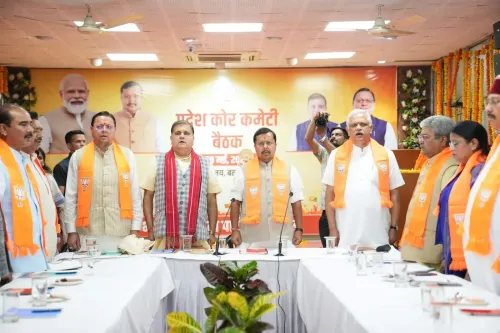
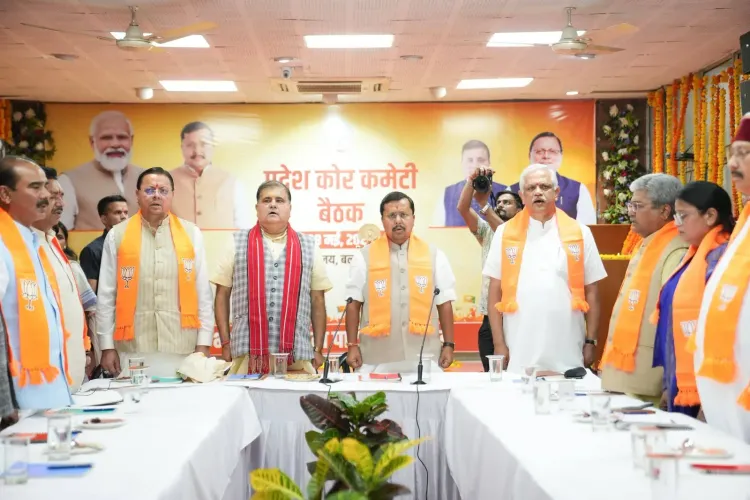
The event was attended by Members of Parliament , Cabinet Ministers , MLAs , and party office-bearers .
The gathering reflects the BJP's sustained effort to frame itself as a mission-driven movement rather than a conventional electoral organisation.
Similar organisational messaging is expected at upcoming BJP state executive sessions in Uttarakhand .
Uttarakhand Chief Minister Pushkar Singh Dhami on Thursday, 28 May 2026 declared that the Bharatiya Janata Party has evolved beyond a conventional political party to become the most powerful people's movement for nation-building in India, crediting Prime Minister Narendra Modi's vision and the party's distinctive organisational culture for the transformation.
Context
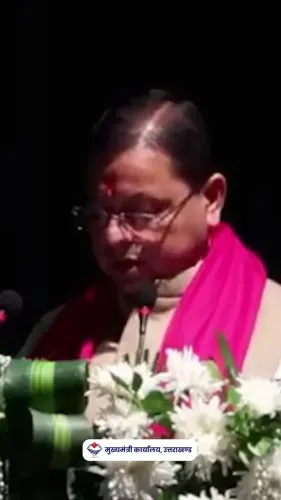
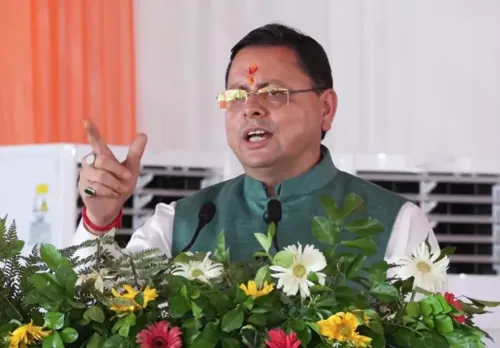
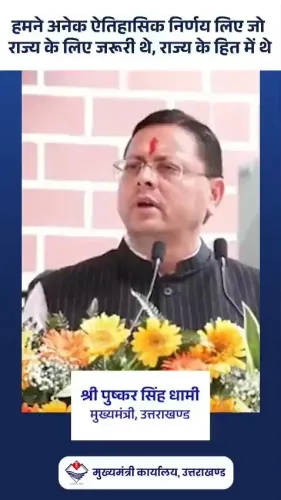
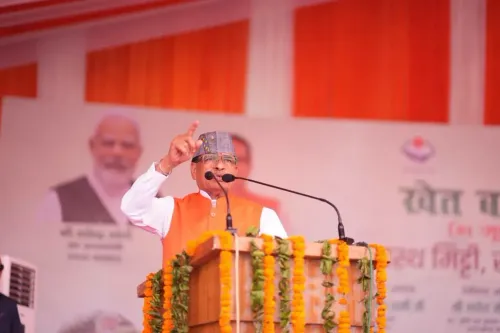
Speaking at a party event in Uttarakhand, Chief Minister Dhami stated — 'BJP aaj keval ek rajnitik dal nahin, balki rashtra nirman ka sabse sashakt jan-andolan ka madhyam ban chuki hai' ['BJP today is not merely a political party, but has become the most powerful medium of a people's movement for nation-building'] — framing the gathering as a reaffirmation of the party's organisational identity. He added that this movement, under the 'respected' Prime Minister Modi's vision and the party's 'remarkable work culture', continues to scale new heights.
The occasion was attended by Members of Parliament, Cabinet Ministers, MLAs, and party office-bearers, signalling a broad-based internal mobilisation rather than a routine administrative event.
Policy Backdrop
Since 2014, the BJP under Prime Minister Modi has systematically promoted a centralised organisational culture across its state units, directing them to align with the Prime Minister's national agenda. The framing of the party as a jan-andolan (people's movement) — rather than a conventional electoral machine — has been a consistent strand of BJP internal communications at both national and state levels.
This narrative serves to reinforce cadre loyalty, distinguish the party from its rivals, and embed policy alignment with central leadership into the grassroots structure. Uttarakhand, a BJP-governed Himalayan state, has been a consistent site for such organisational messaging, with the Chief Minister regularly convening events that bring together central and state functionaries to demonstrate cohesion.
Stakeholders and Impact
The primary audience for this messaging is the BJP's internal ecosystem — MPs, state cabinet ministers, MLAs, and party office-bearers — whose presence at the event underscores the party's emphasis on hierarchical unity. For the broader electorate in Uttarakhand, such gatherings are intended to project a disciplined, mission-driven party image ahead of future electoral cycles.
By explicitly invoking Prime Minister Modi's 'vision' as the engine of the party's rise, Chief Minister Dhami also reinforces the personal brand of central leadership at the state level — a pattern common across BJP-governed states where Chief Ministers publicly align their governance narratives with the Prime Minister's agenda.
What's Next
The BJP is expected to hold further organisational meetings and state executive sessions in the coming weeks, where similar messaging on party culture, leadership alignment, and the jan-andolan framework is likely to be repeated. Observers will watch whether these internal gatherings translate into concrete policy announcements or precede a larger organisational reshuffle in Uttarakhand. The event's composition — spanning legislators, ministers, and party functionaries — suggests the groundwork is being laid for a coordinated political push in the state.
Point of View
Dhami reinforces vertical loyalty within the Uttarakhand unit while signalling alignment with central leadership. The attendance of MPs, cabinet ministers, and MLAs in a single frame is itself a message of organisational discipline, often deployed ahead of electoral cycles or major policy pushes. Analysts will note that such events serve a dual purpose: consolidating the internal rank and file while projecting an image of a unified, mission-driven party to the wider public.
NationPress
11 Oct 2026
Frequently Asked Questions
What did CM Pushkar Singh Dhami say about the BJP at the party event?
Chief Minister Dhami declared that the BJP has become India's most powerful people's movement for nation-building, driven by Prime Minister Modi's vision and the party's organisational work culture.
When and where did CM Dhami make this statement?
The statement was made on 28 May 2026 at a BJP party event in Uttarakhand , attended by MPs, Cabinet Ministers, MLAs and party office-bearers.
What is the BJP's jan-andolan framing?
The BJP has long described itself as a jan-andolan — a people's movement — rather than a conventional political party, a narrative used to reinforce cadre loyalty and distinguish the party from rivals.
Who attended the BJP event addressed by CM Dhami?
The event was attended by Members of Parliament, Cabinet Ministers, MLAs, and party office-bearers from Uttarakhand.
How does CM Dhami's statement connect to PM Modi's leadership?
Dhami explicitly credited Prime Minister Modi's vision and the BJP's centralised organisational culture — institutionalised since 2014 — as the reason the party continues to reach new heights.