Nepal PM Balendra Shah's India visit: Big aid package, border talks on agenda
Synopsis
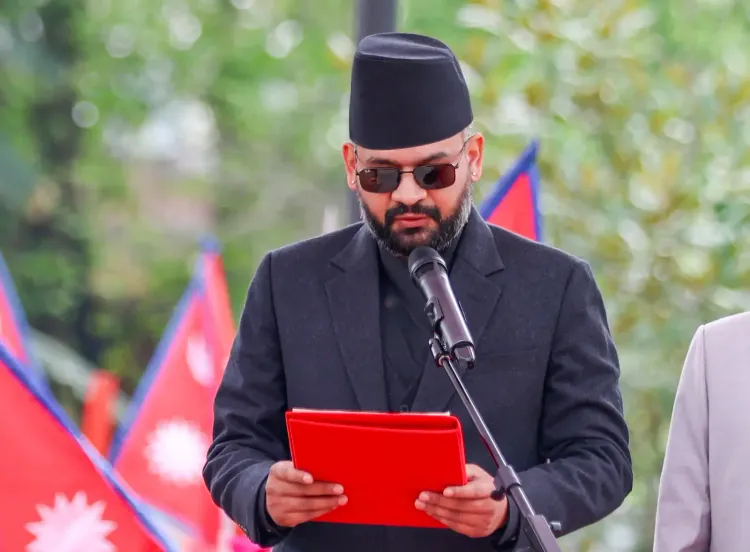
Nepal's PM Balendra Shah is heading to New Delhi in late November with a packed agenda — a large-scale aid request amplified by devastating August floods that killed nearly 1,500 people, longstanding border friction over Lipulekh and Kalapani, a decade-old fight for new air routes, and billions in hydropower deals. This is the most consequential India-Nepal bilateral engagement in years.
Key Takeaways
Nepal PM Balendra Shah is expected to visit New Delhi on 22 or 23 November 2026 , though no official date has been announced.
Nepal is seeking a large-scale assistance package, with urgency heightened by 26 August floods that killed nearly 1,500 people and left more than 5,000 unaccounted for.
India currently provides Nepal four lines of credit totalling US $1.65 billion for infrastructure development.
Border disputes over Lipulekh , Kalapani , and Limpiyadhura , plus new air-entry routes and the Nepal-India Trade Treaty review, are all on the agenda.
Three major hydropower projects — 750-MW West Seti , 480-MW Phukot Karnali , and 450-MW Seti River-6 — all involving India's NHPC , may be placed on the bilateral agenda.
Nepal's Finance Minister Swarnim Wagle has already visited India to discuss post-flood reconstruction assistance ahead of the summit.
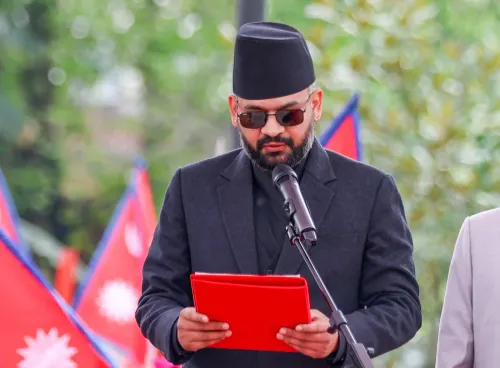
Nepal is seeking a large-scale assistance package from India ahead of Prime Minister Balendra Shah's planned visit to New Delhi, likely on 22 or 23 November 2026, a senior official at Nepal's Ministry of Foreign Affairs confirmed. The visit, yet to be officially announced by either side, is expected to be the first bilateral trip by Shah since he was sworn in as Nepal's Prime Minister on 27 March 2026 following the 5 March parliamentary elections.
Flood Crisis Adds Urgency to Aid Talks
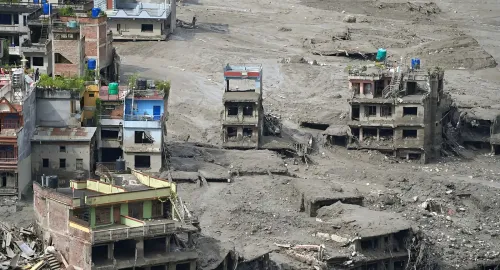
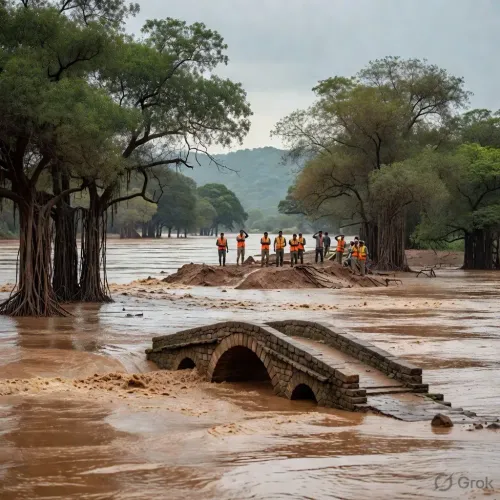
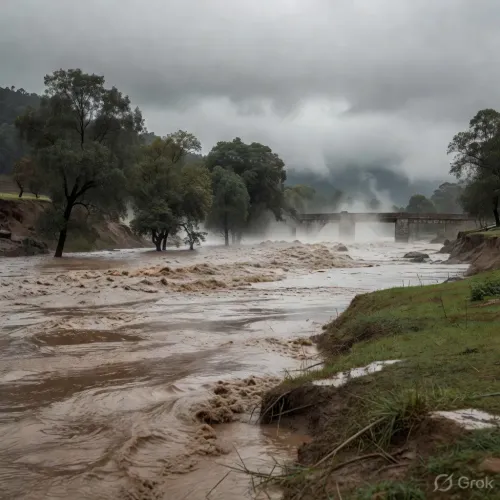
Nepal's appeal for Indian support has taken on fresh urgency following the devastating floods of 26 August, triggered by the swelling of the Bhote Koshi and Trishuli rivers. The disaster killed nearly 1,500 people, with more than 5,000 still unaccounted for, according to Nepal's National Disaster Risk Reduction and Management Authority. Entire communities, hydropower plants, roads, and bridges were swept away, causing billions of dollars in physical damage.
'Although the resources needed for reconstruction are enormous, we had been seeking a large-scale assistance package from India even before the floods struck the country,' the Foreign Ministry official said, without specifying the amount. The official added that Nepal wanted assistance 'with fewer conditions attached to ensure smooth implementation and visible results within a short period.'
Nepal's Finance Minister Swarnim Wagle has already travelled to India to discuss possible assistance for post-flood reconstruction, signalling that preliminary groundwork is under way ahead of the prime ministerial visit.
Lines of Credit and Historical Context
India has been a significant source of development financing for Nepal. Beyond regular grants through budgetary allocations, Nepal is currently utilising four lines of credit (LOCs) from India totalling US $1.65 billion — comprising tranches of US $100 million, US $250 million, US $550 million, and US $750 million — dedicated to infrastructure projects prioritised by the Nepali government, according to the Indian Embassy's website. Following the catastrophic 2015 earthquake, India pledged US $1 billion for post-earthquake reconstruction. Credit extended through the Export-Import Bank of India carries a sourcing requirement, mandating that a certain percentage of components originate in India — a condition Nepal is reportedly seeking to ease.
Border Disputes and Air Routes on the Table
Beyond financial assistance, Nepal's Foreign Ministry official said Kathmandu would seek progress on longstanding border disputes — particularly over the territories of Lipulekh, Kalapani, and Limpiyadhura, which Nepal claims as its own but which India considers part of Uttarakhand. This dispute has been a persistent source of bilateral friction.
Nepal is also pressing for additional air-entry routes through Indian airspace. Currently, approximately 90 per cent of international flights into Nepal enter through a single congested point over Simara in southern Nepal. For nearly a decade, Nepal has sought new entry corridors — through Janakpur, Bhairahawa, and Nepalgunj — to support its newer international airports in Pokhara and Bhairahawa. India has reportedly been reluctant to grant direct low-altitude routes, citing security concerns around sensitive military installations, including the Gorakhpur air base, and complexities in air traffic management.
Trade, Energy, and Infrastructure Projects
The agenda is expected to extend to trade and energy cooperation. Nepal is seeking an early review of the Nepal-India Trade Treaty, which was automatically renewed in 2023. A key Nepali concern is the removal of non-tariff barriers stemming from the requirement that Nepali exporters obtain certification from India's Bureau of Indian Standards (BIS) — a procedural hurdle that has hit exporters of cement, steel, plywood, footwear, sanitary pads, diapers, and electrical wires.
On energy, Nepal is reportedly considering placing major hydropower projects on the summit agenda, including the 750-MW West Seti, the 480-MW Phukot Karnali, and the 450-MW Seti River-6 projects, all involving India's state-owned NHPC. Development of the Phukot Karnali project has faced uncertainty following a Supreme Court ruling requiring NHPC to provide Nepal with at least 21.9 per cent free energy, according to officials at Nepal's Ministry of Energy, Water Resources and Irrigation.
During the visit, the two sides are also expected to inaugurate several India-assisted development projects, including the Nepal Police Academy in Panauti, Kavrepalanchok district, a bridge in Darchula, the integrated check post in Bhairahawa, and a motorable bridge over the Mahakali River. Construction is also expected to be launched on the integrated check post in Dodhara Chandani, the Lower Arun hydropower project, and a petroleum pipeline from Siliguri in India to Jhapa in Nepal, according to reports citing The Kathmandu Post. Other issues on the table reportedly include the Koshi River project, the Ayodhya-Janakpur railway, and Indian support for Nepal's ambitions in artificial intelligence.
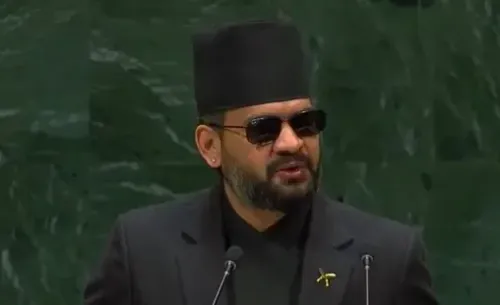
Shah's only foreign trip since taking office was to New York in September to attend the 81st session of the United Nations General Assembly. If confirmed, the New Delhi visit would mark his first bilateral engagement with India — and a defining early test of his government's foreign policy direction.
Point of View
Border territories, air routes, trade barriers, and hydropower — reflects both genuine need and strategic positioning ahead of a visit that has been long delayed since Shah took office in March. India's track record on Nepal's border demands is one of studied patience, and there is little signal New Delhi will move on Lipulekh-Kalapani at this juncture. The more tractable wins — BIS certification reform, additional air routes for Pokhara and Bhairahawa, hydropower project clearances — are where both sides could show early deliverables. The flood reconstruction angle, however, adds a humanitarian dimension that makes it harder for India to offer a minimalist package without diplomatic cost. How India calibrates its response will signal its broader posture toward Kathmandu at a time when China's footprint in Nepal continues to deepen.
NationPress
17 Oct 2026
Frequently Asked Questions
When is Nepal PM Balendra Shah expected to visit India?
Prime Minister Balendra Shah is expected to visit New Delhi on 22 or 23 November 2026, though neither Nepal nor India has officially announced the date. Shah's press advisor confirmed the visit is likely in the final days of November.
What is Nepal seeking from India during the visit?
Nepal is seeking a large-scale financial assistance package for reconstruction following the August 2026 floods, as well as progress on border disputes over Lipulekh, Kalapani and Limpiyadhura, new air-entry routes through Indian airspace, a review of the bilateral trade treaty, and removal of non-tariff barriers affecting Nepali exporters.
How bad were the Nepal floods of August 2026?
The floods on 26 August 2026, triggered by the Bhote Koshi and Trishuli rivers, killed nearly 1,500 people and left more than 5,000 unaccounted for, according to Nepal's National Disaster Risk Reduction and Management Authority. Hydropower plants, roads, bridges, and entire communities were destroyed, causing billions of dollars in damage.
What is the current status of India's financial support to Nepal?
India currently provides Nepal four active lines of credit totalling US $1.65 billion for infrastructure development, in addition to regular budgetary grants. Following the 2015 earthquake, India pledged US $1 billion for reconstruction — establishing a precedent that Nepal is now citing in its appeal for flood-related aid.
Which hydropower projects are expected to be discussed during the visit?
The 750-MW West Seti, 480-MW Phukot Karnali, and 450-MW Seti River-6 projects — all involving India's state-owned NHPC — are reportedly being considered for inclusion on the bilateral agenda. The Phukot Karnali project faces uncertainty following a Supreme Court ruling requiring NHPC to provide Nepal at least 21.9 per cent free energy.