Nepal PM Balendra Shah to raise Himalayan climate crisis at UNGA, seeks $5 bn aid

Synopsis
Nepal's Bhotekoshi floods — which killed over 1,400 and left 5,000 missing — are now a geopolitical flashpoint. Prime Minister Balendra Shah takes the UNGA podium on Friday demanding $5 billion in climate finance from the world's biggest emitters, making a stark case: nations that emit the least are dying the most.
Key Takeaways
Nepal PM Balendra Shah addresses the UNGA on 26 September 2026 — his first overseas trip since assuming office.
Nepal is demanding over $5 billion in climate finance, loss-and-damage support, and reconstruction aid.
The Bhotekoshi floods of 26 August 2026 , triggered by glacier collapse near the Nepal-China border, killed more than 1,400 people and left over 5,000 missing .
A scientific assessment found human-caused warming likely increased the risk of the conditions driving the disaster.
Nepal's Foreign Minister Shishir Khanal has already raised the issue with G-7 nations, calling for concessional finance and Himalayan region protection.
The 'Third Pole' — Himalayas, Hindu Kush, and Tibetan Plateau — covers 5 million sq. km. and supports close to two billion people downstream.
Nepal Prime Minister Balendra Shah is set to address the United Nations General Assembly (UNGA) on Friday, 26 September 2026, placing the Himalayan climate crisis at the centre of his speech and calling for climate justice and financial compensation for low-emission nations bearing disproportionate climate costs. The address, expected in the early morning hours Indian Standard Time, marks Shah's first overseas trip since taking office six months ago.
What Nepal Is Demanding
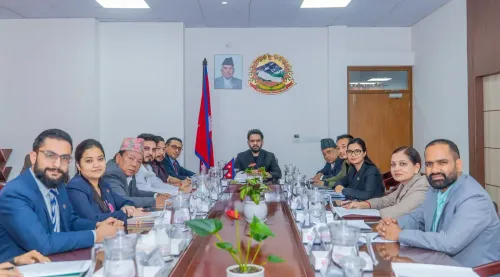
Kathmandu's core demand is a structured global response on three fronts: climate finance, loss-and-damage support, and enhanced international cooperation on Himalayan disaster response. Nepal's Minister for Foreign Affairs Shishir Khanal has already conveyed to G-7 counterparts and the broader international community that preliminary damage assessments point to a recovery bill exceeding $5 billion. Khanal has called for priority to be given to concessional resources, multilateral financial mechanisms, and dedicated protection of the Himalayan region.
According to a government official familiar with the preparations, Prime Minister Shah will draw attention to the recurring destruction of lives, livelihoods, and infrastructure, and push for greater support on recovery, reconstruction, and long-term climate resilience. Nepal contributes a negligible share of global greenhouse gas emissions yet absorbs a disproportionately large share of climate-induced disasters — a central argument in Kathmandu's case for climate justice.
The Bhotekoshi Disaster and Its Toll
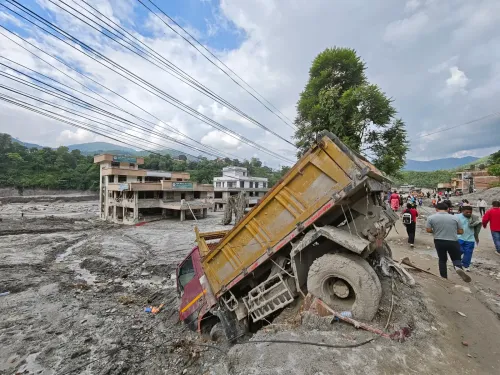
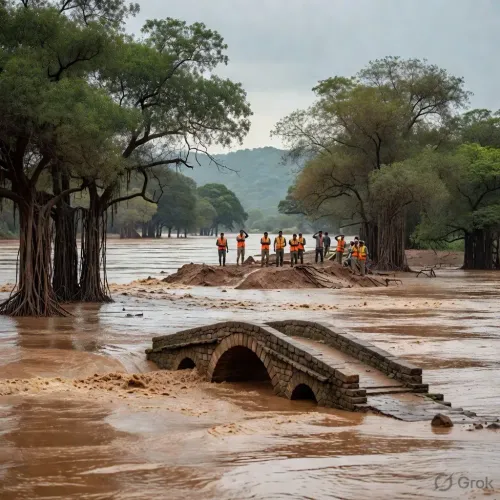
Nepal's UNGA push is anchored in the catastrophic Bhotekoshi floods of 26 August 2026, triggered by an ice-rock collapse and glacier-related disaster near the Nepal-China border. The resulting deluge in the Bhotekoshi River basin reportedly killed more than 1,400 people and left over 5,000 missing. Satellite imagery and scientific analyses indicate that glacier collapse — potentially accelerated by unusually warm conditions and accelerating ice melt — was a primary driver of the catastrophe.
A recent scientific assessment found that human-caused warming likely increased the risk of the conditions that contributed to the disaster, according to reports. Scientists and international experts have said the event underscores growing concerns that climate change is destabilising glaciers and mountain slopes across the Himalayas, with consequences that extend well beyond Nepal's borders.
A Pattern of Himalayan Extremes
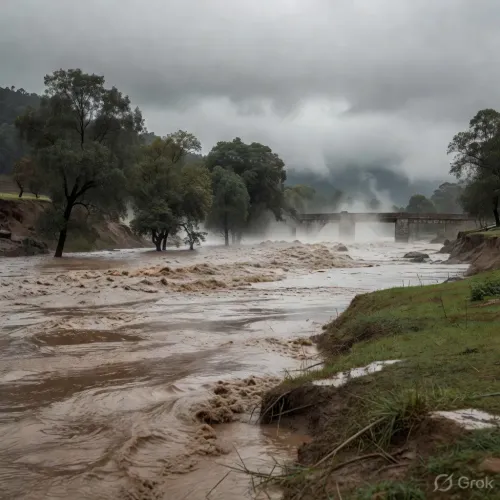
The Bhotekoshi disaster is the latest in a worsening series. In September 2024, extreme rainfall triggered catastrophic floods and landslides across large parts of Nepal, claiming more than 200 lives and damaging critical infrastructure. Nepal's Department of Hydrology and Meteorology recorded unprecedented precipitation across several districts, with rivers in the Bagmati, Narayani, and Koshi basins surpassing historic flood levels.
The high-mountain region spanning the Himalayas, Hindu Kush, and Tibetan Plateau — collectively known as the 'Third Pole' — covers roughly 5 million sq. km. and feeds rivers that support close to two billion people. UN Secretary-General António Guterres, during his 2023 visit to Nepal, warned that 'the rooftops of the world are caving in' due to accelerating glacier melt, and has since reiterated that Himalayan climate impacts are arriving faster and with greater intensity than previously modelled.
Experts caution that the severity of flooding is not driven by climate alone. Rapid urbanisation, inadequate drainage, encroachment on floodplains, poorly planned development, and deforestation in vulnerable catchments all amplify disaster impact. Studies of the 2024 floods specifically identified unplanned construction and weak infrastructure as major compounding factors.
Nepal's International Climate Diplomacy
Kathmandu has increasingly leveraged multilateral platforms — from the UNGA and UN climate conferences (COPs) to its own Sagarmatha Sambaad dialogue process — to sound the alarm on Himalayan ecology. This week's UNGA appearance represents an escalation of that campaign, as Nepal attempts to convert the Bhotekoshi disaster into sustained international political and financial commitments rather than a one-off emergency response.
The economic stakes are significant: hydropower, agriculture, tourism, and water resources — the pillars of Nepal's national economy — are all acutely vulnerable to shifting climatic conditions. How the international community responds to Shah's address at the UNGA could shape both Nepal's reconstruction timeline and the broader global debate on loss-and-damage financing ahead of the next major climate summit.
Point of View
400 killed — gives Kathmandu its most visceral evidence yet, yet the $5 billion figure will encounter the same donor-fatigue and burden-sharing disputes that have hobbled every COP climate finance negotiation. What mainstream coverage underplays is the compounding factor: Nepal's own governance failures — unplanned construction, weak drainage, floodplain encroachment — amplify every climate shock, meaning that even a well-funded international response will underdeliver without parallel domestic reforms. Shah's first foreign trip as Prime Minister is a calculated move, but converting global sympathy into binding, disbursed finance remains the hard problem.
NationPress
24 Sept 2026
Frequently Asked Questions
What is Nepal PM Balendra Shah expected to say at UNGA 2026?
Shah is expected to demand climate justice and international compensation for low-emission nations devastated by climate-induced disasters, citing the Bhotekoshi floods that killed over 1,400 people. He will seek commitments on climate finance, loss-and-damage support, and long-term Himalayan disaster cooperation.
What were the Bhotekoshi floods and how bad was the damage?
The Bhotekoshi floods of 26 August 2026 were triggered by an ice-rock collapse and glacier-related disaster near the Nepal-China border, causing catastrophic flooding in the Bhotekoshi River basin. The disaster reportedly killed more than 1,400 people and left over 5,000 missing, with preliminary reconstruction costs estimated above $5 billion.
How much financial aid is Nepal seeking from the international community?
Nepal's preliminary assessment puts the recovery and reconstruction bill at over $5 billion. Foreign Minister Shishir Khanal has called on G-7 nations and multilateral institutions to prioritise climate finance, concessional resources, and disaster preparedness funding for Nepal.
Why is Nepal particularly vulnerable to Himalayan climate disasters?
Nepal sits within the 'Third Pole' — the Himalayas, Hindu Kush, and Tibetan Plateau — which holds the world's largest volume of ice outside the polar regions and feeds rivers supporting nearly two billion people. As glaciers retreat and permafrost thaws, glacial lake outburst floods and landslides intensify, while Nepal's negligible greenhouse gas emissions mean it bears the consequences of warming it did little to cause.
Is this Balendra Shah's first international trip as Nepal's Prime Minister?
Yes, the UNGA address on 26 September 2026 is Shah's first overseas trip since taking office approximately six months ago. Kathmandu has chosen the visit to escalate its international climate diplomacy, building on earlier engagements at the Sagarmatha Sambaad dialogue and previous UN climate conferences.