Bhote Koshi floods: Nepal FM Khanal urges India-Nepal ecological reframe after 300 deaths

Synopsis
With nearly 300 dead from a single glacial burst on the Nepal-China border, Nepal's Foreign Minister has made a striking public argument: India and Nepal must stop defining their relationship through culture and religion alone, and start treating the Himalayan ecosystem as a shared survival crisis — one that could just as easily devastate Indian border districts next time.
Key Takeaways
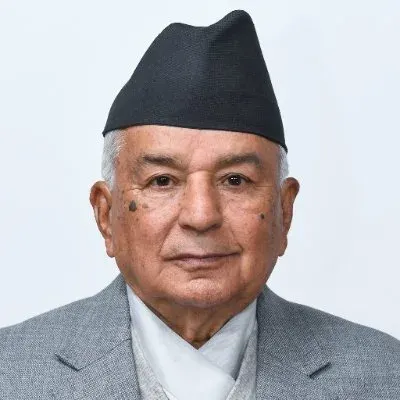
Nepal Foreign Minister Shisir Khanal called for reframing India-Nepal ties in ecological terms at the NDTV World Anviksha Summit in Kathmandu on 27 August .
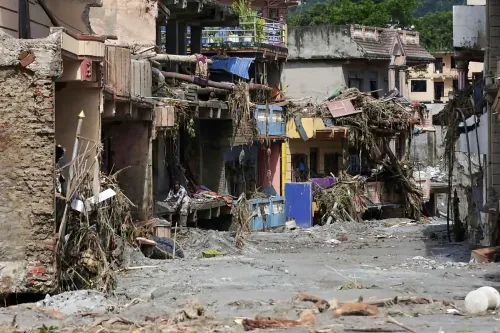
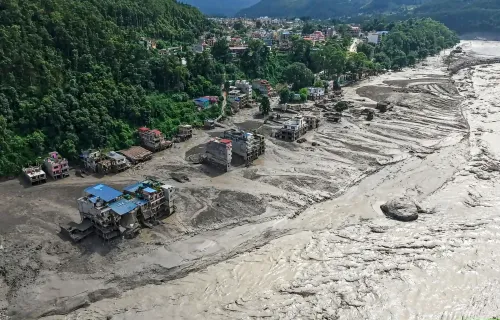
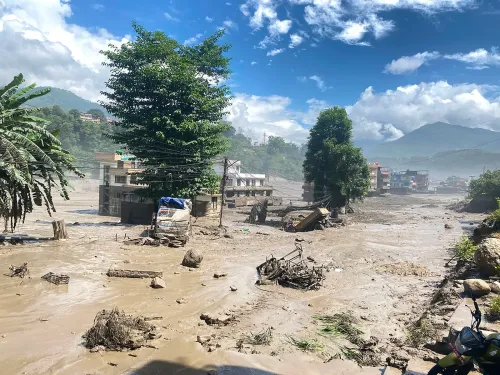
The Bhote Koshi floods , triggered by a glacial burst in the Nepal-China border region , have killed nearly 300 people , with recovery ongoing.
Khanal warned that although India was spared this time, downstream Indian areas bordering Nepal have been affected by similar floods in the past.
He called for a four-nation Himalayan ecological compact involving China , Nepal , India , and Bhutan , urging cooperation despite political rivalries.
Nepal reaffirmed its policy of maintaining balanced ties with both India and China , refusing to prioritise one over the other.
Nepalese Foreign Minister Shisir Khanal on Thursday, 27 August called for a fundamental reframing of India-Nepal relations in ecological terms, warning that the shared fragility of the Himalayan ecosystem poses an existential challenge that transcends traditional diplomatic language. His remarks came as the death toll from the Bhote Koshi floods climbed to nearly 300, with recovery operations still under way across multiple downstream districts of Nepal.
The Floods That Prompted the Call
A glacial burst in the Nepal-China border region on Wednesday sent torrents surging down the transboundary Bhote Koshi River, originating in the Tibetan region of China and carving a path of destruction through Nepal. Nepal Police confirmed on Thursday that bodies were still being recovered from several districts as the toll approached 300. The scale of the disaster gave Khanal's remarks an immediate, visceral backdrop.
What Khanal Said
Speaking at the NDTV World Anviksha Summit in Kathmandu, Khanal urged both nations to move beyond the civilisational framing that has historically defined the bilateral relationship. 'Nepal and India have always talked about our relations in terms of Roti-Beti, Sita-Ram. Religion and civilisational links have always played a big role in our ties. But we have to reframe our relationship in ecological terms. What melts in the Himalayas rises in the sea. This is what we saw live in front of our eyes on Wednesday,' he said.
He acknowledged that the current floods had not yet spilled into Indian territory, but cautioned that the risk is not hypothetical. 'Fortunately, this time the floods have not gone further downstream to actually impact Indian areas bordering Nepal. But this has happened in the past,' Khanal warned.
A Four-Nation Himalayan Compact
Khanal broadened the argument to include all four nations sharing the Himalayan ecology — China, Nepal, India, and Bhutan. He called for setting aside political rivalries in favour of coordinated climate action, noting that the region is among the most vulnerable on earth to accelerating climate change. 'There could be political rivalry, but we have to come together as the Himalayan region is most vulnerable to climate change,' he said.
This comes amid longstanding geopolitical tensions between India and China along the Himalayan frontier, making Khanal's appeal for a shared ecological framework notable in its ambition — and its difficulty.
Nepal's Balancing Act Between India and China
Khanal also addressed Nepal's wider foreign policy posture, reaffirming Kathmandu's intention to maintain strong ties with both New Delhi and Beijing without subordinating one relationship to the other. Using a family analogy to illustrate the point, he said: 'I would not want to tell my father that I'll replace you with the mother or the mother with the father. These are very unique relationships that Nepal has and will continue to maintain.' He stressed that Nepal's approach is guided by rational foreign policy rather than emotional alignment.
What Comes Next
Nepal's call for an ecological compact is unlikely to produce immediate institutional outcomes, given the India-China rivalry that complicates any trilateral or quadrilateral framework in the Himalayan belt. However, the Bhote Koshi disaster may sharpen pressure on all four governments to invest in early-warning systems, transboundary river monitoring, and joint disaster-response protocols. Whether Khanal's summit address translates into a formal diplomatic proposal remains to be seen.
Point of View
And reframes Kathmandu as a multilateral climate actor rather than a small state caught between two giants. But the gap between summit rhetoric and institutional action is vast — no transboundary early-warning mechanism covering the Bhote Koshi basin currently exists, and the India-China border standoff makes any joint Himalayan framework a diplomatic long shot. The real test is whether this disaster produces binding commitments on river monitoring, or simply another round of sympathetic statements. With glacial lake outburst floods projected to increase in frequency, Nepal cannot afford the latter.
NationPress
11 Oct 2026
Frequently Asked Questions
What caused the Bhote Koshi floods in Nepal?
The floods were triggered by a glacial burst in the Nepal-China border region in the Tibetan area of China, sending water surging down the transboundary Bhote Koshi River on Wednesday, 26 August. The disaster devastated multiple downstream districts of Nepal, with the death toll reaching nearly 300.
What did Nepal's Foreign Minister Shisir Khanal say about India-Nepal relations?
Khanal called for reframing India-Nepal ties in ecological terms, arguing that the shared Himalayan ecosystem is a survival issue that goes beyond the traditional cultural and religious bonds the two countries emphasise. He made the remarks at the NDTV World Anviksha Summit in Kathmandu on 27 August.
Did the Bhote Koshi floods affect India?
According to Khanal, the current floods did not extend downstream to affect Indian areas bordering Nepal. However, he warned that similar incidents have caused cross-border damage in the past and could do so again in the future.
Why did Khanal call for a four-nation Himalayan ecological compact?
Khanal argued that China, Nepal, India, and Bhutan are ecologically interconnected through the Himalayan system, making unilateral or bilateral responses insufficient. He said political rivalries must be set aside because the region is among the most climate-vulnerable on earth.
How does Nepal balance its ties with India and China?
Nepal's stated policy is to maintain strong, independent relationships with both neighbours without replacing or subordinating one to the other. Khanal used a family analogy to describe the two relationships as distinct and irreplaceable, emphasising a rational rather than emotionally aligned foreign policy.