Bhote Koshi floods: Nepal's 'River Man' Megh Ale warns against hydrodollar model

Synopsis
Nepal's deadliest flash flood in recent memory — 177 dead, 800 missing — has given conservationist Megh Ale's long-standing warnings new urgency. His argument: Nepal's hydrodollar ambitions and under-construction dams turned a natural disaster into a man-made catastrophe, and India shares the responsibility for what happens to the Ganges next.
Key Takeaways
The Bhote Koshi River floods have killed at least 177 people , with more than 800 still out of contact, according to Nepal Police .
The disaster originated in the Tibetan region of China and swept through multiple Nepali districts; Chitwan recorded the highest body count.
Conservationist Megh Ale warned that under-construction dams worsened the catastrophe by generating additional debris as infrastructure collapsed.
Ale called on Nepal to abandon its 'hydrodollar' development model and urged India to stop encouraging dam construction in Nepal.
He warned that the rivers of the Hindu Kush Himalayas are the lifeline of over 1.5 billion people and that 'this is just the beginning.' Scientific investigations are ongoing to determine whether a glacial lake outburst was involved in triggering the event.
Conservationist and social entrepreneur Megh Ale, widely known as Nepal's 'River Man', has called on Nepal to urgently overhaul its development model and rethink its aggressive expansion of hydropower projects, warning that the catastrophic Bhote Koshi River floods are a symptom of a far deeper crisis threatening the Himalayas. Ale made the remarks on 27 August following flash floods that have claimed at least 177 lives, according to Nepal Police.
The Disaster: Scale and Origin
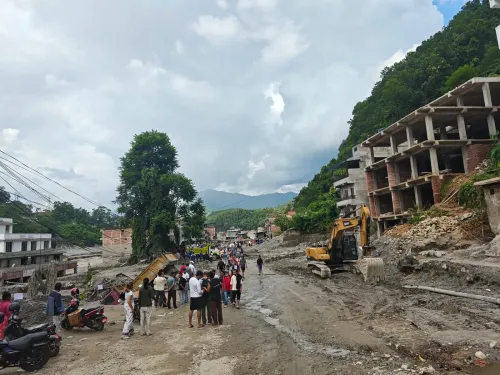
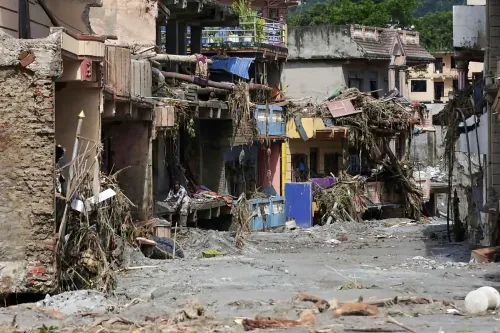
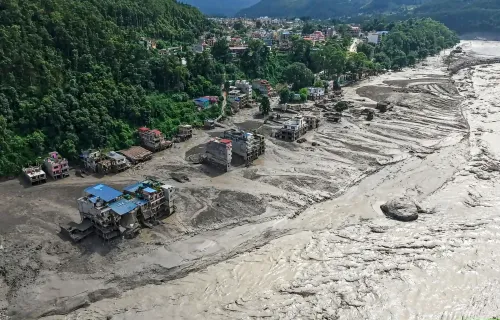
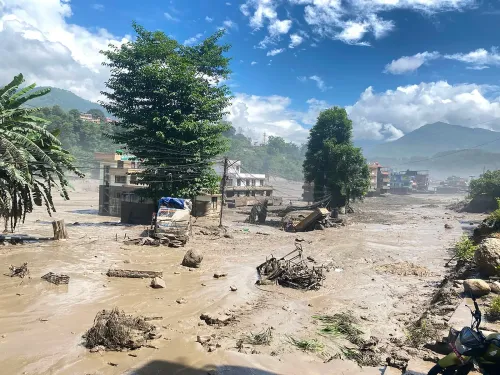
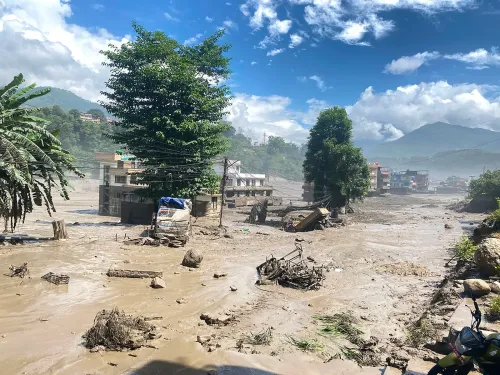
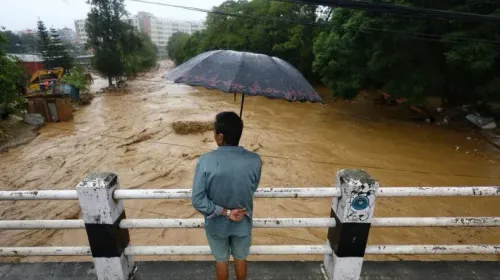
The floods originated in the Tibetan region of China before tearing through the transboundary Bhote Koshi River system, leaving a trail of destruction across multiple Nepali districts. Bodies were recovered from riverbanks in Rasuwa, Nuwakot, Dhading, Chitwan, Gorkha, Tanahun, Nawalparasi East, and Nawalparasi West, with Chitwan recording the highest number of recovered bodies. More than 800 people remained out of contact as of Thursday.
Scientific investigations are ongoing to determine the precise triggers of the event. 'In terms of why that rock fell, scientists are yet to figure it out. Obviously, this is ice-rock from the mountain, and researchers are determining whether a glacial lake was involved. It is both a manmade and natural disaster. When the two combined, the impact became huge, triggering a disaster of this scale,' Ale said.
How Infrastructure Made It Worse
Ale stressed that a series of under-construction dams along the river corridor significantly worsened the catastrophe. As the floodwaters struck, the destruction of these structures generated additional debris that intensified the downstream impact. 'As the flood hit, the destruction of all those infrastructures caused an even bigger problem as debris began floating downstream,' he said.
This dynamic — where development infrastructure becomes a force multiplier in a natural disaster — is a recurring concern in rapid-build hydropower corridors across the Himalayas. Ale argued that it underscores the urgent need to rethink how and where such projects are sited.
Ale's Warning to Nepal and India
Ale directed a pointed message at Nepal's political leadership: 'Change the development model. Don't think of hydrodollars. Also, India must not encourage our business people and government to build all those dams.' He argued that India, as a downstream nation heavily dependent on Nepal's rivers for the Ganges basin — which he said receives a substantial share of its water from Nepal — bears a shared responsibility for river conservation and management.
'If all these disasters happen one after another, what will happen to the Ganges?' he asked, calling for bilateral cooperation on transboundary river protection.
A Pattern Across the Himalayas
Ale linked the Bhote Koshi disaster to a broader pattern of extreme events across the Hindu Kush Himalayan region over the past decade, citing floods in Uttarakhand, along the Teesta River, and Nepal's own Seti River as earlier warnings. 'This is a huge warning. This is just the beginning,' he cautioned.
He noted that Nepal has approximately 6,000 rivers and rivulets and argued that the country must respect the natural behaviour of its waterways when planning infrastructure. 'The rivers of the Hindu Kush Himalayas are the lifeline of over 1.5 billion people. All nations in this region really need to wake up and act before it is too late, and in many ways, we already feel it is too late,' Ale said.
What Needs to Change
Ale called for disaster preparedness to be paired with a fundamental rethink of development planning — not just reactive measures but a structural shift in how Himalayan nations account for climate risk. 'We need to live with it,' he said, referring to the realities of accelerating global warming. He urged Nepal to adapt its policies to current environmental realities rather than pressing ahead with projects that do not adequately factor in escalating climate hazards.
With climate projections indicating continued glacial retreat and more frequent extreme precipitation events across the Hindu Kush Himalayas, the pressure on governments in the region to act on Ale's warnings is only likely to intensify.
Point of View
Teesta, and Seti in a pattern that policymakers have repeatedly acknowledged and repeatedly ignored. Ale's call for India to restrain its appetite for Nepali hydropower is politically inconvenient but analytically sound: a Ganges basin degraded by upstream disasters is a shared liability. The harder question is whether a development model built on 'hydrodollars' can be unwound without replacing the economic logic that drives it.
NationPress
11 Oct 2026
Frequently Asked Questions
How many people died in the Bhote Koshi River floods in Nepal?
At least 177 people were killed in the Bhote Koshi River floods, according to Nepal Police, with more than 800 people still out of contact as of Thursday, 27 August. Bodies were recovered across multiple districts including Chitwan, Rasuwa, Nuwakot, and Dhading.
What caused the Bhote Koshi River floods in Nepal?
The floods originated in the Tibetan region of China and swept through the transboundary Bhote Koshi River system into Nepal. Scientists are still investigating whether a glacial lake outburst was involved; conservationist Megh Ale described it as 'both a manmade and natural disaster,' noting that the collapse of under-construction dam infrastructure worsened the downstream impact.
Who is Megh Ale and why is his warning significant?
Megh Ale is a Nepali conservationist and social entrepreneur known as Nepal's 'River Man' for his decades of advocacy on river conservation. His warning is significant because he links the Bhote Koshi disaster to a broader pattern of Himalayan extreme events and argues that Nepal's hydropower-led development model is increasing, not reducing, flood risk.
Why does Megh Ale say India shares responsibility for Nepal's river disasters?
Ale argues that a substantial share of the Ganges basin's water originates in Nepal, making India a downstream stakeholder in how Nepal manages its rivers. He urged India to stop encouraging Nepali businesses and government to build dams, warning that repeated disasters upstream will eventually threaten the Ganges itself.
What is the broader climate context for the Bhote Koshi floods?
Ale placed the disaster within a decade-long pattern of extreme events across the Hindu Kush Himalayas, citing floods in Uttarakhand, along the Teesta River, and Nepal's Seti River as earlier warning signs. He said the rivers of the region sustain over 1.5 billion people and called on all Himalayan nations to urgently strengthen climate adaptation and river conservation measures.