Nepal floods: 162 bodies recovered, 105 Indian tourists missing after Trishuli disaster
Synopsis
A Tibetan ice-and-rock fall with no early warning set off one of Nepal's deadliest recent flash floods, killing at least 162 and leaving 105 Indian tourists unaccounted for. The disaster lays bare the Himalayan region's acute vulnerability — where climate-driven extreme events meet unplanned riverside construction, with consequences that cross borders in hours.
Key Takeaways
162 bodies recovered from the Bhote Koshi and Trishuli river systems as of 27 August , with the death toll expected to rise.
105 Indian tourists remain missing; more than 300 tourists affected in total.
Trigger: a massive ice-and-rock fall in Tibet caused a sudden surge with no early warning issued on either side of the border.
Affected districts include Rasuwa, Nuwakot, Dhading, Gorkha, Nawalpur, Chitwan, Tanahu, Nawalparasi East , and Nawalparasi West .
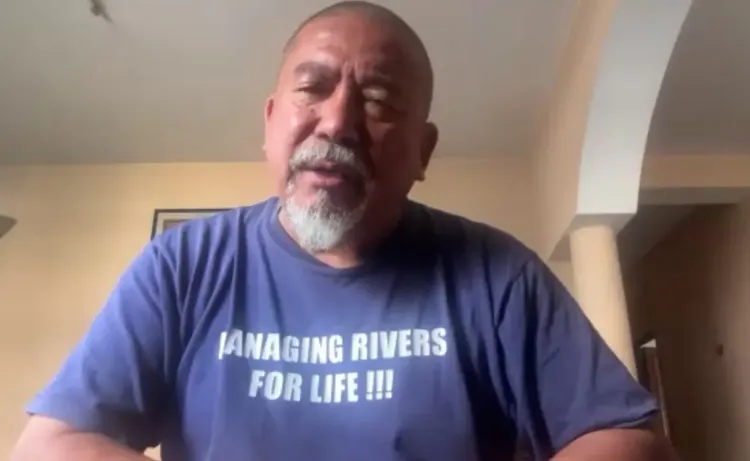
Environmentalist Megh Ale describes the disaster as a combination of natural causes and human factors , including climate change and riverside construction.
Total economic damage could run into millions of dollars ; final assessment is ongoing.
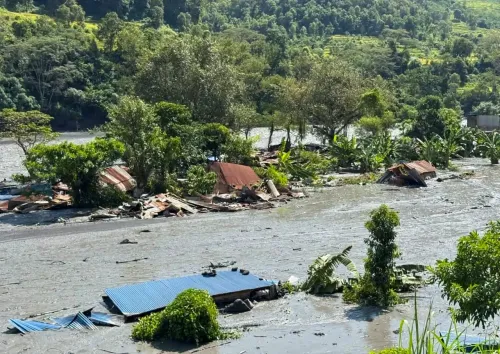
Flash floods triggered by a massive ice-and-rock fall in Tibet have devastated Nepal's Bhote Koshi and Trishuli river systems, killing at least 162 people whose bodies were recovered as of Thursday morning, 27 August, with 105 Indian tourists still missing and more than 300 tourists affected overall. Environmentalist and Nepal's 'River Man' Megh Ale described the catastrophe as a combination of natural forces and human factors, warning that the full scale of destruction is yet to be tallied.
How the Disaster Unfolded
According to Megh Ale, the immediate trigger was a large ice-and-rock fall that plunged into the Bhote Koshi River on the Tibetan side of the border, generating a sudden and violent surge of water and debris downstream. 'According to the information, the big ice-rock fall got into the river in China, in Tibet. So this caused the whole situation,' Ale said. He noted that even Chinese authorities had little opportunity to comprehend the event before it escalated. 'Even the Chinese authorities did not have a chance to understand how it happened,' he added.
The Bhote Koshi, which originates in Tibet and merges with the Gosaikunda stream to form the Trishuli system, carried the destruction deep into Nepal's heartland — all the way to Chitwan, where the river transitions into the Narayani. Infrastructure on both sides of the border was reportedly swept away within hours. 'There was no early warning, and a lot of infrastructure in China was gone in a few hours,' Ale said.
Districts Hit and Scale of Damage
The flooding has caused extensive damage across multiple districts along the Trishuli corridor: Rasuwa, Nuwakot, Dhading, Gorkha, Nawalpur, and Chitwan. Police confirmed that the 162 bodies recovered were found along riverbanks spanning Rasuwa, Nuwakot, Dhading, Chitwan, Gorkha, Tanahu, Nawalparasi East, and Nawalparasi West. Homes, roads, bridges, agricultural land, and other critical infrastructure have been damaged, displacing thousands of families. Ale said the overall economic damage could run into millions of dollars, with the final estimate still being calculated.
Rescue teams remain deployed across the affected zones as authorities continue searching for the missing. 'Lots of people are still — the government is counting on it. We haven't got the final figure yet, but it's a huge loss,' Ale said.
Tourist Safety and Missing Indians
The disaster has raised serious concerns over tourist safety in one of Nepal's most-travelled river corridors. Ale confirmed that more than 300 tourists were affected by the floods, and that 105 Indian tourists remained unaccounted for, based on information available to him at the time. Authorities are yet to release a final official figure on the missing.
Man-Made and Natural Factors Combined
Ale characterised the disaster as neither purely natural nor purely human-caused, but a convergence of both. He pointed to climate change, global warming, and construction activity along the Bhote Koshi-Trishuli corridor as compounding factors. A series of hydropower projects and dams are currently under construction along these river systems, and Ale warned that riverside infrastructure can worsen flash-flood consequences — bridges and construction debris were reportedly swept into the floodwaters, with one bridge colliding with another downstream and intensifying blockages.
Crucially, Ale stopped short of blaming the hydropower projects for triggering the floods. 'I don't say it's a project. I would say it's a natural disaster also caused by climate change and global warming,' he said. He noted that Nepal contributes minimally to global greenhouse gas emissions yet bears a disproportionate share of climate-related risk — a point that carries weight as extreme weather events grow more frequent in the Himalayan region.
What Comes Next
The disaster has renewed calls for robust early-warning systems, improved river management, and stricter infrastructure planning along Nepal's mountain corridors. Authorities are still assessing total losses, and rescue operations are ongoing. The episode also underscores the need for cross-border disaster coordination between Nepal and China, given that the triggering event occurred on the Tibetan plateau with downstream consequences felt hundreds of kilometres away.
Point of View
Yet that infrastructure clearly did not exist or did not function. Nepal's repeated exposure to climate-amplified disasters while contributing negligibly to global emissions is a legitimate grievance, but grievance alone does not build warning systems. The harder question — whether hydropower construction along these corridors is being assessed for flood-risk amplification — remains diplomatically uncomfortable and largely unasked.
NationPress
11 Oct 2026
Frequently Asked Questions
What caused the Nepal flash floods in August 2024?
A massive ice-and-rock fall on the Tibetan side of the border plunged into the Bhote Koshi River, triggering a sudden surge of water and debris that swept downstream into Nepal with no early warning. Environmentalist Megh Ale described the disaster as a combination of this natural trigger and human factors including climate change and riverside construction activity.
How many people have died in the Nepal floods?
As of Thursday morning, 27 August, the bodies of 162 people had been recovered from riverbanks across multiple districts along the Bhote Koshi and Trishuli river systems. Authorities have not yet released a final death toll, and rescue operations are ongoing.
Are Indian tourists among those missing in Nepal?
Yes. According to Megh Ale, 105 Indian tourists were still unaccounted for as of 27 August, based on information available to him. More than 300 tourists in total were affected by the flooding across the Trishuli river corridor.
Which districts in Nepal were most affected by the floods?
The flooding caused extensive damage across Rasuwa, Nuwakot, Dhading, Gorkha, Nawalpur, Chitwan, Tanahu, Nawalparasi East, and Nawalparasi West — all districts along the Bhote Koshi and Trishuli river systems. Homes, roads, bridges, and agricultural land were damaged, displacing thousands of families.
Did hydropower projects cause the Nepal floods?
Megh Ale explicitly said the hydropower projects under construction along the Trishuli and Bhote Koshi corridors did not trigger the floods. However, he warned that riverside infrastructure — including bridges and construction debris — was swept into the floodwaters, worsening blockages and amplifying destruction downstream.