PERM suspension for Infosys, TCS, Wipro may hurt US, analysts warn
Synopsis
The Trump administration has suspended PERM green card filings for eight major tech firms — including Infosys, Wipro, Tata, and Microsoft — freezing permanent residency paths for thousands of Indian professionals. Analysts warn the move could trigger accelerated offshoring and a talent exodus, achieving the opposite of its stated aim of protecting American workers.
Key Takeaways
The Trump administration has suspended PERM applications for eight companies : Infosys , Tata , Wipro , HCL , Cognizant , Capgemini , Microsoft , and Adobe .
The suspension freezes the green card pathway for thousands of Indian tech professionals on H-1B visas without cancelling existing visas.
Analyst Antariksh Singh in Khalsa Vox warned the move will accelerate offshoring and signal to global talent to choose other countries over the US.
Vance alleged Microsoft laid off 6,000 American workers while holding 6,300 H-1B visas and nearly 3,000 green cards .
Indians already dominate the employment-based green card backlog , with wait times stretching decades, making the suspension particularly consequential.
The Trump administration's decision to suspend the Permanent Labor Certification (PERM) programme — the primary pathway to employment-based green cards — for eight major technology and outsourcing companies, including India's Infosys, Tata, Wipro, and HCL, risks backfiring on the United States itself, according to a media analysis. The suspension also covers Cognizant, Capgemini, Microsoft, and Adobe, blocking new PERM filings and halting the processing of pending applications under the programme.
What the Suspension Means in Practice
The PERM suspension does not cancel existing H-1B visas, but it effectively freezes the pathway to permanent residency for thousands of Indian professionals who have spent years building careers, paying taxes, and establishing lives in the United States. According to analysis published in Khalsa Vox, Indians already dominate the employment-based immigration backlog, and those nearing the six-year H-1B limit without an approved extension path now face the prospect of being compelled to leave just as their lives in the country stabilise.
'Families, children's schooling, mortgages, and community ties hang in limbo,' wrote analyst Antariksh Singh in the report. He added that the rhetoric of 'indentured servants' deepens the insult to 'highly educated engineers, programmers, and researchers who came through legal channels and fill genuine skill gaps.'
Why Analysts Say the US Stands to Lose
The Khalsa Vox report argues that immigrant-founded or co-founded unicorns — many with Indian roots — have created enormous value and employment within the United States. Antariksh Singh cautioned that companies confronting heightened uncertainty will accelerate offshoring or nearshoring of work, which is, as he noted, 'the opposite of the stated goal.' He also warned that global talent that once chose America will migrate to countries offering clearer pathways to settlement, while competitors stand to benefit.
'Closing off permanence does not magically produce equivalent American talent overnight; it signals that even those who play by the rules may never fully belong,' the report stated.
Vance's Argument for the Crackdown
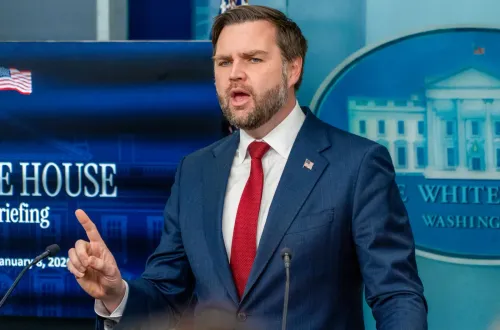
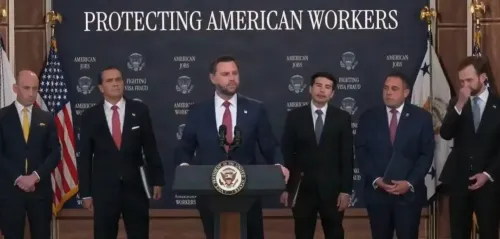
American Vice-President J.D. Vance has publicly defended the administration's position, accusing employers of misusing the H-1B programme to displace American workers with lower-paid foreign employees. 'The H-1B visa program is meant to allow companies to bring in really the best of the best from outside the United States of America for positions that are completely impossible to fill with American workers,' Vance said.
He singled out Microsoft, alleging the company had laid off 6,000 American workers while simultaneously benefiting from 6,300 H-1B visas and nearly 3,000 green cards. Vance added that the administration's goal was to pressure companies into changing their hiring practices rather than to drive them out of the American market.
Broader Implications for Indian Tech Professionals
This move comes amid a wider tightening of US immigration policy under the Trump administration, and it disproportionately affects Indian nationals, who form the largest cohort in the employment-based green card backlog — with wait times that can stretch to decades. The suspension of PERM for some of the largest employers of Indian-origin tech workers adds a new and immediate layer of uncertainty for professionals already navigating an extraordinarily long queue. Notably, several of the targeted firms are among the largest private-sector employers of H-1B workers in the United States, making the policy's downstream effects particularly wide-reaching.
As the administration signals further scrutiny of work visa programmes, affected companies and advocacy groups are expected to mount legal and lobbying challenges in the weeks ahead.
Point of View
But the targeting of firms like Infosys and Wipro — which fill documented skill gaps rather than compete for the same roles as most American workers — suggests the policy is as much about optics as labour market correction. If companies accelerate offshoring in response, the US loses both the tax revenue and the innovation that these workers generate domestically. The deeper contradiction is one the administration has not addressed: the H-1B backlog crisis for Indians exists precisely because demand for their skills has been high for decades — suspending PERM doesn't erase that demand, it just redirects it elsewhere. Legal and lobbying challenges from affected firms are virtually certain, but the political incentive to sustain the crackdown through the current cycle remains strong.
NationPress
11 Oct 2026
Frequently Asked Questions
What is the PERM programme and why has it been suspended?
The Permanent Labor Certification (PERM) programme is the core legal pathway through which US employers sponsor foreign workers for employment-based green cards. The Trump administration suspended PERM filings for eight major tech and outsourcing firms — including Infosys, Wipro, Tata, HCL, Cognizant, Capgemini, Microsoft, and Adobe — as part of broader pressure to reform H-1B and work visa hiring practices.
Which companies are affected by the PERM suspension?
The suspension covers Infosys, Tata, Wipro, HCL, Cognizant, Capgemini, Microsoft, and Adobe. These eight firms are among the largest employers of H-1B workers in the United States, and the move blocks them from filing new PERM applications and halts processing of pending ones.
How does the PERM suspension affect Indian tech professionals in the US?
The suspension does not cancel existing H-1B visas but freezes the pathway to permanent residency for thousands of Indian professionals. Those nearing the six-year H-1B limit without an approved green card path now face the prospect of being forced to leave the US, disrupting families, mortgages, and careers built over many years.
What did Vice-President J.D. Vance say about H-1B visas?
Vance accused employers of using the H-1B programme to replace American workers with lower-paid foreign employees. He specifically alleged that Microsoft laid off 6,000 American workers while holding 6,300 H-1B visas and nearly 3,000 green cards, and said the administration wants companies to change hiring practices, not exit the US market.
Why do analysts say the PERM suspension could harm the United States?
According to analysis published in Khalsa Vox, suspending PERM will likely push affected companies to accelerate offshoring or nearshoring — the opposite of the administration's stated goal. Analysts also warn that global talent will gravitate toward countries offering clearer settlement pathways, eroding America's competitive edge in attracting skilled workers.