India slams US PERM suspension, says steps don't advance shared goals
Synopsis
India's Ministry of External Affairs has fired back at the Trump administration's suspension of green card processing for eight major tech firms — including Infosys, Tata, Wipro and HCL — calling the move contrary to shared US-India ambitions and labelling JD Vance's remarks 'unwarranted' and 'deeply offensive.' The rebuke marks one of New Delhi's sharpest public pushbacks on US immigration policy in years.
Key Takeaways
India's MEA on 9 October 2026 said the US PERM suspension 'does not advance the shared ambitions of both countries.' The Trump administration suspended PERM green card processing for Infosys, Tata, Wipro, HCL, Cognizant, Capgemini, Microsoft, and Adobe .
The MEA clarified the suspension does not affect existing H-1B visas but could impact the Green Card process of eligible employees.
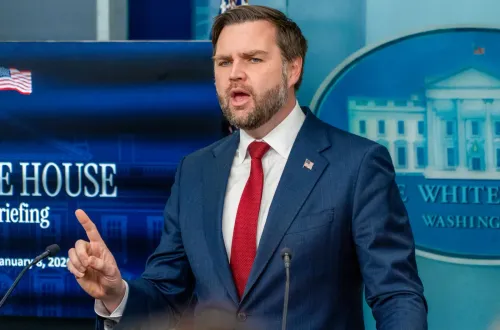
India rebuked US Vice President JD Vance's remarks as 'unwarranted' and 'deeply offensive,' citing colonial legacy connotations.
The named companies collectively requested nearly 3 million foreign workers since 2009 , with over 230,000 H-1B approvals, according to US Labour Secretary Keith Sonderling .
Vance said the PERM suspension would last 'as long as it needs to,' with no fixed end date.
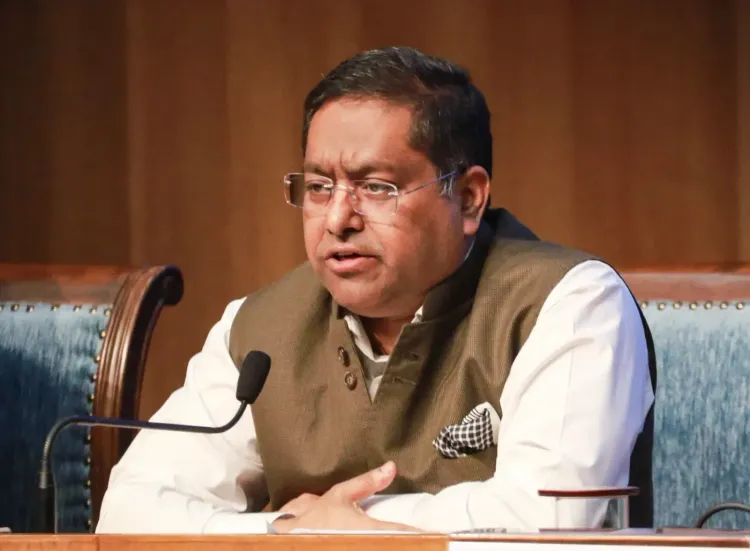
India's Ministry of External Affairs (MEA) on Friday, 9 October 2026 issued a sharp response to the US Department of Labour's decision to suspend Permanent Labour Certification (PERM) applications for eight major technology and outsourcing firms, stating that the steps announced by the United States 'do not advance the shared ambitions of both countries.' The MEA also rebuked remarks made by US Vice President JD Vance, calling them 'unwarranted.'
What the US Announced
The Trump administration on Thursday suspended the PERM green card process for eight major companies, including Indian IT giants Infosys, Tata, Wipro, and HCL, as well as Cognizant, Capgemini, Microsoft, and Adobe. The action prevents these firms from filing new permanent labour certification applications and halts all pending applications under the programme.
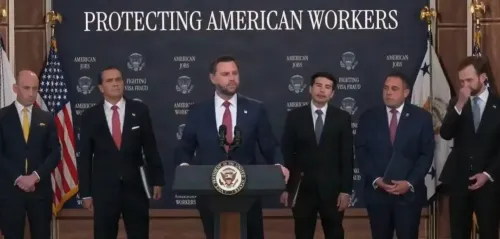
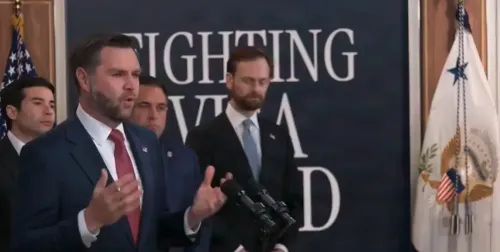
US Labour Secretary Keith Sonderling announced the suspension at a press conference led by Vance, citing 'ongoing criminal and federal investigations' by the Department of Labour's Inspector General. Sonderling stated that the companies named had collectively requested 'nearly three million foreign workers since 2009,' received more than 230,000 H-1B visa approvals and over 100,000 permanent labour certifications.
India's Position on PERM and H-1B
The MEA clarified that the PERM programme is 'distinct from the H-1B visa programme' and that the suspension 'does not, by itself, affect the validity of existing H-1B visas or the status of H-1B visa holders and their dependents.' However, the ministry acknowledged that the move 'could have some impact on the permanent-residency/Green Card process of eligible employees of the affected companies.'
The MEA underscored the mutual economic value of talent mobility: 'While it creates opportunities for Indians, it equally helps US companies with cutting-edge talent, innovation, research, productivity, competitiveness and job creation, besides creating shareholder wealth in the US.'
India Pushes Back on JD Vance's Remarks
The MEA issued a pointed rebuke of remarks attributed to Vice President JD Vance in the context of the suspension, saying such 'descriptions are unwarranted and ignore the fact that Indian professionals in the United States are highly educated and skilled contributors to its economy and innovation ecosystem.'
The ministry also objected strongly to the language used, stating: 'Resorting to terminology that carries painful historical and colonial legacy connotations is deeply offensive.' It did not specify the exact terms used by Vance but described them as carrying colonial undertones.
Vance, for his part, had accused employers of using the H-1B programme to replace American workers with 'lower-paid foreign employees.' He singled out Microsoft, alleging the company had laid off 6,000 American workers while benefiting from 6,300 H-1B visas and nearly 3,000 green cards. On whether the suspension was temporary, Vance said: 'The suspension of PERM is gonna last as long as it needs to.'
Context and What It Means for Indian Professionals
The PERM process is a critical gateway for employment-based permanent residence in the United States, and its suspension directly disrupts the green card pipelines of thousands of Indian tech workers — many of whom already face multi-decade waits due to per-country caps on employment-based visas. This is the most sweeping action targeting Indian IT firms' US workforce pipelines in recent memory.
Notably, the action comes amid broader India-US trade and immigration tensions, even as both governments have publicly sought to deepen bilateral ties. The MEA's characterisation of the steps as failing to 'advance the shared ambitions of both countries' signals diplomatic displeasure at the highest level.
What Happens Next
The MEA said it would 'continue to follow developments around this issue,' suggesting New Delhi may raise the matter through diplomatic channels. Affected companies — particularly Indian IT majors with large US workforces — are expected to assess legal options. The open-ended nature of the suspension, with Vance indicating it could last 'indefinitely,' adds significant uncertainty for employees in the green card queue.
Point of View
Semiconductors and the Quad is simultaneously targeting the very Indian IT firms that underpin US tech infrastructure. The Vance factor adds another layer — his framing of the H-1B programme as a mechanism for replacing American workers with cheap foreign labour directly contradicts data on Indian professionals' contribution to US innovation. India is right to push back, but the harder question is whether New Delhi has enough leverage to move Washington on immigration, where domestic political pressures are driving the agenda.
NationPress
9 Oct 2026
Frequently Asked Questions
What is the PERM suspension announced by the US Department of Labour?
The US Department of Labour suspended the Permanent Labour Certification (PERM) programme for eight major tech firms — Infosys, Tata, Wipro, HCL, Cognizant, Capgemini, Microsoft and Adobe — citing ongoing criminal and federal investigations. The suspension prevents these companies from filing new PERM applications and halts processing of pending ones, disrupting a key step in employment-based green card applications.
Does the PERM suspension affect existing H-1B visa holders?
No, according to India's MEA. The ministry clarified that the suspension of PERM applications 'does not, by itself, affect the validity of existing H-1B visas or the status of H-1B visa holders and their dependents.' However, it acknowledged there could be some impact on the permanent-residency or Green Card process of eligible employees at the affected companies.
Why did India's MEA criticise JD Vance's remarks?
India's MEA called Vance's remarks 'unwarranted,' saying they ignored the fact that Indian professionals in the US are 'highly educated and skilled contributors' to its economy and innovation ecosystem. The ministry also objected to language it said carried 'painful historical and colonial legacy connotations,' describing it as 'deeply offensive.'
Which Indian IT companies are affected by the PERM suspension?
The affected Indian IT majors include Infosys, Tata, Wipro, HCL, and Cognizant. French firm Capgemini and US companies Microsoft and Adobe are also covered by the suspension, with the latter two cited due to 'multiple active federal investigations.'
How long will the PERM suspension last?
US Vice President JD Vance said the suspension would last 'as long as it needs to,' adding that the administration has tools to continue it indefinitely. He indicated the action was intended to pressure the companies to change their hiring practices, rather than exit the US market permanently.