US suspends green card process for Infosys, Tata, Wipro and 5 other tech firms
Synopsis
The Trump administration has suspended the green card certification process for eight major tech and outsourcing firms — including Infosys, Tata, Wipro, HCL, Cognizant, Capgemini, Microsoft and Adobe — citing ongoing criminal investigations. VP JD Vance declared the suspension will last 'as long as it needs to,' putting the US green card pathways for thousands of Indian IT professionals in jeopardy.
Key Takeaways
The Trump administration suspended the PERM green card process for eight companies on 8 October 2026 , including Infosys , Tata , Wipro , HCL , Cognizant , Capgemini , Microsoft , and Adobe .
US Labour Secretary Keith Sonderling cited ongoing criminal investigations by the Department of Labour's Inspector General as the basis for the action.
The eight firms collectively requested nearly three million foreign workers since 2009 , receiving over 230,000 H-1B approvals and 100,000 PERM certifications , according to officials.
VP JD Vance alleged Microsoft laid off 6,000 American workers while holding 6,300 H-1B visas and nearly 3,000 green cards .
The suspension covers new filings and pending applications but does not cancel existing H-1B visas or green cards already held by workers.
Attorney General Todd Blanche said criminal prosecutions and civil lawsuits remain possible enforcement outcomes.
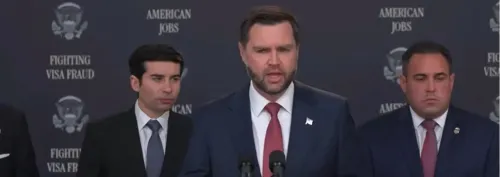
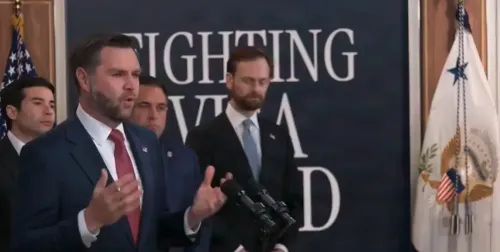
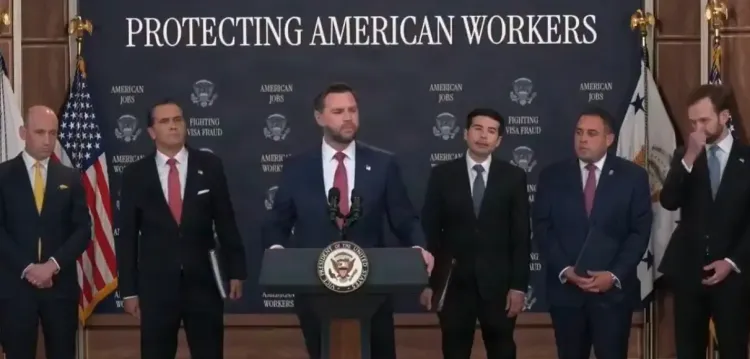
The Trump administration on 8 October 2026 announced the suspension of the Permanent Labour Certification (PERM) programme for eight major technology and outsourcing companies, including Indian IT giants Infosys, Tata, Wipro, and HCL, as Vice President JD Vance unveiled what officials described as a sweeping crackdown on alleged visa fraud. The move halts both new filings and pending applications under the programme for the named firms, marking one of the most significant US immigration enforcement actions targeting the Indian IT sector in recent years.
Which Companies Are Affected
The suspension covers six IT outsourcing firms — Cognizant, Infosys, Tata, Wipro, HCL, and Capgemini — along with US technology majors Microsoft and Adobe. US Labour Secretary Keith Sonderling announced the decision at a press conference led by Vance, saying the action was driven by 'ongoing criminal investigations led by the Department of Labour's Inspector General Anthony DiEsposito.'
Microsoft and Adobe were separately cited due to 'multiple active federal investigations,' Sonderling said. The administration did not release company-specific findings or details of the alleged violations during the press conference.
Scale of the Action and Key Allegations
Sonderling stated that the eight companies had collectively requested nearly three million foreign workers since 2009. They had received more than 230,000 H-1B visa approvals and over 100,000 permanent labour certifications, according to figures he presented at the briefing.
Vance accused the companies of using the H-1B programme to replace American workers with lower-paid foreign employees. 'The H-1B visa program is meant to allow companies to bring in really the best of the best from outside the United States of America for positions that are completely impossible to fill with American workers,' he said. He singled out Microsoft, alleging the company had laid off 6,000 American workers while benefiting from 6,300 H-1B visas and nearly 3,000 green cards.
What the PERM Suspension Means
The PERM programme is a critical step in the employment-based permanent residence process, through which US employers sponsor foreign workers for green cards. The suspension announced Thursday concerns permanent labour certification applications involving the named companies specifically. It does not, by itself, cancel existing H-1B visas or green cards already held by workers at these firms.
Asked whether the suspension was temporary or permanent, Vance said, 'The suspension of PERM is gonna last as long as it needs to.' He added that the administration had tools to continue the suspension indefinitely but wanted companies to 'improve their behaviour' rather than exit the American market.
Criminal and Civil Enforcement Measures
The Justice Department also announced it was actively investigating companies suspected of favouring foreign workers over Americans. Attorney General Todd Blanche said criminal prosecutions and civil lawsuits were among the possible enforcement measures being considered.
This comes amid a broader push by the Trump administration to tighten immigration and employment-based visa pathways, following earlier executive actions on H-1B adjudication standards. Notably, the H-1B programme and the PERM green card route are legally separate processes — the suspension targets the latter exclusively.
Impact on Indian IT Sector
Indian IT companies have long relied on employment-based visa programmes to deploy skilled professionals to American clients, making the US their largest revenue market. The suspension could significantly disrupt long-term workforce planning for firms like Infosys, Wipro, HCL, and Tata, particularly for employees in multi-year green card queues.
The full consequences for Indian technology professionals already in the PERM pipeline remain unclear, and the named companies had not issued formal public responses at the time of the announcement. How the suspension interacts with existing sponsorship commitments is expected to be a key legal question in the days ahead.
Point of View
The administration has chosen a weapon that inflicts maximum long-term pain without triggering immediate legal challenges from existing visa holders. The absence of company-specific findings at the press conference is telling: the action appears designed as leverage to compel behavioural change, not as the conclusion of a concluded investigation. For Indian IT, the deeper risk is not this suspension alone but the precedent it sets — that visa access is now a negotiating chip in a broader America-first industrial policy.
NationPress
8 Oct 2026
Frequently Asked Questions
Which companies have been suspended from the US PERM green card programme?
Eight companies have been suspended: Cognizant, Infosys, Tata, Wipro, HCL, Capgemini, Microsoft, and Adobe. The suspension halts both new permanent labour certification filings and the processing of pending applications for these firms.
What is the PERM programme and why does this suspension matter?
The Permanent Labour Certification (PERM) programme is a mandatory step for US employers seeking to sponsor foreign workers for employment-based green cards. Suspending it for these eight firms means their employees currently in the green card pipeline face an indefinite hold on their permanent residence applications.
Does this suspension cancel existing H-1B visas or green cards?
No. The suspension specifically targets new and pending PERM applications. It does not, by itself, cancel H-1B visas or green cards already approved and held by employees of the named companies.
How long will the PERM suspension last?
Vice President JD Vance said the suspension will last 'as long as it needs to,' adding that the administration has tools to continue it indefinitely. Officials indicated it could be lifted if the companies change their hiring practices.
What are the possible legal consequences for the companies involved?
Attorney General Todd Blanche stated that criminal prosecutions and civil lawsuits are among the enforcement measures under consideration. The Justice Department confirmed it is actively investigating companies suspected of favouring foreign workers over American workers.