CM Pema Khandu: Arunachal Cabinet renames 3 institutions
Synopsis
The Arunachal Pradesh Cabinet has approved renaming three educational institutions after Late Donglo Sonam, Lt. Punji Mara, and Popak Bage, cementing their legacies in the state's public memory through a formal government resolution announced by CM Pema Khandu.
Key Takeaways
The Arunachal Pradesh Cabinet approved the renaming of three educational institutions on October 11, 2026 .
The institutions will be named after Late Donglo Sonam , Lt.
Punji Mara , and Popak Bage .
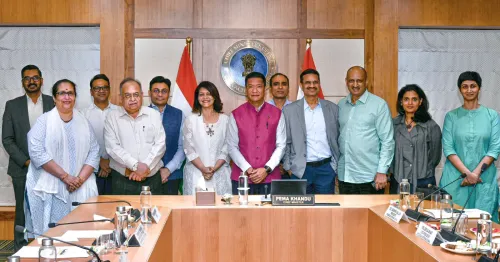
The decision was announced by Chief Minister Pema Khandu via an official post on X.
The military honorific 'Lt.' before Punji Mara suggests a defence services background for one of the honoured figures.
Cabinet approval gives the renaming formal legal weight, requiring updates to records, signboards, and official affiliations.
The move reflects a broader pattern of BJP-governed states using cabinet decisions to honour local and tribal figures through institutional commemoration.
Three names. Three legacies. One cabinet decision that will print them into the geography of Arunachal Pradesh forever. On Sunday, October 11, 2026, Arunachal Pradesh Chief Minister Pema Khandu announced that the state cabinet has approved the renaming of three educational institutions in honour of Late Donglo Sonam, Lt. Punji Mara, and Popak Bage — individuals whose contributions the government has now chosen to immortalise in brick, mortar, and curriculum.
Three figures, three institutions, one collective tribute
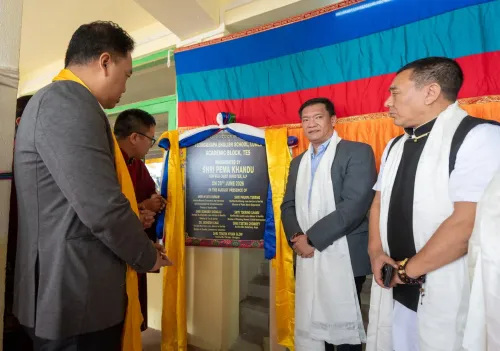
The cabinet resolution links each of the three honorees to a specific educational institution, though the names of the schools or colleges were not specified in the announcement. What the decision does make explicit is the intent: to ensure that the legacy of Donglo Sonam, Lt. Punji Mara, and Popak Bage is 'recognised for generations to come', in the Chief Minister's own words. Renaming an institution is among the most durable forms of public honour a state can confer — it embeds a name into the daily vocabulary of students, teachers, and communities for decades.
The inclusion of a military honorific — Lt. Punji Mara — signals that at least one of the three figures had a defence services connection, lending the decision a patriotic dimension alongside its civic one. The other two names, Donglo Sonam and Popak Bage, point to community or public-service figures whose contributions the state government has formally recognised.
Renaming as statecraft in the Northeast
In Arunachal Pradesh, where tribal identities, local histories, and oral traditions run deep, the renaming of public institutions carries weight beyond the bureaucratic. Educational institutions in particular serve as touchstones of community identity — naming one after a local figure is a political and cultural act that resonates with families across generations. CM Khandu and the BJP-led state government have used such symbolic decisions consistently to acknowledge local heroes and bridge the gap between state administration and community memory.
The move also fits a broader pattern visible across several BJP-governed states, where cabinet meetings have increasingly included cultural and commemorative resolutions alongside development and infrastructure approvals — signalling that governance, in the party's framing, includes the stewardship of historical memory.
What the cabinet's stamp means
A cabinet approval — rather than a simple executive order — gives the renaming formal legislative weight and ensures the process moves through official notification channels. The institutions will be required to update their records, signboards, affiliations, and government correspondence, making the change permanent and traceable. For the families and communities of the three honoured figures, it is recognition that carries the full authority of the state.
Arunachal Pradesh, India's easternmost frontier state, has long grappled with the challenge of integrating its rich mosaic of tribal histories into the official narrative of the nation — and decisions like this one are, quietly, part of that ongoing negotiation.
The names are set. The institutions will follow. And somewhere in Arunachal Pradesh, a new generation of students will one day walk through gates bearing the names of people who shaped the world before them.
Point of View
Embedding local names into state infrastructure is a durable form of community outreach that outlasts election cycles. The inclusion of a military figure, Lt. Punji Mara, alongside civilian honourees broadens the symbolic appeal, invoking both patriotism and community service. For the Khandu government, such resolutions serve a dual purpose: they acknowledge constituencies that often feel overlooked by mainstream historical narratives, while reinforcing the BJP's positioning as a party that governs with cultural sensitivity in the Northeast. The long-term test is whether the renamed institutions receive matching investment in infrastructure and quality — tribute in name means little without substance in practice.
NationPress
11 Oct 2026
Frequently Asked Questions
Which institutions did the Arunachal Pradesh Cabinet approve renaming?
The Arunachal Pradesh Cabinet approved the renaming of three educational institutions, though the specific names of the institutions were not disclosed in the official announcement. They are to be named after Late Donglo Sonam, Lt. Punji Mara, and Popak Bage.
Who are Donglo Sonam, Lt. Punji Mara, and Popak Bage?
They are individuals honoured by the Arunachal Pradesh government for their legacy and contributions. Lt. Punji Mara's military honorific suggests a defence services background; the others are believed to be community or public-service figures, though detailed biographical information was not provided in the official announcement.
When did the Arunachal Pradesh Cabinet take this decision?
Chief Minister Pema Khandu announced the cabinet decision on October 11, 2026, via a post on X.
Why is a cabinet approval needed to rename an institution?
Cabinet approval gives the renaming formal legal authority, ensuring it passes through official government notification channels. This makes the change binding and requires all affiliated bodies to update their records, signboards, and correspondence accordingly.
What is the significance of renaming educational institutions in Arunachal Pradesh?
In Arunachal Pradesh, where tribal identities and local histories are central to community life, renaming public institutions after local figures is a durable act of official recognition. It embeds those names into daily life for generations of students, making it one of the most lasting forms of tribute a state government can confer.