CM Pema Khandu Inaugurates New Academic Block at Tsongkhapa English School
Synopsis
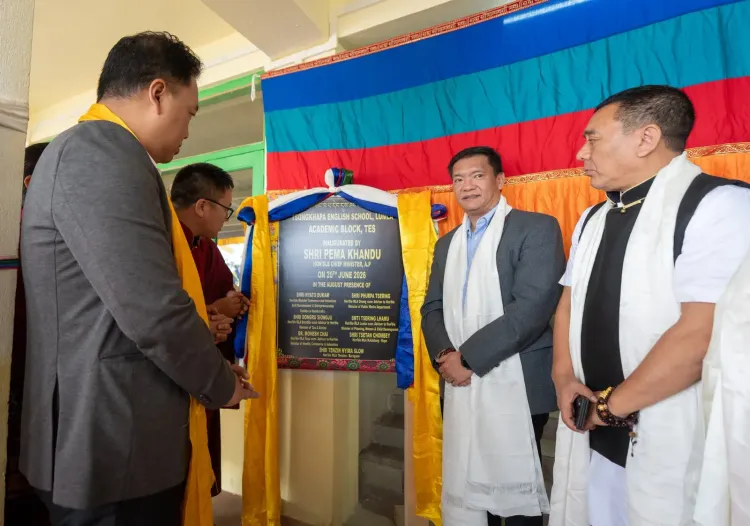
Arunachal Pradesh Chief Minister Pema Khandu inaugurated a new Academic Block at Tsongkhapa English School in Thrillam, Lungla on 20 June 2026, expanding learning infrastructure at a Buddhist-heritage institution in one of the state's remote regions.
Key Takeaways
CM Pema Khandu inaugurated the new Academic Block at Tsongkhapa English School in Thrillam, Lungla on 20 June 2026 .
The school is named after Je Tsongkhapa , the revered 14th-century Tibetan Buddhist philosopher and Gelug tradition founder.
Lungla falls within the culturally Buddhist Tawang belt of Arunachal Pradesh , a region where school access has historically been limited by geography.
The inauguration reflects the state government's pattern of linking school infrastructure expansion with local Buddhist and indigenous cultural identity.
Students and rural communities in the Thrillam-Lungla area are the immediate beneficiaries of the expanded facility.
State education budget allocations for 2026-27 and further school inaugurations will signal the broader scope of infrastructure investment in remote districts.
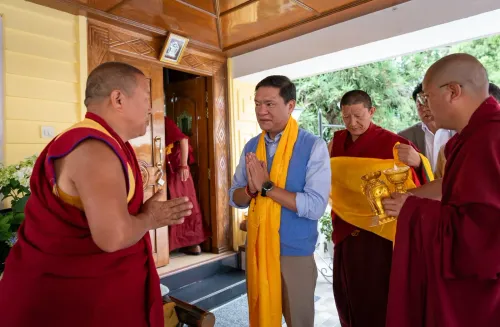
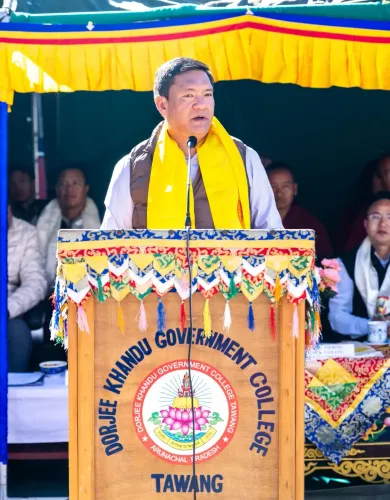
Arunachal Pradesh Chief Minister Pema Khandu on Saturday, 20 June 2026, visited Tsongkhapa English School in Thrillam, Lungla, and inaugurated its new Academic Block, adding fresh infrastructure to one of the remote Buddhist-heritage institutions in the state.
Context
The school, situated in Lungla in the culturally significant Tawang region of Arunachal Pradesh, is named after Je Tsongkhapa, the revered 14th-century Tibetan Buddhist philosopher and founder of the Gelug tradition. Khandu described the institution as one that 'embodies the values of wisdom, compassion, discipline, and the pursuit of knowledge,' drawing a direct line between the school's academic mission and the ethical framework of its namesake.
The Chief Minister expressed hope that the institution would 'continue to nurture enlightened minds and responsible citizens for generations to come,' underscoring the dual emphasis on academic excellence and civic character that has come to define government messaging around school infrastructure in the Northeast.
Policy Backdrop
The inauguration fits into a consistent pattern of school infrastructure upgrades across Arunachal Pradesh's remote districts, where successive state governments have prioritised physical expansion of learning facilities to improve enrolment and retention rates. Events of this kind frequently weave together modern educational investment with local Buddhist and indigenous cultural references, reflecting the state's demographic and religious profile.
Similar education-plus-heritage initiatives have been observed across other northeastern states, where identity-linked institution names and cultural framing are used to build community ownership of public infrastructure. The new Academic Block at Tsongkhapa English School represents another node in this broader network of rural school expansion.
Stakeholders and Impact
The most immediate beneficiaries are students and families in Thrillam and the surrounding Lungla area, a remote belt where access to quality schooling has historically been constrained by geography and limited infrastructure. An expanded academic facility is expected to support better classroom capacity and learning conditions for children in the locality.
Broader rural communities in the Tawang belt also stand to gain, as improved school infrastructure in anchor institutions typically draws students from neighbouring villages, reducing dropout rates and the need for families to send children to distant urban centres for secondary education.
What's Next
Attention will now turn to Arunachal Pradesh's education budget allocations for 2026-27 and whether the state government schedules further school or college inaugurations across other remote districts in the coming months. The pace and geographic spread of such inaugurations will indicate how systematically the state is addressing infrastructure gaps in its more inaccessible areas.
For Tsongkhapa English School specifically, the commissioning of the new Academic Block sets a baseline; how the institution is staffed, equipped, and sustained over time will determine whether the infrastructure investment translates into measurable educational outcomes for children in Lungla.
Point of View
Particularly in the Tawang belt, which carries both strategic and demographic significance. By invoking the legacy of Je Tsongkhapa, the government signals sensitivity to the region's Buddhist identity at a time when the Northeast's cultural landscape remains politically consequential. The inauguration also keeps the CM's public presence active in frontier districts, reinforcing grassroots connectivity ahead of future electoral cycles. Whether the infrastructure investment is matched by commensurate spending on teachers and learning materials will be the harder test of policy intent.
NationPress
19 Sept 2026
Frequently Asked Questions
Where is Tsongkhapa English School located?
Tsongkhapa English School is located in Thrillam, Lungla, in Arunachal Pradesh, within the culturally Buddhist Tawang region of the state.
Who is Je Tsongkhapa, after whom the school is named?
Je Tsongkhapa was a revered 14th-century Tibetan Buddhist philosopher and the founder of the Gelug tradition, known for his teachings on wisdom, ethics, and compassion.
What did CM Pema Khandu inaugurate at the school?
CM Pema Khandu inaugurated a new Academic Block at Tsongkhapa English School in Thrillam, Lungla, on 20 June 2026, aimed at providing a better learning environment for students.
Why is school infrastructure important in Lungla and the Tawang region?
Lungla and the broader Tawang region are remote areas where geographic constraints have historically limited access to quality schooling, making infrastructure expansion critical for improving enrolment and reducing dropout rates.
What is Arunachal Pradesh's broader approach to school development in remote areas?
The Arunachal Pradesh government has consistently prioritised school infrastructure upgrades in remote districts, often linking modern facilities with local Buddhist or indigenous cultural references to build community ownership.