CM Samrat Choudhary Shares PM Modi's Vision for Viksit Bharat
Synopsis
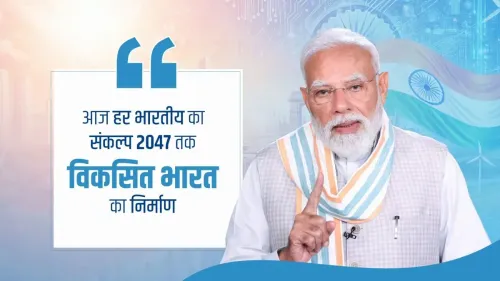
Bihar CM Samrat Choudhary amplified PM Modi's vision on October 11, 2026, sharing a quote that positions India's youth as the core force behind the Viksit Bharat 2047 goal — and frames their new ideas as globally consequential.
Key Takeaways
Bihar CM Samrat Choudhary shared a PM Modi quote on October 11, 2026 centred on youth and national development.
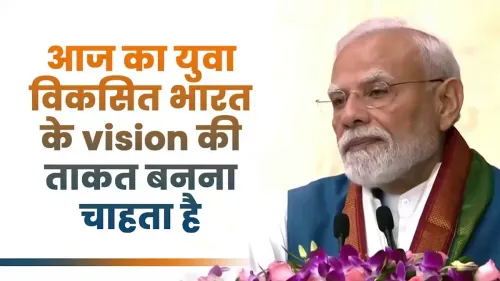
PM Modi's quote states that today's youth 'wants to become the strength of the Viksit Bharat vision.' The quote argues that new ideas from Indian youth will shape 'not just India, but the future of the entire world.' The Viksit Bharat framework targets full development of India by 2047 , the centenary of independence.
Bihar, with one of India's youngest and largest demographic profiles, is a key state in any youth-focused national agenda.
The post reflects a broader BJP pattern of state leaders reinforcing the Viksit Bharat narrative at the grassroots level.
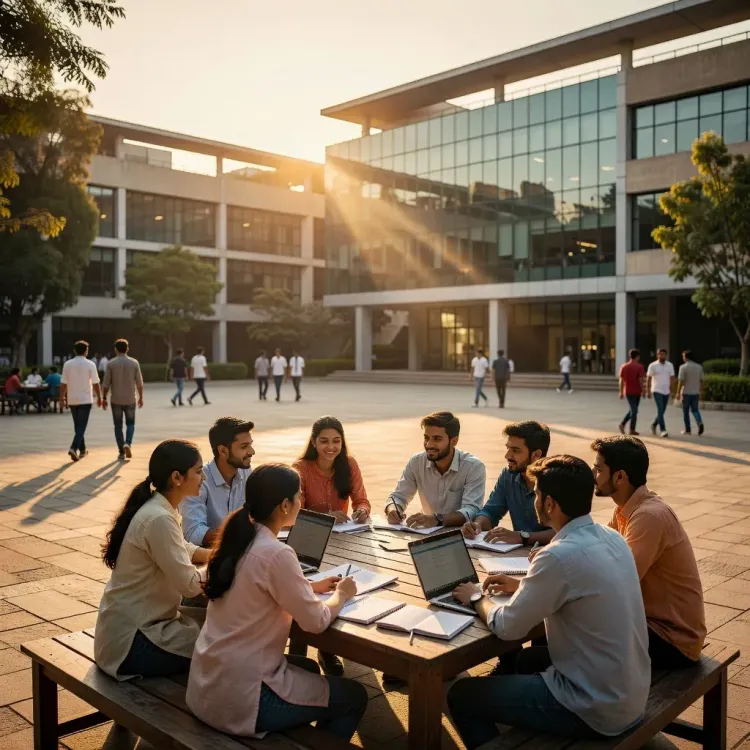
Youth as the engine of a developed India — that is the message Bihar Chief Minister Samrat Choudhary amplified on Sunday, October 11, 2026, sharing a striking quote from Prime Minister Narendra Modi that frames India's youngest generation not as beneficiaries of national growth, but as its architects.
The post quotes PM Modi directly: 'Aaj ka yuva Viksit Bharat ke vision ki takat banna chahta hai' ('Today's youth wants to become the strength of the Viksit Bharat vision'). The Prime Minister's words go further — arguing that new ideas and new solutions are not merely needed for India's future, but will 'determine the future of the entire world.'
What the 'Viksit Bharat' vision actually demands of youth
The Viksit Bharat (Developed India) framework, which targets making India a fully developed nation by 2047 — the centenary of independence — has been the central organising idea of the BJP-led government's long-range planning. At its core, it asks for a generational shift: from implementation of inherited systems to invention of new ones. PM Modi's framing, as shared by CM Choudhary, positions Indian youth not as job-seekers within an existing economy, but as problem-solvers whose innovations will carry global consequence.
For a state like Bihar — one of India's most populous, with one of its youngest demographic profiles — that message lands with particular weight. A large share of Bihar's population falls within the working-age youth bracket, making the state both a major contributor to, and a major stakeholder in, any national youth-forward policy push.
CM Choudhary's pattern of amplifying the Viksit Bharat message
By sharing this quote, CM Choudhary continues a visible pattern among senior BJP leaders of reinforcing the Viksit Bharat narrative at the state level — translating a national aspiration into regional political communication. The move signals alignment between Patna and New Delhi on the ideological direction of governance, even as Bihar navigates its own development challenges around infrastructure, education, and employment.
The quote's emphasis on 'new ideas and new solutions' also carries an implicit call to action for state governments: that delivering on Viksit Bharat requires more than central schemes — it requires local innovation ecosystems, educational investment, and the political will to back young entrepreneurs and thinkers.
India's demographic dividend is a finite window. Whether the country's institutions move fast enough to harness it will define not just the 2047 milestone — but the century beyond it.
Point of View
Not beneficiary' framing both politically astute and developmentally honest. What the post does not answer — and what will define the 2047 narrative — is whether state-level governance actually backs the aspiration with institutional investment in education, skilling, and innovation infrastructure.
NationPress
11 Oct 2026
Frequently Asked Questions
What is the Viksit Bharat vision that PM Modi talks about?
Viksit Bharat, meaning 'Developed India,' is the BJP-led government's long-range goal to make India a fully developed nation by 2047, the 100th anniversary of Indian independence, through economic growth, innovation, and social progress.
Why did Bihar CM Samrat Choudhary share PM Modi's quote about youth?
CM Choudhary shared PM Modi's quote to amplify the Viksit Bharat message at the state level, aligning Bihar's political communication with the national BJP narrative on youth-driven development.
What did PM Modi say about India's youth and Viksit Bharat?
PM Modi said today's youth wants to become the strength of the Viksit Bharat vision, and that new ideas and solutions from Indian youth will determine the future not just of India but of the entire world.
Who is Samrat Choudhary?
Samrat Choudhary is the Chief Minister of Bihar and a senior leader of the Bharatiya Janata Party (BJP).
What is Bihar's connection to the Viksit Bharat youth agenda?
Bihar has one of India's largest and youngest populations, making it a critical state for any national youth-development agenda — and giving PM Modi's message about youth as nation-builders particular resonance there.