Nepal floods kill 1,000+: Himalayan AI debate gains ground
Synopsis
More than 1,000 dead and 5,000 missing in Nepal's worst recent floods — and the disaster has opened an unexpected front in the global AI debate. From unverified claims about Himalayan server farms to serious questions about data-centre emissions and the promise of AI-powered early warning systems, the Bhotekoshi tragedy is forcing a reckoning over whether AI is part of the Himalayan problem or its solution.
Key Takeaways
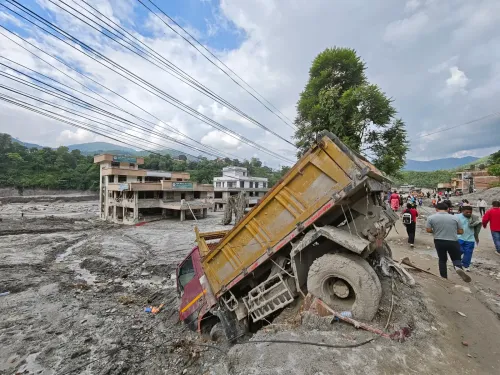
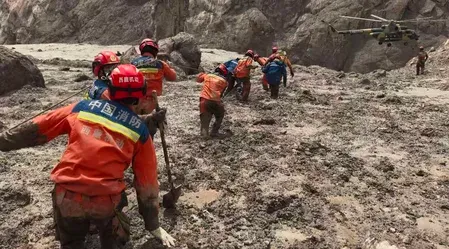
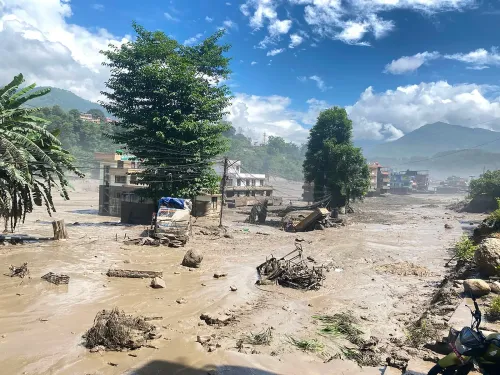
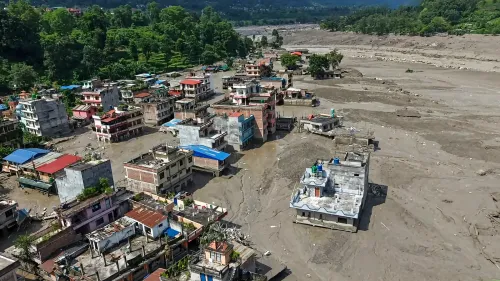
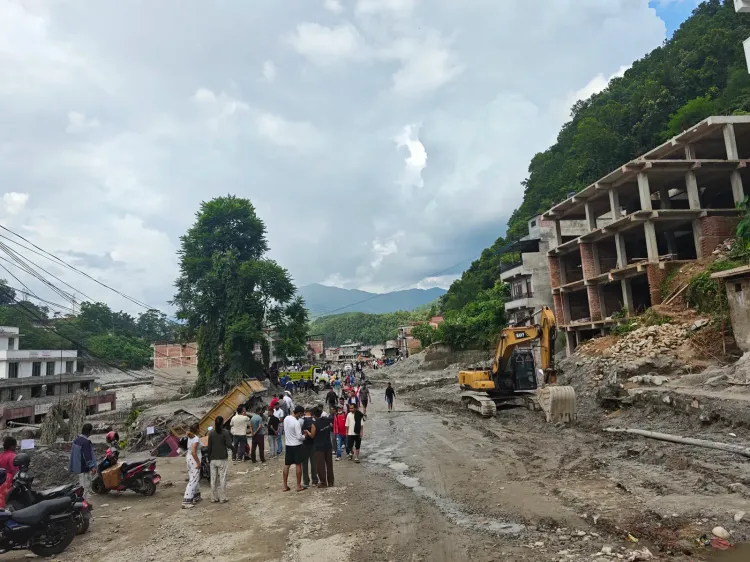
Nepal's Bhotekoshi and Trishuli river floods, reportedly triggered by a glacial collapse, killed more than 1,000 people and left nearly 5,000 missing .
Claims linking alleged underground Himalayan server farms to glacier melt have been largely dismissed by experts for lack of evidence.
Sustainability strategist Karin Kloosterman confirmed 'there is currently no evidence establishing that connection' while warning that fossil-fuel-powered data centres do contribute to global warming.
Development expert Ashutosh Tiwari noted AI played little role in real-time rescue operations during the disaster.
A Nepal minister has reportedly sought climate-linked compensation from China , India , and the United States .
Experts say AI-driven early warning systems integrating satellites and sensors could give downstream communities critical evacuation time in future glacial dam collapses.
The catastrophic floods that swept through Nepal last month, killing more than 1,000 people and leaving nearly 5,000 missing, have ignited a wide-ranging debate over climate change, Himalayan ecological fragility, and the environmental footprint of artificial intelligence. The disaster has exposed the mounting vulnerabilities of one of the world's most sensitive mountain ecosystems.
What Triggered the Disaster
The Bhotekoshi and Trishuli rivers burst their banks following what reports describe as a glacial collapse, unleashing destruction across communities downstream. The scale of loss has drawn renewed attention to how rapidly warming temperatures are destabilising Himalayan glaciers — a process scientists say is accelerating faster than the global average.
This comes amid longstanding concerns from environmentalists about the cumulative ecological impact of large-scale infrastructure in the region, including hydropower projects that already strain fragile river systems.
The AI-Himalaya Controversy
In the disaster's aftermath, some social media posts circulated claims linking glacial instability to alleged underground server farms operating in the Himalayas. Experts have largely dismissed those assertions for lack of evidence.
Journalist and sustainability strategist Karin Kloosterman — founder of Green Prophet, one of the Middle East's pioneering sustainability platforms — addressed the speculation directly, writing that 'there is currently no evidence establishing that connection', while acknowledging that obtaining reliable data from Beijing would be difficult. She nonetheless stressed that data centres consume vast amounts of electricity and, when powered by fossil fuels, contribute greenhouse-gas emissions that accelerate global warming. 'Those emissions join the accumulated global emissions driving climate change. The resulting warming does not respect borders,' Kloosterman noted.
Reports have pointed to China's significant investments in AI, cloud computing, and data-centre infrastructure alongside major hydropower projects in the Himalayan region. The direct role of AI infrastructure in Himalayan degradation, however, remains a subject of active debate rather than settled science.
AI's Limited Role in Relief Operations
Development expert Ashutosh Tiwari, cited in a Kathmandu Post report, argued that AI played little role in real-time rescue operations during the disaster. He observed that discussions around the technology in Nepal tend to remain confined to policy and academic forums rather than translating into practical, on-the-ground applications.
Separately, Nepali diplomacy expert Mahesh Kushwaha shared an AI-generated infographic illustrating a cycle in which rising global demand for AI drives energy consumption, increases carbon emissions, accelerates glacier melt, and destabilises mountain terrain — ultimately raising the risk of disasters such as the Bhotekoshi floods, according to the Kathmandu Post.
The Dual Reality of AI in Climate Risk
Experts warn that the enormous electricity and water requirements of AI infrastructure may place additional pressure on environmentally sensitive regions. In countries such as Nepal, where hydropower projects already affect fragile river systems, growing resource demands could further strain ecological balances.
At the same time, proponents argue that AI holds significant promise as a disaster-prevention tool. Satellite imagery can be used to train AI models to detect glacial movement and identify risk patterns, potentially enabling earlier warnings for vulnerable communities, according to Analytics India Magazine. AI-driven early warning systems integrating sensors, satellites, and predictive algorithms could help bridge the critical gap between the formation and collapse of glacial dams, giving downstream populations precious time to evacuate.
Political Fallout and Compensation Demands
Reports indicate that a Nepal minister has sought compensation from China, India, and the United States, arguing that greenhouse-gas emissions linked to climate change contributed to the scale of the disaster. The demand underscores a growing push by climate-vulnerable nations to hold high-emission economies accountable for localised catastrophes.
As the Himalayas continue to warm at a faster-than-average rate, the debate over AI's role in the region is becoming increasingly complex. Whether as a contributor to the conditions that enable such disasters or as a tool to prevent them, the technology is now firmly part of the Himalayan climate conversation.
Point of View
But the AI-Himalaya link requires far more rigour than social media infographics provide. Conflating data-centre emissions — a real and growing problem — with unverified claims of underground server farms risks discrediting legitimate environmental concerns. The more consequential question, largely buried in the noise, is why AI-powered early warning systems that already exist have not been deployed at scale in one of the world's most disaster-prone corridors. Nepal's compensation demand directed at China, India, and the US is politically significant, but without a credible attribution framework, it is unlikely to produce binding outcomes.
NationPress
19 Oct 2026
Frequently Asked Questions
What caused the Nepal floods that killed over 1,000 people?
The floods were reportedly triggered by a glacial collapse on the Bhotekoshi and Trishuli rivers, leaving more than 1,000 people dead and nearly 5,000 missing. The disaster has highlighted the accelerating fragility of Himalayan glaciers under climate stress.
Is there evidence that AI data centres caused the Nepal floods?
No. Experts have largely dismissed social media claims linking alleged underground Himalayan server farms to glacier melt, citing a lack of evidence. Journalist Karin Kloosterman stated that 'there is currently no evidence establishing that connection', though she noted that fossil-fuel-powered data centres do contribute to global greenhouse-gas emissions.
How could AI help prevent future Himalayan flood disasters?
AI-driven early warning systems that integrate satellite imagery, ground sensors, and predictive algorithms could detect glacial dam formation and collapse risks, giving downstream communities critical time to evacuate. Proponents say satellite data can train AI models to identify dangerous glacial movement patterns before a disaster unfolds.
Why is Nepal seeking compensation from China, India, and the US?
Reports indicate a Nepal minister argued that greenhouse-gas emissions from these countries contributed to the climate conditions that triggered the floods. The demand reflects a broader push by climate-vulnerable nations to hold high-emission economies accountable for localised catastrophes.
What is the broader environmental concern about AI infrastructure in the Himalayas?
Experts warn that AI data centres require vast amounts of electricity and water, and when powered by fossil fuels, add to the global emissions driving glacier melt. In regions like Nepal, where hydropower projects already stress fragile river systems, growing AI-linked resource demands could further strain ecological balances.