Nepal PM urges global climate action as Bhotekoshi floods kill 1,114
Synopsis
Nepal's deadliest recent flood — triggered by a glacial dam burst on the Bhotekoshi River — has killed at least 1,114 people and left nearly 4,000 missing. Prime Minister Balendra Shah used a parliamentary address to transform a national tragedy into a global climate accountability moment, demanding that the international community share responsibility for Himalayan disaster risks that Nepal did not create.
Key Takeaways
The Bhotekoshi River floods have killed at least 1,114 people, with 3,916 still unaccounted for as of 2 September .
An avalanche blocked the Lengde Khola tributary near the Nepal-China border , causing a glacial dam burst that triggered the disaster.
Prime Minister Balendra Shah told Parliament that climate change is increasing Himalayan risks and called it a shared global responsibility.
India and China dispatched technical experts from day one; ground conditions — heavy mud and debris — initially prevented landing at affected sites.
Shah denied reports that Nepal had refused international aid, saying the government coordinated with foreign partners from the outset.
Nations including India , China , the US , the UK , and Japan , along with the World Bank , ADB , and UN , have extended support.
Nepal Prime Minister Balendra Shah on Wednesday, 2 September called for urgent international action on Himalayan climate risks, addressing Parliament as the confirmed death toll from the catastrophic Bhotekoshi River floods climbed to 1,114. With around 3,916 people still unaccounted for, the disaster ranks among the deadliest flood events in Nepal's recent history.
Scale of the Disaster
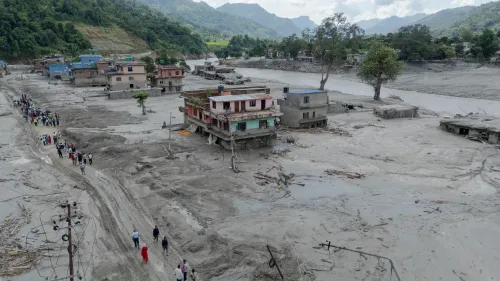
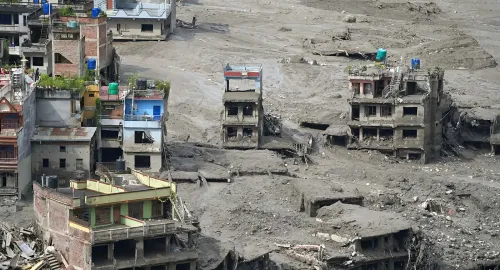
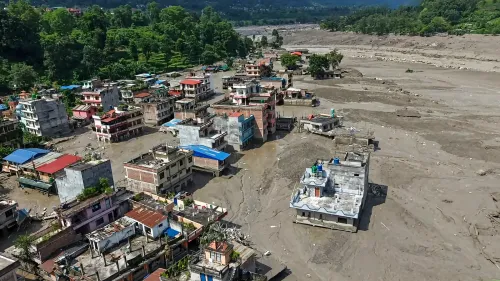
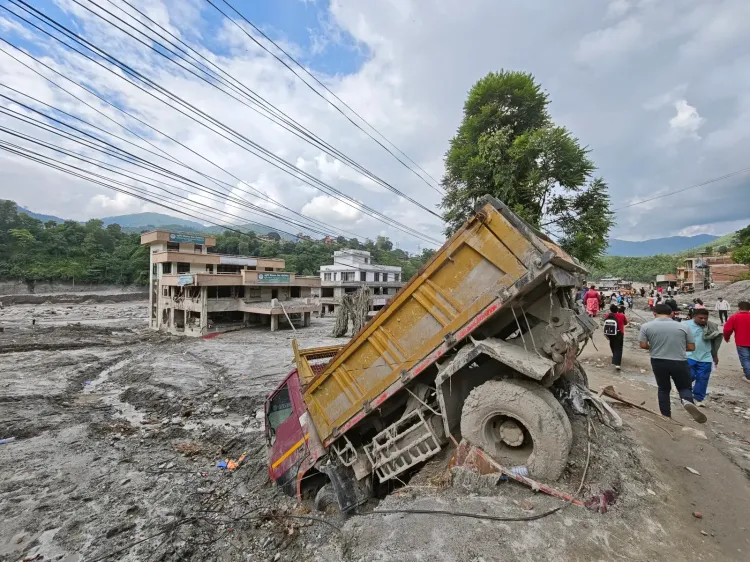
According to the National Disaster Risk Reduction and Management Authority (NDRRMA), at least 1,114 bodies had been recovered by 9 am on Wednesday. Experts attributed the catastrophe to a glacial lake outburst: an avalanche blocked the Lengde Khola, a tributary of the Bhotekoshi near the Nepal-China border, and the accumulated water eventually breached the natural dam, sending a massive torrent downstream toward the Trishuli River, obliterating settlements and infrastructure in its path.
What Prime Minister Shah Said in Parliament
Addressing the House of Representatives, Shah described the scale of the crisis and the questions it raised for Nepal's future. 'The huge disaster, whose impacts of climate change we have suddenly experienced, has kept us working around the clock to manage the damage. At the same time, another profound question has arisen in our minds: How did this disaster come upon us?' he said.
Shah framed the disaster as a warning that must be heard globally. 'We must make the international community aware of the disasters we are experiencing as a result of climate change. Climate change is a global challenge. Its impacts and efforts to mitigate and manage them are the shared responsibility of the global community,' he said, citing expert assessments that rising Himalayan risks are a direct consequence of accelerating climate change.
Rescue Conditions and Government Response
Shah defended the government's handling of early warnings, saying security personnel were deployed the moment flood alerts were received — only for some of those personnel to go missing during the operation. He also addressed media reports suggesting Nepal had been reluctant to accept international assistance, calling them inaccurate.
'We had been coordinating with international countries from the very beginning to seek assistance as needed in the affected areas,' he told Parliament, noting that India and China had dispatched technical experts from the first day of the disaster. He explained that initial aerial reconnaissance by Indian and Chinese technicians, working alongside Nepali Army personnel, found conditions on the ground unsuitable for landing due to the volume of mud and debris. 'This was an exceptional situation,' Shah said, adding that even excavators could not be deployed until stable ground was established.
International Support Acknowledged
Shah formally thanked a wide coalition of nations and multilateral bodies for their assistance, naming India, China, the United States, the United Kingdom, Australia, Japan, South Korea, the UAE, Qatar, Switzerland, Singapore, Pakistan, Sri Lanka, and Bangladesh. International organisations including the Asian Development Bank, the World Bank, the European Union, and the United Nations were also cited. Several other countries and organisations have reportedly pledged further assistance.
Broader Climate Context
This comes amid growing scientific concern over glacial lake outburst floods (GLOFs) across the Hindu Kush-Himalayan region, where warming temperatures are accelerating glacial melt. Nepal, which contributes less than 0.1% of global greenhouse gas emissions, is considered among the most climate-vulnerable countries in Asia. Shah's parliamentary address signals a deliberate push to link domestic disaster response with a louder international advocacy role — a posture Kathmandu has increasingly adopted at forums such as the UN General Assembly and COP climate summits. How the global community responds to that call will be closely watched in the weeks ahead.
Point of View
China, and a dozen other nations as partners — and insisting Nepal never refused aid — he is pre-empting a narrative that could have damaged Kathmandu's credibility in future climate negotiations. The deeper issue, however, is structural: Nepal sits at the frontline of glacial lake outburst floods it has neither caused nor the resources to fully mitigate. Shah's call for global shared responsibility is morally sound, but without a binding international mechanism — something successive COP summits have failed to deliver — it risks remaining rhetorical. The 1,114 dead are a data point the world's largest emitters should be made to reckon with.
NationPress
18 Oct 2026
Frequently Asked Questions
What caused the Bhotekoshi River floods in Nepal?
According to experts, an avalanche blocked the Lengde Khola, a tributary of the Bhotekoshi River near the Nepal-China border, forming a natural dam. The accumulated water eventually breached the barrier, releasing a massive flood that swept downstream toward the Trishuli River, destroying settlements and infrastructure.
How many people have died in the Nepal floods?
At least 1,114 bodies had been recovered by 9 am on 2 September, according to the National Disaster Risk Reduction and Management Authority (NDRRMA). Around 3,916 people remain out of contact.
What did Nepal PM Balendra Shah say in Parliament about the floods?
Shah called for stronger international attention to Himalayan climate risks, describing the disaster as a consequence of climate change and arguing that its mitigation is a shared global responsibility. He also defended the government's rescue response and denied that Nepal had refused international assistance.
Did India and China help with Nepal flood rescue operations?
Yes. Shah told Parliament that both India and China sent technical experts from the first day of the disaster to conduct aerial reconnaissance. Initial landing at affected sites was not possible due to heavy mud and debris, and teams could reach the ground only after conditions stabilised.
Which countries and organisations have supported Nepal's flood relief?
Shah thanked India, China, the United States, the United Kingdom, Australia, Japan, South Korea, the UAE, Qatar, Switzerland, Singapore, Pakistan, Sri Lanka, and Bangladesh, as well as the Asian Development Bank, World Bank, European Union, and United Nations. Several other nations have reportedly pledged further assistance.