CM Samrat Choudhary Highlights India's Education Surge Since 2014
Synopsis
Bihar Chief Minister Samrat Choudhary shared PM Modi's figures on India's higher education boom — universities up from 750 to 1,300-plus and colleges from 38,000 to 52,000-plus since 2014, alongside new IITs, IIMs, AIIMS, and ITIs nationwide.
Key Takeaways
India's university count has grown from approximately 750 in 2014 to more than 1,300 in 2026 , a rise of over 73 percent.
Colleges have expanded from roughly 38,000 to over 52,000 in the same period, a near-37 percent increase.
Multiple new IITs, IIMs, AIIMS campuses, and ITIs have been established across the country since 2014.
Bihar CM Samrat Choudhary shared the figures as a direct quote attributed to PM Narendra Modi .
The amplification from a state CM underscores the political salience of education infrastructure in states like Bihar , which have historically faced low enrolment ratios.
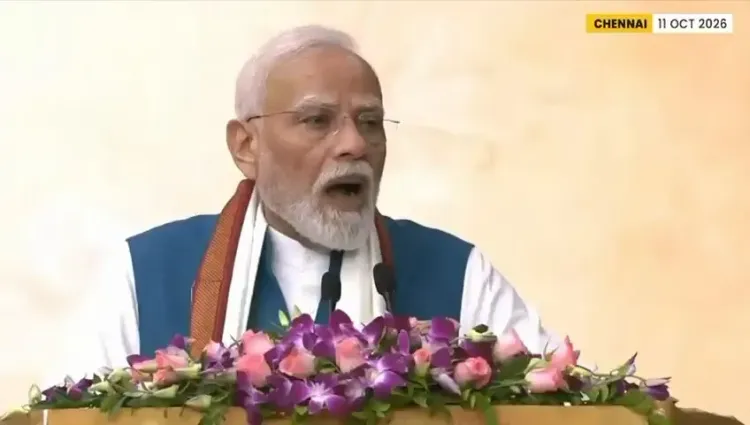
India's higher education landscape has undergone a quiet revolution — and Bihar Chief Minister Samrat Choudhary is making sure voters notice. On Sunday, October 11, 2026, Choudhary shared a striking set of figures attributed to Prime Minister Narendra Modi, detailing how the number of universities and colleges across India has surged dramatically over the past decade.
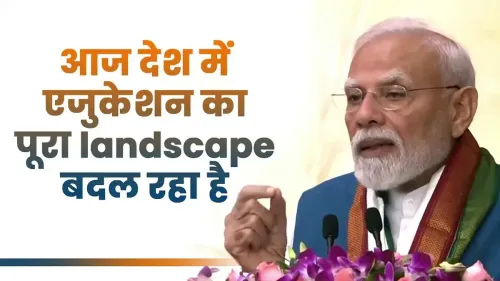
The post, shared in Hindi, quotes the Prime Minister directly: 'आज देश में शिक्षा का परिदृश्य तेजी से बदल रहा है' — 'Today, the landscape of education in the country is changing rapidly.' The figures cited are concrete: universities have grown from roughly 750 in 2014 to more than 1,300 today, while colleges have expanded from approximately 38,000 to over 52,000. That is a jump of over 73 percent in university count and nearly 37 percent in colleges within a single decade.
IITs, IIMs, AIIMSes — The Flagship Numbers
Beyond sheer institutional count, the post also flags the establishment of 'numerous ITIs, IIMs, IITs, and AIIMS' across the country during this period. These are not interchangeable acronyms — each represents a distinct tier: ITIs (Industrial Training Institutes) deliver vocational skilling at the ground level; IIMs produce management graduates; IITs anchor engineering and technology research; and AIIMS campuses extend premier medical education beyond New Delhi. The expansion of all four categories simultaneously signals a broad-spectrum approach to human capital development.
Why Bihar's Chief Minister Is Amplifying This Message
Choudhary's decision to amplify PM Modi's words on education is politically calculated but substantively grounded. Bihar has historically ranked among India's states with the lowest higher-education enrolment ratios. New universities and AIIMS campuses in the state — including the AIIMS Darbhanga project — are directly relevant to his electorate. By anchoring the national data to the Prime Minister's voice, the Chief Minister ties local infrastructure gains to a pan-India narrative of governance delivery.
The wider picture is significant: India is now home to one of the largest higher education systems in the world by sheer institution count. Whether the quality of graduates keeps pace with the quantity of campuses is the harder question — but the access story, measured in seats and buildings, is undeniably large in scale.
Point of View
Though analysts consistently flag that access gains and quality outcomes are separate metrics. For the BJP, tying education expansion to PM Modi's personal brand reinforces the party's governance-delivery thesis, which has been central to its communication strategy since 2014. The Bihar angle — with its AIIMS projects and newly sanctioned central institutions — makes this more than a generic national talking point.
NationPress
11 Oct 2026
Frequently Asked Questions
How many universities are there in India in 2026?
According to figures shared by Bihar CM Samrat Choudhary and attributed to PM Modi, India now has more than 1,300 universities , up from approximately 750 in 2014.
How many colleges are there in India now?
The number of colleges in India has grown to over 52,000 , compared to roughly 38,000 in 2014, an increase of nearly 37 percent in about a decade.
Has India opened new IITs and AIIMS since 2014?
Yes. The post attributes to PM Modi the statement that 'numerous ITIs, IIMs, IITs, and AIIMS' have been established across India since 2014, expanding both technical and medical education significantly.
Why did Bihar CM Samrat Choudhary post about India's education growth?
Choudhary shared the figures to highlight the national government's education infrastructure record. Bihar, which has historically low higher-education enrolment, has been a beneficiary of new central institutions, making the data locally relevant.
What does India's university expansion since 2014 mean for students?
More universities and colleges mean more seats and greater geographic access to higher education, particularly in underserved states. However, experts note that quality and graduate outcomes are separate benchmarks that the raw institution count does not automatically capture.