CM Samrat Choudhary Hails India's Tech Rise Under PM Modi
Synopsis
Bihar Chief Minister Samrat Choudhary on 21 June 2026 publicly praised India's technological transformation, attributing the country's rise as a creator and innovator to Prime Minister Narendra Modi's decade-long push on digital infrastructure, UPI, and manufacturing incentives.
Key Takeaways
Bihar Chief Minister Samrat Choudhary praised India's technological progress in a post on X dated 21 June 2026 .
He credited Prime Minister Narendra Modi 's leadership for India's growing role as a global technology creator and innovator.
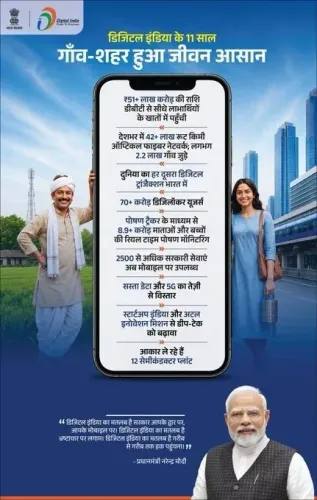
The Digital India programme, launched in 2015 , and the Unified Payments Interface , rolled out in 2016 , form the backbone of India's digital public infrastructure.
The Production Linked Incentive (PLI) scheme for electronics, announced in 2020 , aims to reduce import dependence and boost domestic manufacturing.
Proposed data protection and AI governance legislation in Parliament will define the next phase of India's technology policy.
State-level adoption of central digital schemes in Bihar remains a key metric for translating national policy into citizen-level outcomes.
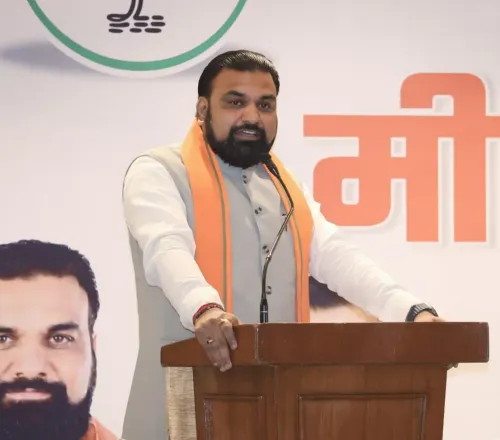
Bihar Chief Minister Samrat Choudhary on Sunday, 21 June 2026, praised India's technological transformation, crediting Prime Minister Narendra Modi's leadership for the country's growing confidence as a creator and innovator in the global technology landscape.
In his post on X, Choudhary wrote: 'A confident India is creating, innovating and leading. Proud to witness this remarkable technological transformation under the visionary leadership of Hon'ble Prime Minister Shri Narendra Modi Ji.' The message underscores a broader BJP narrative that frames India's digital and technological advances as a direct outcome of policy decisions taken since 2014.
Context
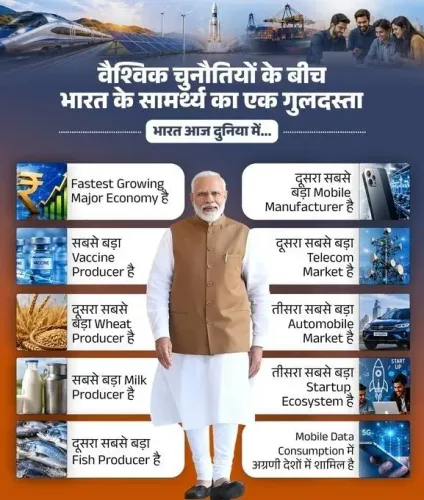
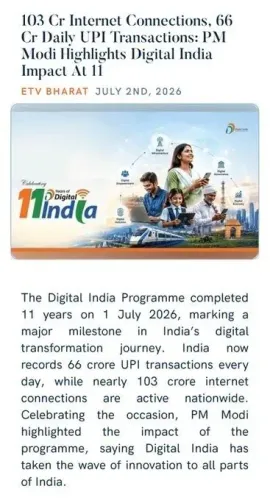
India's technology journey over the past decade has been anchored in large-scale public digital infrastructure. The Digital India programme, launched in 2015, set the foundation for electronically delivered public services and expanded broadband connectivity across the country. The rollout of the Unified Payments Interface (UPI) in 2016 further positioned India as a global leader in real-time digital payments, with the system now processing billions of transactions monthly.
These initiatives have been supplemented by the Production Linked Incentive (PLI) scheme for electronics and IT hardware, announced in 2020, which aims to reduce India's dependence on imported components by incentivising domestic manufacturing. Together, these programmes have shaped the policy environment that Choudhary references in his post.
Policy Backdrop
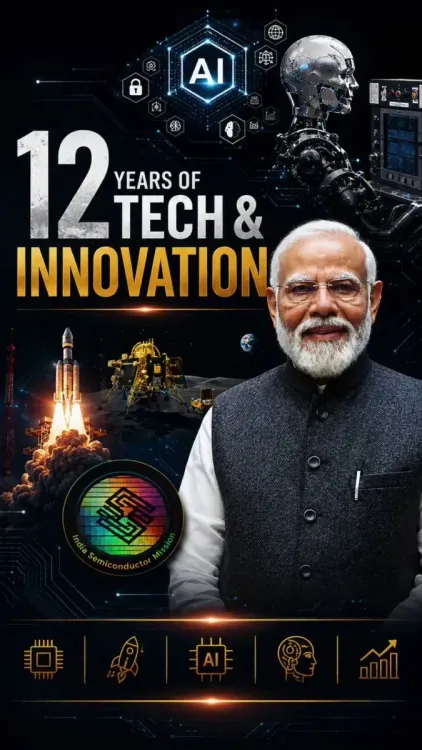
Successive Union Budgets since 2014 have allocated resources toward building digital public infrastructure, with increasing focus on semiconductors, data centres, and artificial intelligence. The government's push to establish India as a semiconductor design and fabrication hub has drawn attention from global chipmakers and technology investors. Aadhaar-linked service delivery has also expanded, enabling direct benefit transfers and reducing leakages in welfare programmes.
Parliamentary discussions around a proposed data protection framework and AI governance legislation are expected to shape the next phase of this digital push. These bills, if enacted, would provide a regulatory structure for the rapidly growing Indian technology sector, including startups and large enterprises alike.
Stakeholders and Impact
India's technology sector — encompassing startups, IT services firms, fintech companies, and hardware manufacturers — stands as the primary stakeholder in this policy arc. The startup ecosystem, which has produced several unicorns over the past decade, has benefited from digital infrastructure investments and improved ease-of-doing-business metrics. For Bihar specifically, state-level adoption of central digital schemes remains a key indicator of ground-level impact, with programmes such as direct benefit transfers and digital literacy initiatives reaching rural populations.
For the BJP, messaging around technological progress serves a dual purpose: it reinforces the party's governance credentials nationally while allowing state leaders like Choudhary to align themselves with the central leadership's achievements ahead of electoral cycles.
What's Next
The trajectory of India's technology ambitions will be shaped by legislative developments in New Delhi, including the passage of data protection and AI governance bills currently under consideration. At the state level, Bihar's integration of central digital schemes — from agricultural subsidies to health services — will serve as a measure of how effectively national technology policy translates into citizen-level outcomes. Choudhary's public alignment with PM Modi's technology vision signals that Bihar is likely to remain an active participant in federal digital initiatives in the months ahead.
Point of View
He reinforces the party's decade-long framing of Modi-era governance as synonymous with national self-confidence and modernisation. The post also serves a local political purpose: positioning Bihar's leadership as aligned with, and benefiting from, the Centre's flagship digital programmes. As legislative debates on data protection and AI governance intensify, such messaging is likely to become more frequent, tying state-level political identity to national technology milestones.
NationPress
20 Sept 2026
Frequently Asked Questions
What did Bihar CM Samrat Choudhary say about India's technology progress?
Bihar Chief Minister Samrat Choudhary posted on X on 21 June 2026 that 'a confident India is creating, innovating and leading,' praising the country's technological transformation under Prime Minister Narendra Modi's leadership.
What is the Digital India programme?
Digital India is a government programme launched in 2015 to transform India into a digitally empowered society by delivering public services electronically and expanding digital infrastructure across the country.
What is UPI and why is it significant?
The Unified Payments Interface (UPI) was rolled out in 2016 to enable instant digital payments across banks and platforms. It has since grown into one of the world's largest real-time payment systems and is a flagship example of India's digital public infrastructure.
What is the PLI scheme for electronics?
The Production Linked Incentive (PLI) scheme for electronics and IT hardware, announced in 2020, provides financial incentives to manufacturers to produce goods domestically in India, reducing the country's dependence on imported components.
How does Bihar fit into India's digital transformation?
Bihar is a key state for the adoption of central digital schemes, including direct benefit transfers and digital literacy initiatives. State-level implementation of these programmes is seen as a critical measure of how national technology policy reaches ordinary citizens.