CM Saini to Rahul: Parliament, Not TV Studios, for PM Debate

Synopsis
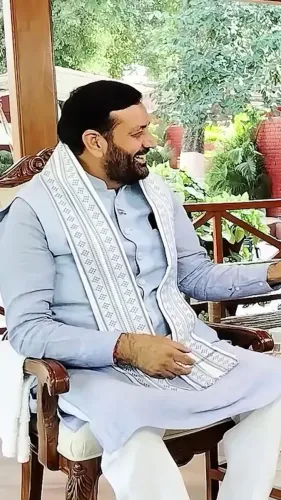
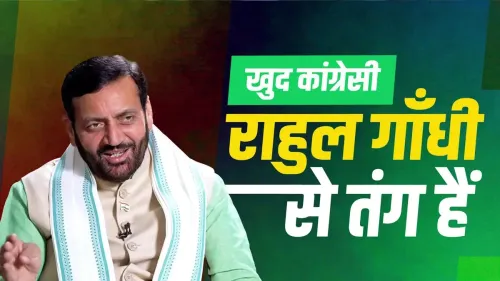
Haryana CM Nayab Singh Saini fired back at Rahul Gandhi on 4 November 2026, arguing that Parliament — not television studios — is the right venue for debating the Prime Minister, and noting that the floor of the House requires answering questions too.
Key Takeaways
Nayab Singh Saini posted on 4 November 2026 challenging Rahul Gandhi's reported invitation for a TV debate with the Prime Minister.
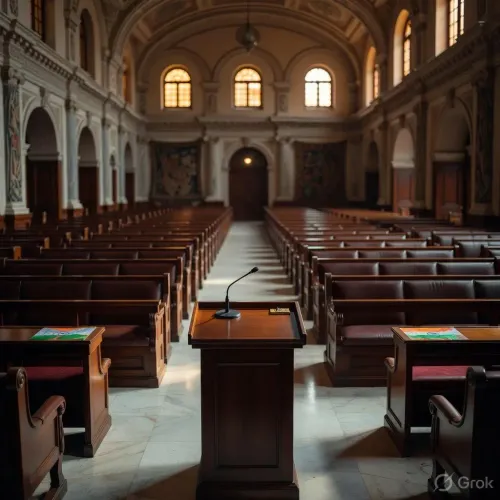
Saini argued that Parliament of India was constitutionally designed for exactly this purpose.
He reminded Gandhi that as Leader of the Opposition , he already has the right to raise questions, debate, and hold the government accountable in the Lok Sabha.
Saini's pointed qualifier: Parliamentary debate comes with the condition that you must also answer questions yourself.
The CM closed by saying the country needs 'meaningful parliamentary discussion', not media debate challenges.
The Congress response and the conduct of the next parliamentary session will indicate whether the opposition takes up the institutional challenge.
A sharp political volley landed on Wednesday, 4 November 2026, when Haryana Chief Minister Nayab Singh Saini turned a reported television debate challenge aimed at the Prime Minister back on Rahul Gandhi — with a pointed reminder about where India's constitutional democracy actually conducts its debates.
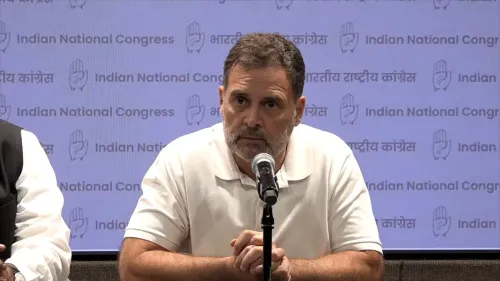
Saini's post, written in Hindi, asked directly: 'Rahul ji, pradhanmantri se bahas karne ke liye TV studio ka nimantran kyun?' ('Rahul ji, why a TV studio invitation to debate the Prime Minister?'). The Haryana CM's argument was crisp — Parliament was built precisely for this purpose, and Gandhi, as Leader of the Opposition in the Lok Sabha, already holds every tool he needs: the right to raise questions, participate in debates, and hold the government accountable on the floor of the House.
The Sting in the Tail
Saini did not stop at the institutional argument. He added a pointed qualifier: Parliament comes with one 'small condition' — 'wahan sawalon ke jawab bhi dene pad sakte hain' ('you may also have to answer questions there'). The line was designed to land, and it did. It reframes Gandhi's challenge not as democratic boldness but as a preference for a forum where accountability flows in only one direction.
The Haryana CM closed with a broader assertion: 'The country does not need a debate challenge; it needs meaningful parliamentary discussion.' In six words, the post attempted to shift the frame from political theatre to institutional responsibility.
Parliament vs. Prime Time — A Recurring Fault Line
This exchange fits a well-worn pattern in Indian politics. The ruling coalition and the opposition have repeatedly clashed over which forum best serves democratic accountability — the constitutional chamber in New Delhi or the national television studios that reach hundreds of millions of viewers. Each side accuses the other of retreating to preferred terrain when the heat is on.
Gandhi's elevation to Leader of the Opposition after the 2024 general elections gave the Congress a formal institutional platform it had lacked for a decade. Under Lok Sabha rules of procedure, that role carries substantive powers — questions during Question Hour, participation in every major debate, and the authority to demand ministerial accountability. Saini's post is essentially an argument that Gandhi should use those powers rather than issue media challenges.
What the Congress Response Could Look Like
The Congress leadership has not formally responded to the post at the time of publication. The next scheduled parliamentary session will be a test of whether the Gandhi-led opposition chooses to press the government through the mechanisms Saini is pointing to — or whether the battle stays in the media arena. Either choice will itself become political ammunition.
India's constitutional design gives Parliament the last word on executive accountability. The question is whether both sides are willing to show up and use it.
Point of View
The BJP is implicitly pressuring Congress to engage on parliamentary terrain where the government controls the procedural advantage. The 'you may have to answer questions too' line is particularly sharp: it signals awareness that Gandhi's media challenge may partly reflect a preference to control the terms of the exchange. Longer term, this exchange is a proxy battle over who gets to define what democratic accountability looks like in a high-decibel media environment.
NationPress
4 Nov 2026
Frequently Asked Questions
Why did Nayab Singh Saini challenge Rahul Gandhi over the Parliament debate?
Saini argued that Parliament — not television studios — is the constitutional venue for debating the Prime Minister, and that Gandhi, as Leader of the Opposition, already has the institutional tools to do so.
What powers does the Leader of the Opposition have in Parliament?
Under Lok Sabha rules of procedure, the Leader of the Opposition can raise questions during Question Hour, participate in all major debates, and hold the government accountable on the floor of the House.
What was the key point Saini made about parliamentary debate?
Saini noted that Parliament comes with a 'small condition' — that participants must also be prepared to answer questions, not just ask them.
Is this the first time BJP and Congress have clashed over Parliament versus media debates?
No. Indian politics has seen recurring exchanges between the ruling coalition and opposition over whether Parliament or media platforms are the preferred forum for national debates, with both sides accusing the other of avoiding institutional accountability at different times.
What is expected next after Saini's post?
A formal response from the Congress leadership and the opposition's conduct during the next parliamentary session — particularly around Question Hour and debates — will indicate how this challenge plays out.