CM Samrat Choudhary Flags India's Metro Boom: 5 to 25 Cities
Synopsis
Bihar CM Samrat Choudhary cited PM Modi on India's metro boom: from 5 cities with metro rail in 2014 to 25 cities today, framing the expansion as modern, holistic infrastructure — not just wider roads.
Key Takeaways
Bihar Chief Minister Samrat Choudhary shared PM Modi's statement on India's metro expansion on 11 October 2026 .
India had metro services in only 5 cities in 2014 ; that figure has risen to 25 cities by 2026 .
PM Modi's quoted rationale frames metro rail as 'modern and holistic infrastructure,' distinct from road-widening alone.
The message carries direct relevance for Bihar , where the Patna Metro project is under active development.
The fivefold city-level expansion over one decade is among the fastest metro network scale-ups globally.
India's metro revolution has a number that stops you cold: in just over a decade, the country went from 5 metro-connected cities to 25 — a fivefold expansion that reshaped how tens of millions of Indians move every day. Bihar Chief Minister Samrat Choudhary underscored this transformation on Sunday, 11 October 2026, sharing Prime Minister Narendra Modi's words on the philosophy driving it.
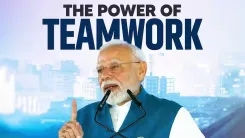
Quoting Prime Minister Narendra Modi, CM Choudhary wrote: 'बेहतर परिवहन के लिए सिर्फ चौड़ी सड़कें नहीं, आधुनिक और समग्र इंफ्रास्ट्रक्चर भी जरूरी है' — 'For better transportation, wide roads alone are not enough; modern and holistic infrastructure is also essential.' That framing is deliberate. It positions metro expansion not as a prestige project, but as a structural answer to urban mobility at scale.
From 5 Cities in 2014 to 25 Cities Today
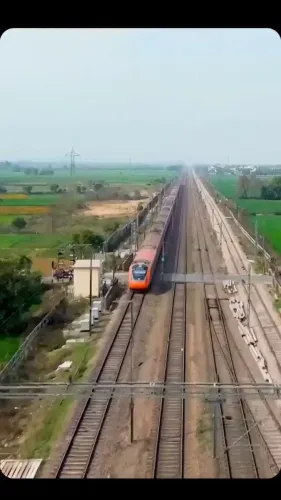
When 2014 began, metro rail services were confined to a handful of legacy networks — Delhi, Mumbai, Kolkata, Bengaluru, and Chennai. The decade since has seen lines extended and entirely new systems commissioned in cities that had never seen a metro car. By 2026, 25 Indian cities operate metro services, a footprint that now reaches Tier-2 centres far beyond the traditional metros.
The scale signals a policy shift: urban mobility is no longer treated as a big-city privilege. Extending rapid transit to mid-sized cities addresses both congestion and the economic friction of long, unreliable commutes — costs that fall hardest on daily-wage workers and the emerging middle class.
Bihar's Stake in the Connectivity Conversation
That a Bihar Chief Minister is amplifying this message carries its own significance. Patna Metro — Bihar's first metro project — has been in active development, making urban rail a live issue for the state's electorate. For CM Choudhary, citing the national metro expansion is also a signal to Patna's commuters: the infrastructure momentum is real, and Bihar is part of it.
Modern metro networks do more than move people. They anchor land values, reduce vehicular pollution, and cut accident rates on congested arterial roads. Every new city brought into the metro fold multiplies those dividends — and the compound effect of 20 additional cities gaining rapid transit in one decade is genuinely historic by any global benchmark.
The Broader Infrastructure Doctrine
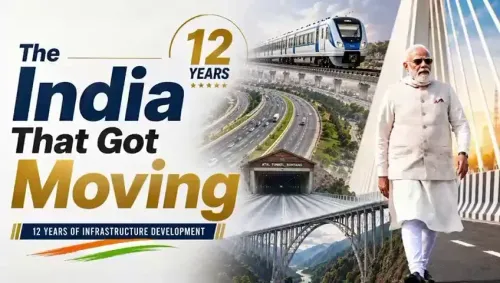
PM Modi's quoted line — holistic infrastructure over roads alone — echoes a wider doctrine visible in parallel investments: high-speed rail corridors, logistics parks, and multimodal hubs designed to stitch different transport layers together. The metro network is the urban node in that larger web. Five cities to twenty-five is not just a statistic. It is the skeleton of a different kind of Indian city taking shape.
The question now is which of the remaining urban agglomerations cross the threshold next — and how fast the network's depth matches its breadth.
Point of View
He ties Bihar's urban ambitions to the Centre's broader mobility doctrine, reinforcing the BJP's 'infrastructure delivery' narrative ahead of any future electoral cycle. The jump from 5 to 25 metro cities is a genuinely significant policy output, and framing it as 'holistic' infrastructure — rather than headline-grabbing road projects — signals a maturing of the ruling coalition's urban policy pitch. Watch whether similar messaging intensifies as Patna Metro milestones approach.
NationPress
11 Oct 2026
Frequently Asked Questions
How many cities in India have metro rail in 2026?
As of 2026, 25 Indian cities have operational metro rail services, up from just 5 cities in 2014.
Which cities had metro rail in India in 2014?
In 2014, metro services were available in 5 cities — primarily the legacy networks of Delhi, Mumbai, Kolkata, Bengaluru, and Chennai.
What did Bihar CM Samrat Choudhary say about metro expansion?
CM Choudhary shared PM Modi's statement emphasising that better transport requires 'modern and holistic infrastructure,' not just wide roads, highlighting India's growth from 5 to 25 metro cities in a decade.
Is there a metro in Patna, Bihar?
Yes, the Patna Metro project is under active development, making urban rail a key infrastructure issue for Bihar.
What is India's metro expansion policy under PM Modi?
Under PM Modi's government since 2014, India's metro network has expanded to 25 cities , guided by a policy of holistic urban infrastructure that integrates rapid transit into broader mobility planning.