Rahul Gandhi Calls March to Supreme Court Over Vote Fraud
Synopsis
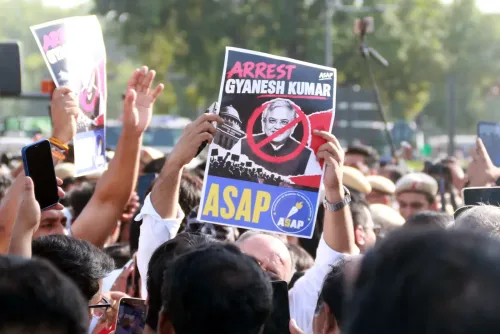
Congress leader Rahul Gandhi has called for a march to the Supreme Court on October 12, 2026, citing Sunday's police crackdown on Delhi youth protesters. The opposition plans to submit a memorandum to the Chief Justice demanding an end to vote fraud, a halt to SIR, and Election Commissioner Gyanesh Kumar's resignation.
Key Takeaways
Rahul Gandhi announced an opposition march to the Supreme Court of India on Monday, October 12, 2026 .
The march follows alleged police and BJP worker violence against youth protesters in Delhi on Sunday, October 11 .
A memorandum will be submitted to the Chief Justice of India with three demands: end to 'vote chori', halt to SIR (Special Intensive Revision) of electoral rolls, and resignation of Chief Election Commissioner Gyanesh Kumar .
Gandhi named PM Modi, Home Minister Amit Shah, NSA Ajit Doval, and RSS chief Mohan Bhagwat as those trying to silence the people's voice.
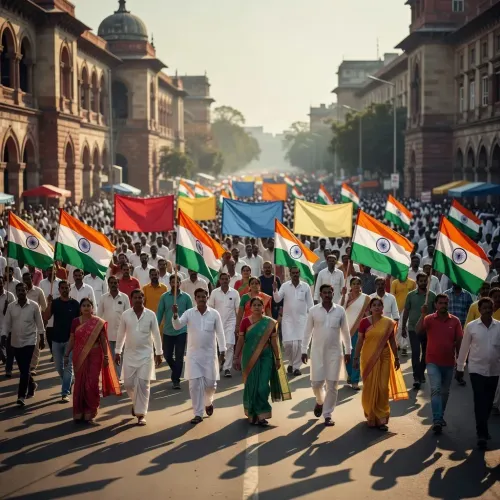
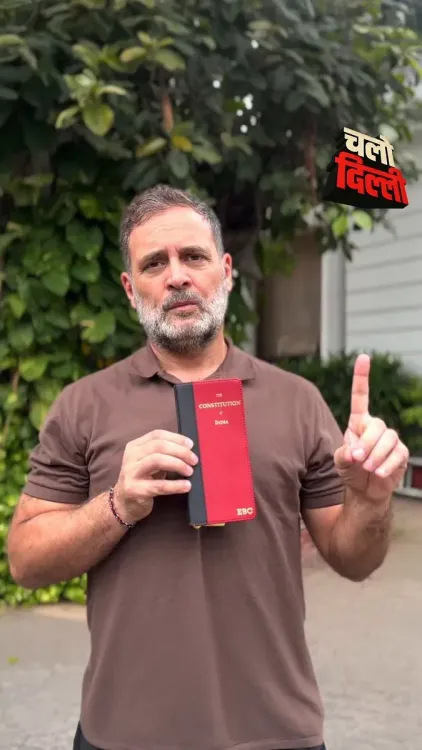
The march is framed as a cross-party, cross-caste, cross-gender citizens' mobilisation under the hashtag #ChaloDilli .
Gandhi closed with the rallying call 'Daro mat' — 'Do not be afraid.'
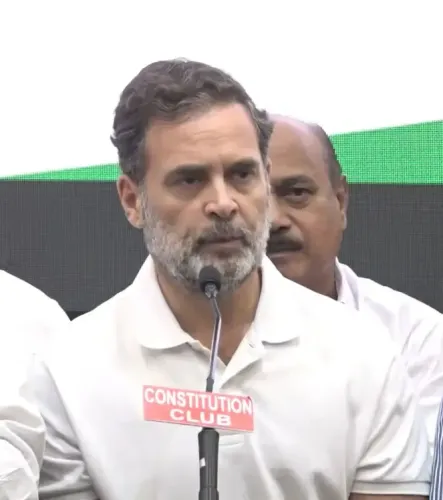
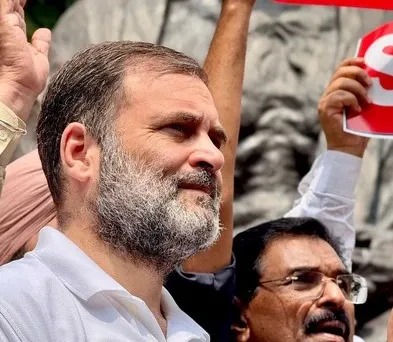
Batons swung in the capital on Sunday, and now the opposition is marching to the nation's highest court. Congress leader Rahul Gandhi, Leader of the Opposition in the Lok Sabha, announced on Sunday, October 11, 2026 that he and a broad coalition of opposition parties, youth groups, and civil society organisations will march to the Supreme Court of India in New Delhi on Monday, October 12, submitting a memorandum to the Chief Justice demanding an end to what he calls 'vote chori' (vote theft), a halt to the Special Intensive Revision (SIR) of electoral rolls, and the resignation of Election Commission of India chief Gyanesh Kumar.
What happened in Delhi on Sunday
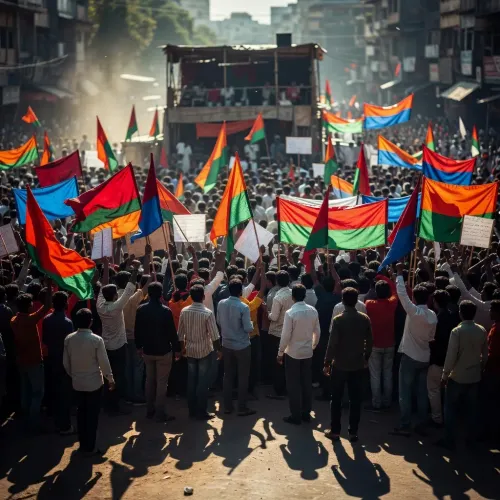
Gandhi's post describes the scene the day before: young protesters took to Delhi's streets in what he characterised as a peaceful demonstration — 'unke dilon mein nafrat ya gussa nahin, mohabbat thi' ('in their hearts there was no hatred or anger, only love'). He alleged they were beaten by both police and, in his words, 'BJP goons.' The claim of police lathicharging protesters at the demonstration forms the immediate trigger for the announced Supreme Court march.
The hashtag #ChaloDilli anchored the post, framing Monday's march as a national summons — not a party event, but a citizen's walk to the apex judiciary.
Three demands for the Chief Justice
Gandhi laid out a precise three-point memorandum to be handed to the Chief Justice of India. First: an end to what the opposition has termed 'vote chori,' broadly referring to alleged irregularities in the electoral process. Second: a halt to the Special Intensive Revision (SIR) of voter rolls — a process the opposition argues is being used to selectively purge voters. Third: the resignation of Gyanesh Kumar, the current Chief Election Commissioner, whom the opposition holds responsible for overseeing these processes.
The choice to submit the memorandum at the Supreme Court rather than through parliamentary or executive channels is itself a pointed signal — it frames the judiciary as the last constitutional safeguard when, in the opposition's telling, the executive and the electoral machinery have both failed the citizen.
Names called out — and a direct dare
Gandhi named four individuals in his post — Prime Minister Narendra Modi, Home Minister Amit Shah, National Security Adviser Ajit Doval, and RSS chief Mohan Bhagwat — asserting they 'cannot silence India's voice.' Calling them 'cowards' (kayar) who 'will have to step aside,' he closed the Hindi section with two defiant words: 'Daro mat' — 'Do not be afraid.'
The explicit inclusion of Doval and Bhagwat alongside the elected leadership is unusual in opposition rhetoric, directly widening the frame from electoral controversy to what Gandhi presents as a coordinated establishment crackdown on democratic dissent.
Who Gandhi says will march
The announced coalition spans all opposition parties, civil society groups, and — crucially — citizens beyond partisan identity. Gandhi's framing explicitly dissolves the usual fault lines: 'party, mahila-purush, jati, samudaay aur rajya ki har deewar se upar uthkar' — above every wall of party, gender, caste, community, and state. It is a deliberate constitutional grammar, invoking unity across the very categories that Indian politics routinely weaponises.
Whether the turnout on Monday, October 12 matches the ambition of that framing is the question that will determine how loudly this moment echoes.
Point of View
Suggesting the opposition intends to frame this as a systemic, not merely partisan, threat to democracy. The three-point memorandum gives the march a concrete deliverable, raising the stakes beyond symbolism. Monday's turnout will be the real test of whether 'united beyond party, gender, caste, community and state' is a political aspiration or a street reality.
NationPress
11 Oct 2026
Frequently Asked Questions
Why is Rahul Gandhi marching to the Supreme Court on October 12?
Rahul Gandhi announced the march to submit a memorandum to the Chief Justice of India demanding an end to alleged vote fraud, a halt to the Special Intensive Revision of electoral rolls, and the resignation of Chief Election Commissioner Gyanesh Kumar, following an alleged police crackdown on Delhi youth protesters on October 11.
What is SIR and why does the opposition want it halted?
SIR stands for Special Intensive Revision of electoral rolls. The opposition alleges it is being used to selectively delete voters from the rolls, effectively disenfranchising sections of the electorate, and has demanded an immediate halt to the process.
Who is Gyanesh Kumar and why is his resignation being demanded?
Gyanesh Kumar is the Chief Election Commissioner of India. The opposition, led by Rahul Gandhi, holds him personally responsible for overseeing what they describe as electoral malpractice, including the SIR process and alleged vote theft.
What happened at the Delhi youth protest on October 11, 2026?
According to Rahul Gandhi's post, young protesters gathered peacefully in Delhi on October 11, 2026 and were beaten by police as well as, in his words, BJP workers. The alleged crackdown became the immediate trigger for the announced Supreme Court march.
What does 'vote chori' mean in the context of Rahul Gandhi's demands?
'Vote chori' literally means 'vote theft' in Hindi. The opposition uses the term to refer to alleged large-scale irregularities in the electoral process — from roll manipulations to disputed counting — that they argue have undermined free and fair elections.