Sitharaman in Singapore: Trade finance, GIFT IFSC and AI on agenda with Standard Chartered
Synopsis
Finance Minister Nirmala Sitharaman's Singapore trip is more than a diplomatic courtesy call — it is a targeted capital-attraction exercise. From Standard Chartered's leadership to BlackRock, PIMCO and Temasek at the same roundtable, New Delhi is clearly pitching India as the go-to emerging-market bet of 2026, with GIFT IFSC, CBDCs and AI regulation all on the table.
Key Takeaways
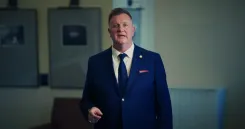
Finance Minister Nirmala Sitharaman met Standard Chartered CEO Bill Winters in Singapore on 11 October 2026 to discuss trade finance and cross-border banking flows.
Talks covered expanding treasury centres at GIFT IFSC and enabling AI adoption through suitable tax and regulatory frameworks.
Sitharaman met Singapore PM Lawrence Wong and reviewed outcomes of the 4th India-Singapore Ministerial Roundtable , covering capital markets, payments, semiconductors, and cybersecurity.
She called on President Tharman Shanmugaratnam to advance the Comprehensive Strategic Partnership between the two countries.
A Business Roundtable with firms including BlackRock , PIMCO , Temasek , Carlyle , JPMorgan , and Deutsche Bank focused on India's economic resilience and opportunities in AI.
Both sides discussed tokenisation of financial assets and CBDCs , with Singapore keen to share its experience in asset tokenisation.
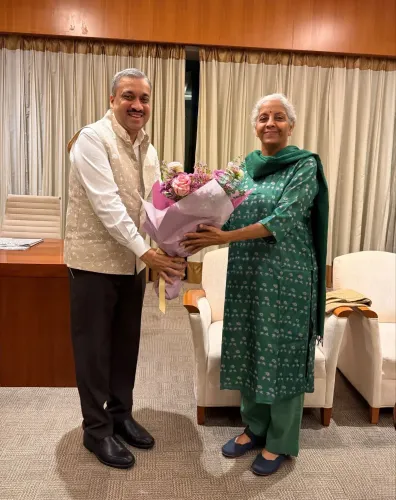
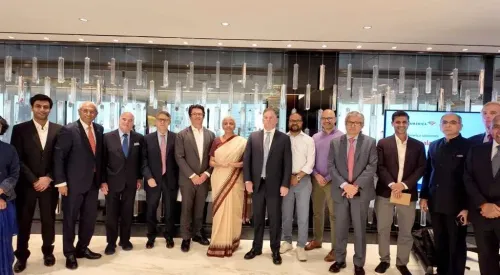
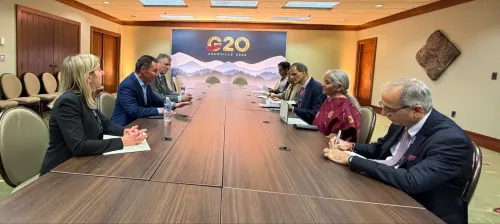
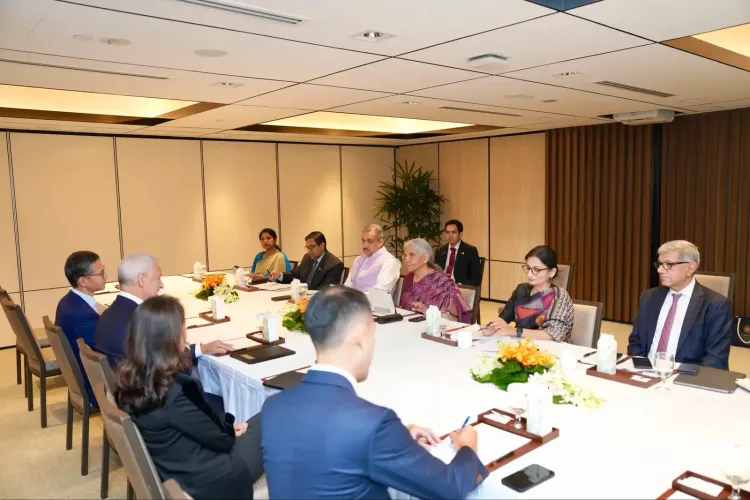
Finance Minister Nirmala Sitharaman on Sunday, 11 October 2026, held high-level talks in Singapore with Standard Chartered Bank Group Chief Executive Bill Winters, covering trade finance, cross-border banking flows, and India's deepening integration with global financial markets. The meeting forms part of her three-day official visit to the city-state.
Who Was in the Room
The Standard Chartered delegation included Group Chief Operating Officer Tanuj Kapilashrami, CEO Singapore, ASEAN and South Asia Patrick Lee, and Director of Government Affairs (Group Public and Regulatory Affairs) Colin Tung. The breadth of seniority signals the bank's strategic interest in the India-Singapore financial corridor at a time when both nations are deepening economic ties.
Key Agenda: GIFT IFSC, AI Frameworks and Treasury Centres
Discussions also covered enabling wider Artificial Intelligence (AI) adoption through appropriate tax and regulatory frameworks — a theme that has surfaced repeatedly in Sitharaman's overseas engagements this year. According to a Finance Ministry statement, the two sides explored opportunities to establish and expand treasury centres at GIFT IFSC, India's emerging international financial services hub in Gujarat. Positioning GIFT IFSC as a preferred destination for global treasury operations has been a stated government priority, and this meeting reinforces that push.
PM Wong Meeting and the India-Singapore Bilateral Agenda
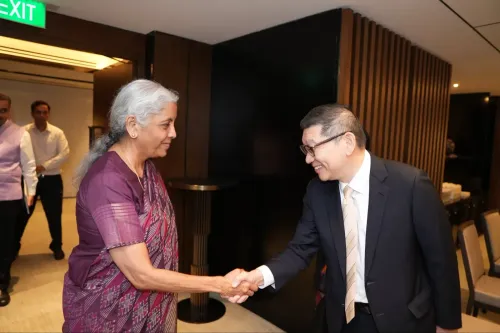
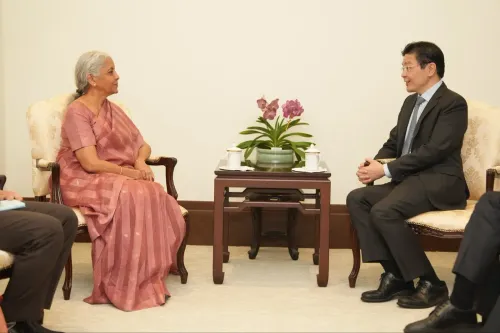
Earlier in the visit, on Friday, Sitharaman met Singapore Prime Minister Lawrence Wong and reviewed progress on the outcomes of the 4th India-Singapore Ministerial Roundtable (ISMR). The agenda spanned capital markets, payments connectivity, digitalisation, semiconductors, AI, and cybersecurity. The two leaders also discussed tokenisation of financial assets and central bank digital currencies (CBDCs), with Singapore indicating keenness to share its experience in asset tokenisation — an area where the Monetary Authority of Singapore has been a global front-runner.
Sitharaman also presented select projects from the National Investment and Infrastructure Fund (NIIF) pipeline to encourage greater investment by Singapore-based investors, citing India's strong macroeconomic fundamentals. PM Wong noted that bilateral cooperation between the two countries continues to grow and expressed optimism about India's growth trajectory.
Meeting with President Tharman and the Comprehensive Strategic Partnership
The Finance Minister called on Singapore President Tharman Shanmugaratnam — himself a former finance minister and globally respected economist — to advance the Comprehensive Strategic Partnership between the two nations. The interaction provided a platform for broader views on bilateral cooperation beyond trade and finance.
Business Roundtable with Global Investment Giants
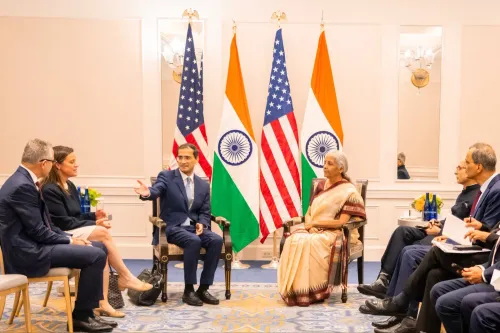
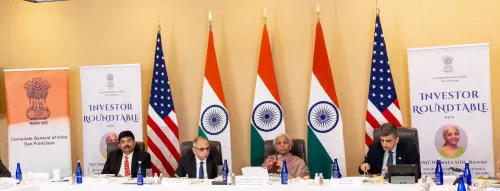
Sitharaman also addressed a Business Roundtable with senior representatives from some of the world's largest investment firms, including Millennium Partners, Brevan Howard, BlackRock, PIMCO, Carlyle, ADIA, Temasek, Citadel, JPMorgan, and Deutsche Bank. Discussions centred on India's economic resilience amid volatile oil prices and geopolitical uncertainties, alongside the opportunities and risks from rapid advances in AI.
The roundtable allowed for a candid exchange on India's macroeconomic fundamentals, financial market depth, and measures to attract greater global capital into Indian assets. This comes amid heightened global investor scrutiny of emerging-market destinations as the US Federal Reserve's rate trajectory remains uncertain.
ASEAN Dimension and Singapore's 2027 Chairmanship
Beyond bilateral matters, the two sides exchanged views on strengthening India-ASEAN cooperation, including in the lead-up to Singapore's ASEAN Chairmanship in 2027 — a tenure that could provide a structured diplomatic window to advance India's Act East policy in the financial and digital domains.
The Singapore visit underscores New Delhi's broader strategy of using high-level financial diplomacy to position India as a preferred destination for global capital, even as geopolitical and macroeconomic headwinds persist.
Point of View
A roundtable with BlackRock and PIMCO for capital-market optics, and a bilateral with PM Wong to lock in institutional momentum ahead of Singapore's 2027 ASEAN chairmanship. The consistent appearance of GIFT IFSC across these meetings suggests New Delhi is making a deliberate bet that treasury-centre status — not just FDI pledges — is the metric that will define this phase of financial diplomacy. Whether global investors convert that optimism into actual flows into Indian assets remains the open question, particularly with US rate uncertainty still clouding emerging-market allocations.
NationPress
11 Oct 2026
Frequently Asked Questions
Why did Finance Minister Sitharaman visit Singapore?
Sitharaman undertook a three-day official visit to Singapore to strengthen economic, financial, investment, and business ties between India and Singapore. The trip included bilateral meetings with Singapore's Prime Minister and President, a roundtable with global investment firms, and talks with Standard Chartered's top leadership on trade finance and cross-border banking.
What was discussed with Standard Chartered CEO Bill Winters?
The talks with Standard Chartered CEO Bill Winters focused on opportunities to deepen trade finance, cross-border banking flows, AI adoption through appropriate tax and regulatory frameworks, and expanding treasury centres at GIFT IFSC. Senior officials including the Group COO and the bank's Singapore and ASEAN CEO participated.
What is GIFT IFSC and why does it feature in these discussions?
GIFT IFSC (Gujarat International Finance Tec-City International Financial Services Centre) is India's dedicated international financial services hub, designed to attract global banking, asset management, and treasury operations. The government has been actively promoting it as an alternative to established centres like Singapore and Dubai, and the Sitharaman-Winters talks specifically covered establishing and expanding treasury centres there.
Which global investors did Sitharaman meet at the Business Roundtable?
The Business Roundtable included senior representatives from Millennium Partners, Brevan Howard, BlackRock, PIMCO, Carlyle, ADIA, Temasek, Citadel, JPMorgan, and Deutsche Bank. Discussions focused on India's macroeconomic fundamentals, financial market depth, and resilience amid volatile oil prices and geopolitical uncertainties.
What is the significance of Singapore's ASEAN Chairmanship in 2027 for India?
Singapore assumes the ASEAN Chairmanship in 2027, giving it an elevated platform to shape the regional agenda. Both sides exchanged views on strengthening India-ASEAN cooperation in the lead-up to this chairmanship, which could provide India a structured diplomatic window to advance its Act East policy across financial, digital, and trade domains.